SBA loan options for Walnut Creek small business owners center on the 7(a) program, SBA’s primary business financing tool. Lenders use it to fund real estate purchases, equipment, working capital, and debt refinancing through a government-backed guarantee. Munshi Capital Inc. guides local borrowers through loan structuring, documentation, and lender matching to secure financing suited to each business’s growth stage and capital needs.
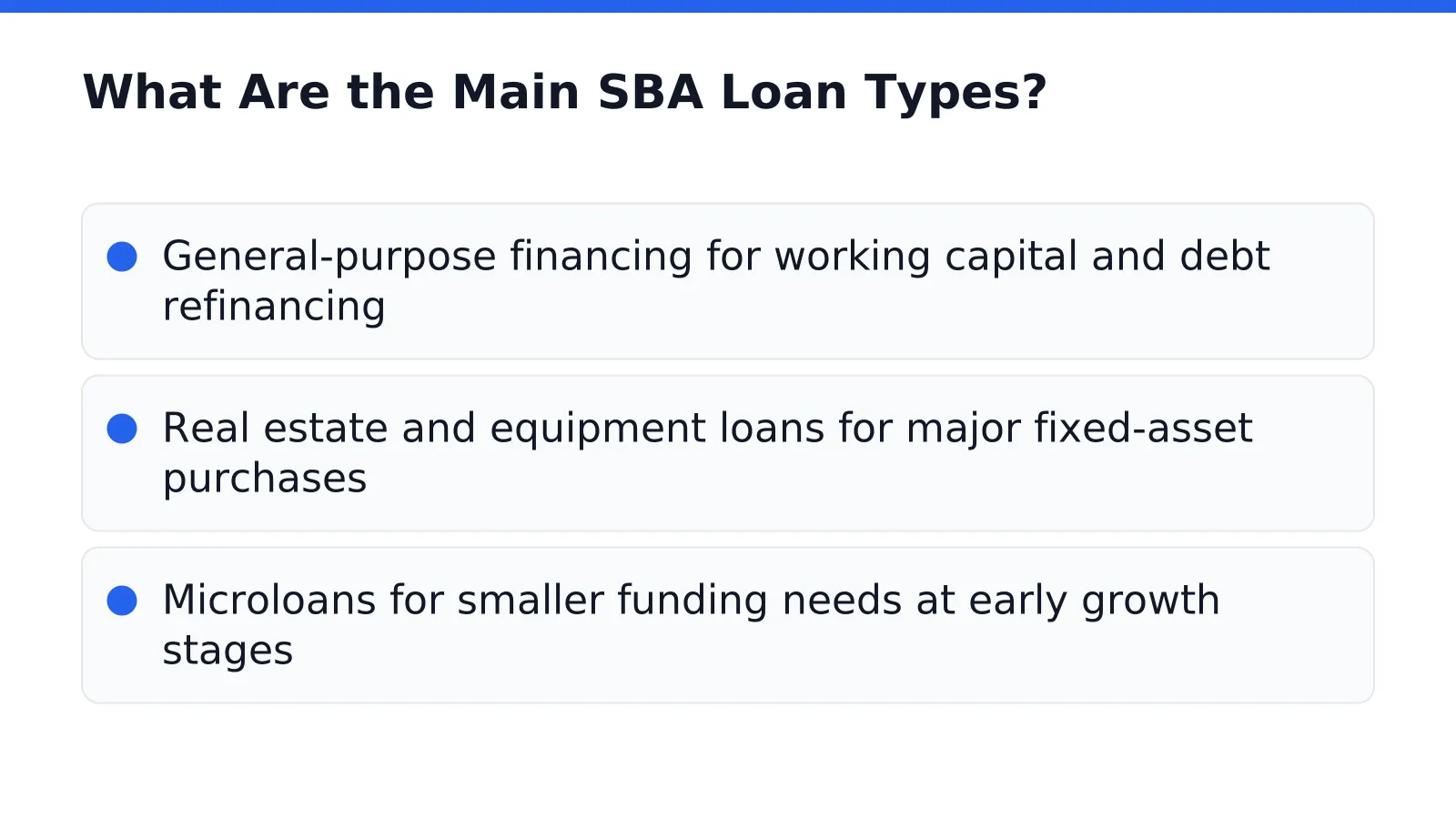
What Are the Main SBA Loan Types?
SBA Loan Types for Small Businesses fall into a federal guarantee structure rather than a single loan product. Government backing covers a portion of each loan, which lowers risk for the lender and widens access for entrepreneurs who might not qualify for conventional financing. Walnut Creek business owners researching financing options encounter several distinct programs, each built for a different stage of growth or a different use of funds.
The structure matters more than the label. An SBA loan is partially guaranteed by the federal government, not funded directly by a federal agency. The Small Business Administration itself does not hand out the money, except in disaster relief cases. Instead, it partners with approved lenders, reducing their exposure. They extend credit on terms a small business might not otherwise secure.
What is the difference between SBA 7(a) and 504 loans?
SBA 7(a) vs. 504 Loans comes down to purpose and structure. The 7(a) program is the SBA’s primary loan offering, built for working capital, debt refinancing, equipment purchases, and ownership changes. The 504 program, by contrast, targets fixed assets like real estate and large equipment, typically through a structure pairing a lender with a certified development company.
What loan types serve different business needs?
Common categories reviewed by Walnut Creek entrepreneurs include:
- General-purpose financing for working capital and debt refinancing
- Real estate and equipment loans for major fixed-asset purchases
- Microloans for smaller funding needs at early growth stages
Choosing between these paths often starts with a conversation among first-time home buyers, investors, and business owners evaluating how financing fits broader property and growth goals.

How Does the SBA 7(a) Loan Work?
The SBA 7(a) loan functions through a federal guarantee, not a direct loan from the government. The U.S. Small Business Administration backs a portion of the loan amount, which reduces risk for the lender and allows approved lenders to extend financing to small businesses carrying special requirements that might otherwise block approval. A business in Walnut Creek seeking capital works directly with a participating lender. The federal guarantee sits behind the transaction as a safety net.
This structure matters for business owners weighing SBA Loan Types for Small Businesses. The 7(a) program stands as the SBA’s primary and most flexible offering. Funds can cover several distinct needs:
- Acquiring, refinancing, or improving commercial real estate
- Covering short- and long-term working capital
- Refinancing existing business debt
- Purchasing machinery, equipment, furniture, or fixtures
- Financing a change of business ownership
What Makes the 7(a) Loan Different from Other SBA Options?
Business owners often compare SBA 7(a) vs. 504 Loans when deciding which structure fits their project. The 7(a) loan offers broader use of funds, spanning working capital, debt refinancing, and equipment purchases. Loan programs tied more narrowly to fixed assets serve a different purpose. For a Walnut Creek entrepreneur juggling multiple financing goals under one approval, the 7(a) structure typically offers more flexibility.
Evaluating SBA Loan Requirements for Startups alongside this guarantee structure takes guidance grounded in evidence, not guesswork. Munshi Capital Inc. applies proprietary insights and strategies to give clients comprehensive guidance when weighing financing structures like SBA-backed loans. The firm’s service portfolio emphasizes transparency and efficiency, addressing the complex financing needs small business owners across Walnut Creek encounter at every stage of growth.
SBA 7(a) vs. 504 Loans: What’s the Difference?
SBA 7(a) vs. 504 loans differ mainly in flexibility of use. The 7(a) program covers a wide range of business needs, while the 504 structure typically ties funding to a single fixed asset, such as a building or piece of major equipment. For a Walnut Creek small business owner comparing financing paths, that distinction shapes which program fits a given goal.
Among the SBA loan types for small businesses, the 7(a) loan stands out for its range of approved uses. Funds can go toward acquiring, refinancing, or improving real estate and buildings, giving business owners room to address multiple property needs under one loan structure. This differs from financing models limited strictly to one fixed asset purchase.
The 7(a) program also extends to ownership transitions. It can fund a complete or partial change of business ownership, a use case that fixed-asset-only structures generally do not support. For a Walnut Creek entrepreneur buying into an existing business or planning a partial buyout, this matters.
Which SBA loan is best for buying a business?
A 7(a) loan generally suits ownership changes better than a fixed-asset-focused structure. Its approved uses explicitly include complete or partial ownership transitions. This makes it a relevant option for Walnut Creek buyers acquiring an existing company rather than building new real estate.
Munshi Capital Inc. maintains city-specific resources so Walnut Creek readers can review local loan programs, rates, and market insights before deciding between structures. That customer-centric approach aims to keep practical, clear financing information in view throughout the comparison process.
What Can SBA 7(a) Loan Funds Cover?
SBA loan types for small businesses differ by purpose, and the 7(a) program covers a wide range of operating needs for a Walnut Creek business owner. Funds extend to short-term and long-term working capital, giving a company cash to cover payroll, inventory, or seasonal gaps without draining reserves. A retail shop on North Main Street or a restaurant near downtown Walnut Creek can tap this capital to smooth out slow months and keep operations running.
Beyond daily cash flow, 7(a) proceeds also refinance existing business debt. A business owner carrying high-interest loans from an earlier expansion can consolidate that debt into one structured payment. This frees up monthly cash and often lowers overall borrowing costs.
How Does a 7(a) Loan Compare to a 504 Loan?
The SBA 7(a) vs. 504 loans distinction matters most when deciding between working capital and fixed-asset financing. The 7(a) program covers operating expenses, debt refinancing, and general business needs. 504 loans typically target real estate and large equipment purchases. Business owners weighing both options should match the loan type to the actual use of funds.
What Are SBA Loan Requirements for Startups?
SBA loan requirements for startups generally include a sound business plan, demonstrated repayment ability, and acceptable credit history. New businesses in Walnut Creek face closer scrutiny than established companies, since lenders weigh limited operating history against projected revenue.
Munshi Capital Inc. applies proprietary insights and strategies to help clients determine where loan proceeds should be directed for maximum benefit. The firm guides clients through every financing step with clarity and speed, avoiding confusing jargon and unnecessary delays. Business owners considering their options can request a direct cash offer or request your property assessment when exploring financing paths tied to real estate.
What Are SBA Loan Requirements for Startups?
Startup eligibility for SBA financing rests on three factors: how the business earns its income, its credit history, and where it operates. Walnut Creek entrepreneurs without years of tax returns still qualify, provided they document these elements clearly. A clean operating plan matters more than age of the company.
SBA Loan Requirements for Startups differ slightly depending on the program, but the underlying review stays consistent. Lenders want to see a defensible revenue model, not simply a polished pitch deck. For a bakery opening on North Main Street or a consulting firm launching near the Walnut Creek BART station, the income-generating activity itself becomes the first checkpoint reviewers examine.
SBA Loan Types for Small Businesses include several structures, and new owners often confuse them. The two most common paths for growth-stage financing fall under SBA 7(a) vs. 504 Loans: the 7(a) program covers working capital, equipment, and debt refinancing, while the 504 structure typically supports fixed-asset purchases like real estate. Choosing between them depends on whether a Walnut Creek business needs flexible cash flow or long-term asset financing.
Startups preparing an application should expect to demonstrate:
- A clear description of how the business generates revenue
- Personal and business credit history, even if limited
- Confirmation that the business operates within an eligible location and industry
- A realistic use-of-funds breakdown tied to growth plans
Can a brand-new business qualify without an established credit history?
Yes. Credit history is one factor among several, not a disqualifier on its own. Reviewers weigh it alongside the business’s income activity and operating location. A thin credit file does not automatically close the door for a first-year Walnut Creek venture.
Munshi Capital Inc. provides mortgage financing solutions for diverse clients, including first-time home buyers weighing early-stage business financing alongside property decisions. Its process begins with a quick, secure application, giving newer owners a practical entry point before committing to a full loan program.
How Do SBA-Approved Lenders Process Loans?
SBA-approved lenders route every loan guaranty request through the Capital Access Financial System (CAFS), the primary platform the Small Business Administration built for loan origination and servicing. A Walnut Creek small business owner applying for financing never touches this system directly. The approved lender handles submission, documentation, and updates on the lender’s end. The applicant focuses on providing accurate financial records and business projections.
Processing moves through distinct stages, each with its own checkpoints:
- Application intake: lenders collect financial statements, tax returns, and business plans.
- Underwriting review: eligibility and repayment capacity get evaluated against SBA guidelines.
- CAFS submission: the lender files the guaranty request electronically.
- Approval and closing: funds disburse once terms are finalized.
Why does loan processing speed vary so much between lenders?
Speed depends on how efficiently a lender manages documentation and communicates with applicants. Lenders offering clear timelines and consistent updates typically close faster than those with fragmented, paper-heavy workflows. First-time home buyers and small business owners in Walnut Creek benefit most when a provider removes guesswork from each stage.
This is where transparency and efficiency separate strong mortgage financing partners from the rest. A provider’s commitment to clear, fast guidance, from application through closing, reduces the uncertainty that often stalls financing decisions. Clients move through each step with defined expectations rather than vague timelines or confusing jargon.
For seasoned investors managing multiple properties or business owners juggling capital needs, that clarity matters as much as the loan terms themselves. A process without hidden surprises lets borrowers plan confidently, whether financing a first home, expanding a local business, or structuring an investment portfolio around predictable closing dates.
Why Do Walnut Creek Businesses Use SBA Loans?
Walnut Creek business owners turn to SBA-backed financing because federal guarantees reduce lender risk. Open access to capital that conventional loans often deny. The framework traces back to the Small Business Act of 1953, which established the Small Business Administration and the guarantee structure still used in lending programs today. That backing gives local banks confidence to extend credit to newer or undercapitalized ventures. Without it, many Walnut Creek startups and expanding firms would face higher down payments or outright rejection.
Local entrepreneurs benefit from understanding the range of SBA loan types for small businesses. Each program targets a different financing need, from equipment purchases to real estate acquisition.
What’s the difference between SBA 7(a) and 504 loans?
The comparison of SBA 7(a) vs. 504 loans comes down to flexibility versus fixed-asset focus. The 7(a) program covers working capital, debt refinancing, and business acquisitions. The 504 program concentrates on long-term, fixed-rate financing for real estate and heavy machinery. Walnut Creek businesses weighing a commercial property purchase against day-to-day cash flow needs often choose between these two tracks.
What are SBA loan requirements for startups?
Meeting SBA loan requirements for startups means demonstrating sound business planning, adequate collateral, and owner equity investment. Lenders still bear partial risk despite the federal guarantee, so documentation matters. New Walnut Creek ventures without lengthy credit histories find these programs more attainable than conventional bank loans.
Munshi Capital Inc., based in Walnut Creek, California, works with first-time buyers, seasoned investors, and fund managers navigating these financing decisions. The firm also maintains local loan program. Market insight pages, giving Walnut Creek business owners visibility into loan options and rates specific to their area. Owners comparing a financing path against a property sale can consult those local resources before committing to either route.
How Should Walnut Creek Owners Choose a Loan?
Walnut Creek property owners match the loan structure to the purpose of the financing first, then narrow by cost and timeline. Skipping this step carries real consequences: owners who pick the wrong program face slower closings, mismatched repayment terms, and financing that doesn’t cover every planned expense.
Understanding SBA Loan Types for Small Businesses starts with recognizing that programs differ by purpose, loan size, and collateral structure. Some loans fund a single need, such as equipment or working capital. Others, known as multiple-purpose loans, combine several eligible uses inside one approval, giving business owners flexibility when comparing structures for a single property purchase or expansion plan.
What’s the Difference Between 7(a) and 504 Loans?
The core distinction in SBA 7(a) vs. 504 Loans comes down to flexibility versus fixed-asset focus. The table below outlines the general difference in purpose.
What Do Startups Need to Qualify?
SBA Loan Requirements for Startups generally center on documented goals, a clear use of funds, and a credible repayment plan. Lenders evaluate how the business plans to use the capital before matching it to a program.
Munshi Capital Inc. approaches these decisions with a customer-centric model, valuing the time of first-time buyers, seasoned investors, and small business owners alike. The process begins with a quick, secure application. A specialist reviews the client’s goals before pointing toward a residential or commercial program. Rather than offering one rigid product, Munshi Capital Inc. maintains a comprehensive range of loan programs designed around each client’s financial picture, not the other way around.
Conclusion
In closing, understanding the distinct characteristics and eligibility requirements of various SBA loan programs empowers small business owners in Walnut Creek to align their financing strategy with their operational objectives. Each loan type addresses specific capital needs, whether for working capital, equipment acquisition, or real estate transactions. By evaluating your business requirements against the structural features of available programs, you position your enterprise to secure the appropriate funding mechanism and establish a foundation for sustainable growth and operational success.
Leave a Reply