
Hard money loans are short-term, asset-based loans secured by real estate, offered through Munshi Capital Inc.’s Commercial & Specialty programs to investors and business owners nationwide. These loans deliver faster approval and flexible qualification compared to conventional mortgages, though they carry higher interest rates and shorter repayment periods. First-time buyers, seasoned investors, and fund managers use them for acquisitions requiring speed over cost.
What Is a Hard Money Loan for Real Estate Investors?
Hard Money Loans Explained describe a short-term, asset-based financing tool secured by real property. Private or nonbank lenders typically issue these loans rather than traditional banks, which shifts the underwriting focus away from personal credit history and onto the asset itself.
For real estate investors, the distinction matters. What Is a Hard Money Loan in practice? It functions as a short-term secured loan requiring collateral, usually the investment property being purchased or renovated. This structure makes the loan fundamentally different from a conventional 30-year mortgage built for owner-occupied housing.
Hard money financing exists primarily to fund the purchase or renovation of investment properties. It is not designed for buyers seeking a primary residence. Fund managers acquiring multiple properties, seasoned investors pursuing fix-and-flip projects, and first-time buyers entering the investment market all encounter this tool at different stages of a deal.
Who typically uses a hard money loan?
Seasoned investors use hard money loans to move quickly on time-sensitive acquisitions. Fund managers rely on the same structure to bridge capital gaps across multiple simultaneous projects. First-time buyers entering the investment space often need the asset-based approach because their credit or income history alone would not qualify them under conventional standards.
How does collateral shape hard money loan terms?
Collateral sits at the center of every agreement. Because the property itself secures the loan, lenders can move faster than banks evaluating income and tax returns.
Munshi Capital Inc. structures financing for first-time buyers, seasoned investors, and fund managers evaluating these hard money-style options. Clients weighing a transaction can request a direct cash offer to compare against traditional financing paths before committing capital.

How Do Hard Money Loans Actually Work?
Collateral value drives the entire transaction. Hard money loans explained simply: a lender evaluates the property securing the loan, not the borrower’s credit history or income documentation. This structure skips the lengthy underwriting process required by traditional mortgages, which often takes weeks to complete. For real estate investors, that difference determines whether a deal closes on time or falls apart waiting on paperwork.
Speed defines the appeal. Traditional underwriting digs through pay stubs, tax returns, and debt ratios. A hard money lender instead asks one central question: is the property worth enough to secure the loan? That shift in focus is precisely what is a hard money loan built to solve.
Is a hard money loan hard to qualify for?
Despite the name, qualifying is usually fast and uncomplicated. Conventional mortgage underwriting demands extensive documentation and can stretch for weeks. Hard money lenders evaluate the asset first, which streamlines approval considerably for investors moving on time-sensitive acquisitions.
What role does the property play in loan structure?
The property carries the weight of the deal. Munshi Capital Inc. provides commercial mortgage financing for real estate investors nationwide, structuring loans around the income and value of the property itself, not solely the borrower’s balance sheet.
Munshi Capital Inc. extends this asset-based approach across a full financing spectrum. Programs range from commercial mortgages to hard money loans, serving investors and fund managers across the USA. Hard money loan requirements and hard money loan terms vary by lender, but the underlying logic stays consistent:
- Property value anchors approval decisions
- Documentation requirements stay lighter than conventional loans
- Funding timelines compress significantly compared to traditional mortgages
- Terms typically run shorter, reflecting the loan’s bridge-financing purpose
Investors evaluating a fast-moving acquisition should weigh these mechanics before committing capital.
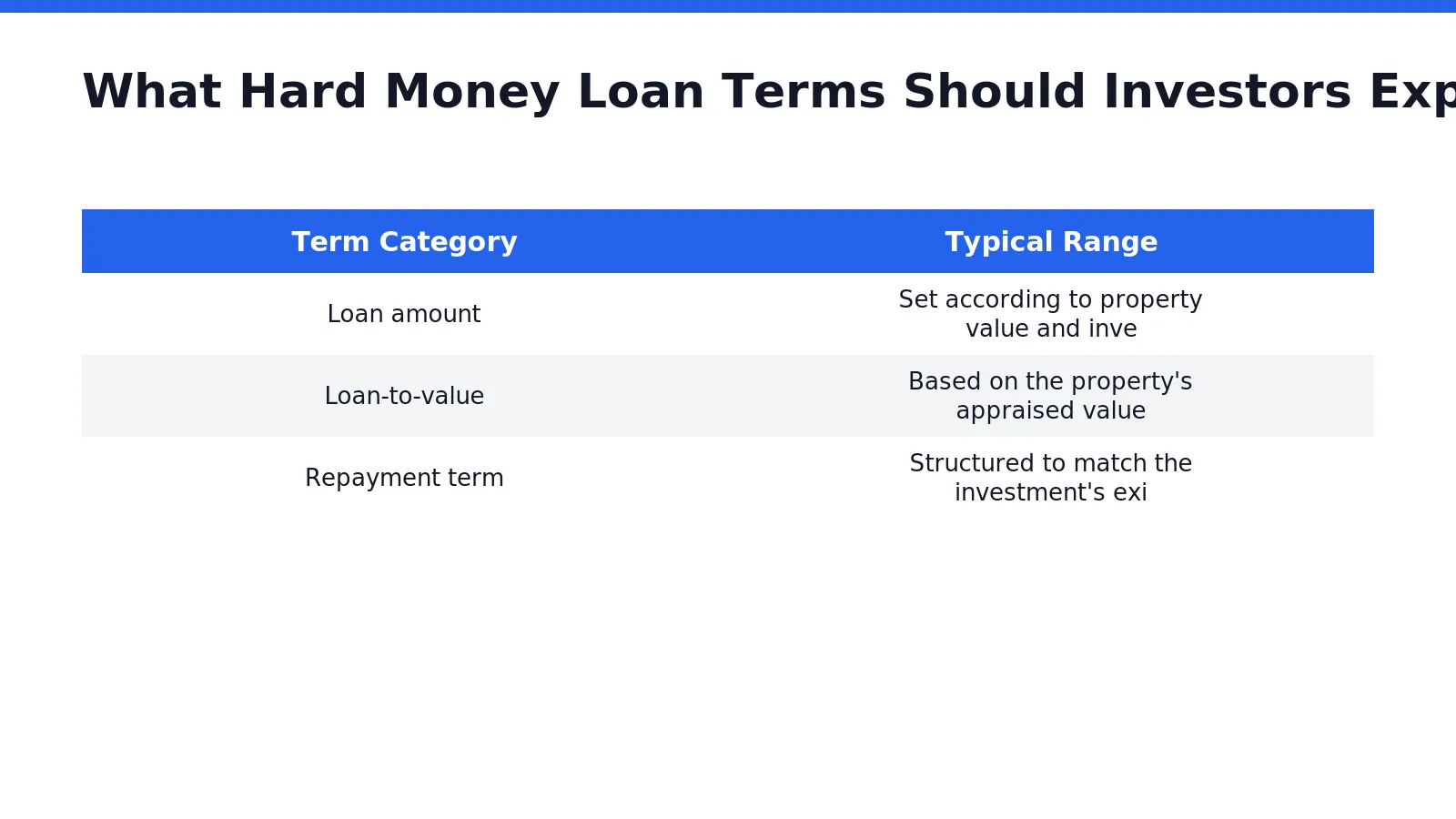
What Hard Money Loan Terms Should Investors Expect?
Hard money loan terms differ sharply from conventional mortgage terms in three areas: cost, timeline, and risk exposure. Real estate investors evaluating a fix-and-flip or bridge purchase should expect higher interest rates, shorter repayment periods, and greater foreclosure risk compared with traditional financing. Speed comes at a price. The same flexibility that lets an investor close on a distressed property in days, rather than weeks, arrives paired with significantly higher borrowing costs.
Some hard money advertisements promise funding of up to 80% of a property’s value in under a week. That pace appeals to investors competing for off-market deals or auction properties. The compressed underwriting window often means less room to negotiate rate or fee structures.
How do hard money loan terms compare across lenders?
Terms vary by lender, property type, and loan-to-value requirements. Investors should compare structures side by side before committing capital.
Munshi Capital Inc. provides commercial mortgage financing for business owners. Real estate investors across the USA, structuring loan programs around the income and value of the property.
What Is a Hard Money Loan compared to a bridge loan from a structured lender?
A hard money loan typically carries a compressed repayment window and steeper rates tied to speed of approval. A structured commercial loan, by contrast, spreads repayment across longer terms while still funding property acquisitions or refinances.
Investors weighing both options should request a direct cash offer on properties under consideration and compare total repayment cost against projected returns. Property owners uncertain about current market value can request your property assessment before selecting a financing path.

What Are Typical Hard Money Loan Requirements?
Hard money loan requirements center on the property itself, not on a real estate investor’s pay stubs or tax returns. Approval typically hinges on the asset pledged as collateral rather than exhaustive personal income documentation. That single distinction separates this financing from a conventional bank mortgage.
For a fund manager evaluating a multi-property acquisition. A first-time buyer eyeing a fixer-upper, the underwriting focus stays on value, not payroll history. Because approval weighs collateral so heavily, hard money loan terms tend to be less document-intensive than a traditional mortgage application. Lenders skip the weeks-long verification process that conventional underwriting demands, since the property’s worth carries the analysis.
What documentation does a hard money lender usually ask for?
Requirements vary by lender, but most requests fall into a few consistent categories:
- Property valuation or appraisal supporting the loan amount
- A basic entity or borrower profile, not a full income history
- Exit strategy details, such as a renovation timeline or resale plan
- Proof of collateral ownership or purchase contract
Seasoned investors familiar with hard money loans explained in broader lending contexts recognize this list as far shorter than a bank’s checklist.
Who qualifies for this type of financing?
Qualification suits short-term real estate needs, including property investments or situations where traditional financing falls short. Real estate investors weighing what is a hard money loan should still evaluate costs and risks carefully before applying, since speed comes at a price. Interest rates and fees run higher than conventional loans, and repayment windows stay short.
Munshi Capital Inc. maintains a customer-centric approach for real estate investors navigating these requirements. The firm values a client’s time and delivers clear, practical financial guidance during qualification, rather than burying investors in redundant paperwork. That steady, straightforward posture matters most when a deal’s timeline leaves little room for delay.
When Should Investors Use Hard Money Financing?
Speed dictates the answer. Real estate investors chasing a house flip or racing to close on an investment property before a competing offer lands often need capital faster than a bank can deliver it. Hard Money Loans Explained in simple terms: these are short-term, asset-based loans that lenders approve based on property value rather than a lengthy underwriting process.
That speed matters most in specific scenarios. What Is a Hard Money Loan used for, practically speaking? Investors turn to this financing when traditional mortgages fall short of the timeline or the property condition.
What situations call for hard money over a conventional loan?
Conventional financing works well for stable, move-in-ready properties with buyers who can wait weeks for approval. Hard money fits differently. It suits time-sensitive acquisitions, distressed properties, and deals where a bank’s standard criteria would derail the purchase entirely.
Common scenarios include:
- A property under contract with a tight closing deadline
- A distressed asset requiring renovation before it qualifies for permanent financing
- An investor competing against cash buyers in a fast-moving market
- A fund manager needing bridge capital between acquisition and long-term refinancing
Is hard money right for a long-term rental purchase?
Rarely. Hard money loans exist primarily to fund the purchase or renovation of investment properties, not to serve as permanent financing for a buy-and-hold rental. Investors typically pair the loan with an exit strategy, such as a sale or refinance into a conventional mortgage once repairs are complete.
Seasoned investors and fund managers evaluating hard money loan terms alongside traditional programs benefit from comparing both paths before committing capital. Munshi Capital Inc. works with this exact audience, structuring short-term, asset-based financing options for those who need speed without sacrificing sound underwriting.
What Benefits Do Hard Money Loans Offer Investors?
Hard money loans explained in simple terms: they trade speed for cost, giving real estate investors a financing path that closes faster than a conventional bank loan. Approval timelines shrink because underwriting centers on the property’s value rather than a lengthy personal financial review. For investors chasing a competitive deal, that speed often determines whether an offer gets accepted at all.
Hard money loan requirements also tend to be less rigid than conventional mortgage criteria. Faster approval and more flexible qualification standards rank among the clearest advantages these loans hold over traditional financing, even though the trade-off includes higher interest rates and shorter repayment windows.
What makes hard money loans attractive to seasoned investors?
Seasoned investors value control over timeline more than a rock-bottom rate. A property-based approval process lets them move on distressed assets, auction properties, or fix-and-flip opportunities before conventional buyers finish paperwork.
How does financing flexibility support fund managers and portfolio growth?
Fund managers juggling multiple acquisitions need financing that adapts deal by deal. Munshi Capital Inc. structures options spanning commercial mortgages through hard money loans, giving investors a full range of tools as each transaction evolves.
Comparing structures side by side clarifies the trade-offs:
Commercial property sellers looking to exit quickly benefit from a related option: Munshi Capital Inc. provides fast and fair cash offers on commercial properties, helping owners maximize net proceeds while sidestepping costly repairs and delays. Investors weighing a sale rather than a loan can request a direct cash offer to compare against traditional listing timelines before committing capital elsewhere.
What Risks Should Investors Weigh Before Borrowing?
Real estate investors face three documented downsides with hard money financing: higher interest rates, shorter repayment periods, and greater foreclosure risk. Hard Money Loans Explained in plain terms means weighing speed against cost. Rocket Mortgage’s analysis notes that the speed. Flexibility these loans provide come with significantly higher financing costs and elevated risk exposure.
For an investor rehabbing a rental property or acquiring a distressed asset on a tight timeline, that tradeoff carries real consequences. A missed repayment window on a short-term loan can trigger foreclosure faster than a conventional mortgage would allow. Fund managers deploying capital across multiple properties face compounded exposure if several loans come due at once.
Investopedia’s coverage of hard money lending underscores this point directly: borrowers should carefully weigh costs and risks before using this financing for short-term real estate needs, whether for property investment or situations where traditional financing falls short.
Is a hard money loan riskier than a traditional mortgage?
Yes, in most cases. Hard Money Loan Requirements typically involve less scrutiny of personal finances. That flexibility shifts risk onto the borrower through steeper rates and compressed timelines. Foreclosure risk rises when repayment periods shrink and interest costs climb faster than expected.
What should investors check before signing?
Investors should review the full set of hard money loan terms, not just the headline rate. Key factors include:
- Loan-to-value ratio and required collateral
- Repayment period length and balloon payment structure
- Interest rate compared to projected project return
- Exit strategy if refinancing or resale timelines slip
First-time buyers considering this route should request a direct cash offer comparison before committing. Seasoned investors evaluating a property’s true worth can request your property assessment to confirm the numbers support the borrowing cost.
How Do Investors Choose the Right Hard Money Lender?
Real estate investors choose a hard money lender by comparing loan structure, funding speed, and how well that lender understands property-based underwriting. Munshi Capital Inc., based in Walnut Creek, California, structures mortgage financing solutions for first-time home buyers, seasoned investors, and fund managers who need capital tied to income-producing property rather than personal credit history alone.
Selecting a lender starts with hard money loans explained in plain terms: short-term financing secured by the asset itself. Investors researching what is a hard money loan should look past marketing claims and examine how a lender values the property, sets loan-to-value limits, and prices risk.
Munshi Capital Inc. provides commercial mortgage financing, including hard money loan options, for business owners and real estate investors across the USA. Financing decisions rest on the income and value of the property being financed, not solely on personal financial history. This asset-based approach opens deals that traditional mortgage underwriting often rejects.
Investors comparing lenders should weigh:
- Speed of funding versus documentation demands
- Clarity around hard money loan requirements, including property valuation methods
- Transparency of hard money loan terms, covering rate, points, and repayment schedule
- Willingness of the lender to explain every fee before closing
What makes a hard money lender trustworthy?
Trustworthiness shows up in transparency, not promises. A dependable lender explains fees, valuation methods, and repayment schedules before an investor signs anything. Munshi Capital Inc. embodies a customer-centric approach, valuing a client’s time and offering clear, practical financial solutions for real estate transactions. Investors gain confidence when the final terms match what was communicated at the outset.
Fund managers and seasoned investors alike benefit from lenders who structure financing around property performance rather than rigid, one-size-fits-all credit formulas.
Conclusion
In closing, hard money loans represent a strategic financing mechanism for real estate investors seeking expedited capital deployment and flexible underwriting criteria. The combination of rapid funding timelines, asset-based lending structures, and reduced documentation requirements positions these instruments as valuable tools for time-sensitive acquisitions and value-add opportunities. Investors who understand the mechanics of hard money financing, including higher interest rates. Shorter terms, can leverage this capital source to execute transactions that traditional lenders cannot accommodate, thereby expanding their competitive positioning within the real estate marketplace.
Leave a Reply