
Understanding the differences between “jumbo loans” and conventional loans is crucial for potential homebuyers navigating the mortgage landscape. Jumbo loans exceed the conforming loan limits set by federal guidelines, which can impact the eligibility criteria and financial implications for borrowers. In this article, we will explore key distinctions between jumbo loans and conventional loans, providing insights into their eligibility requirements, interest rates, and how these factors influence one’s mortgage decisions. By grasping these differences, prospective buyers can make informed choices about the right mortgage for their financial situation.
Key Differences Between Jumbo Loans and Conventional Loans
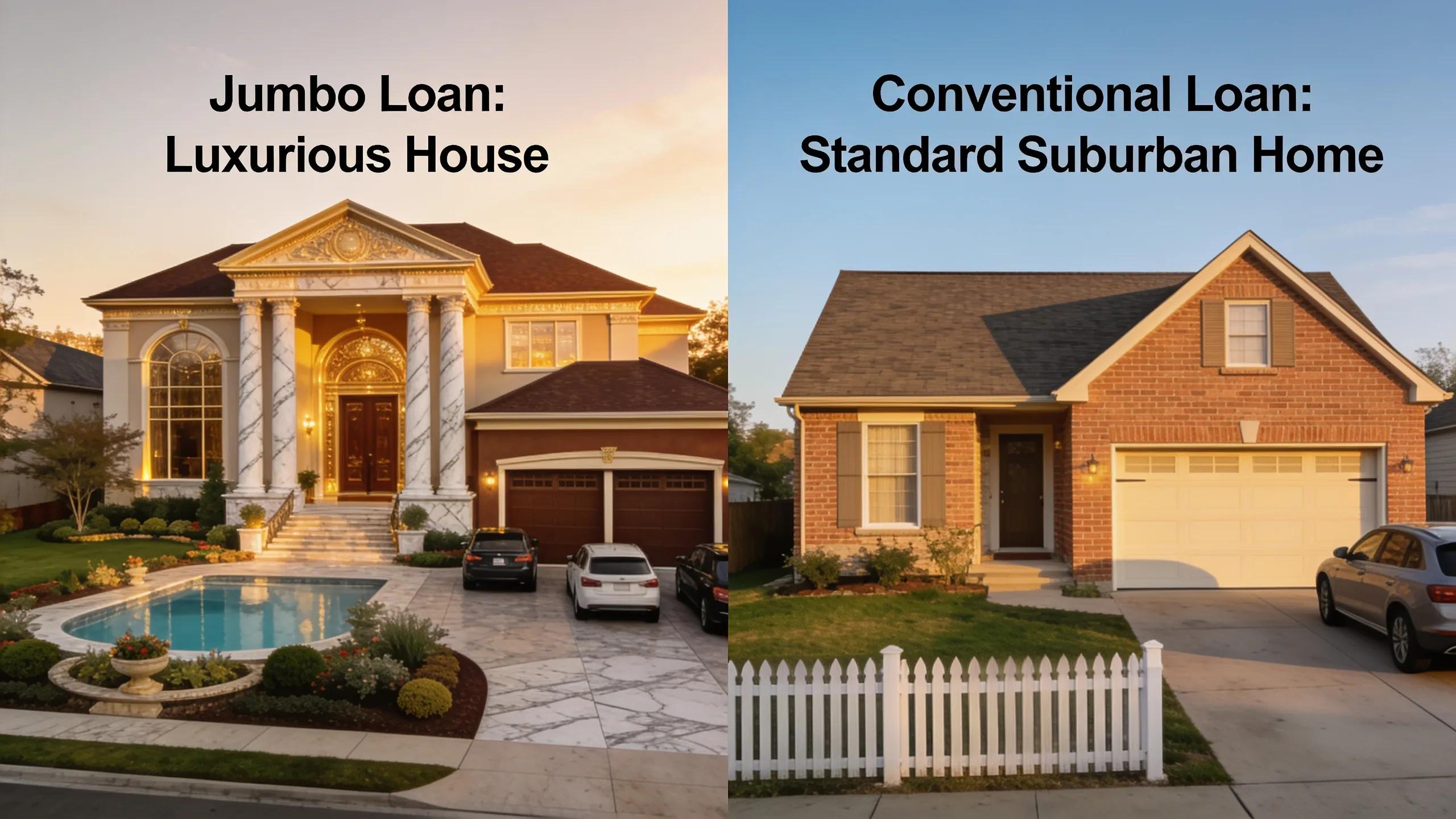
When comparing jumbo loans to “conventional loans”, several key differences emerge that can impact borrowers. These distinctions affect eligibility criteria, interest rates, and borrowing limits, ultimately influencing a homebuyer’s financing options.
Eligibility Criteria:
Eligibility criteria play a significant role when determining whether you qualify for a jumbo loan or a conventional loan. Below is a comparison outlining the critical requirements for each loan type.
This comparison highlights that jumbo loans generally have stricter credit score requirements and higher down payment percentages, presenting more challenges for borrowers compared to conventional loans.
Interest Rates:
Interest rates are a critical factor in mortgage decisions, and they can vary significantly between jumbo and conventional loans. In general, jumbo loans may have higher interest rates due to their increased financial risk to lenders.
Factors influencing interest rates include:
- Market Conditions: Economic factors and inflation can cause fluctuations in interest rates for both loan types.
- Loan Amount: Larger loan amounts in jumbo loans typically carry higher rates because of the absence of government backing.
- Creditworthiness: Borrowers with strong credit scores may secure lower rates, regardless of the loan type.
For many lenders, understanding these nuances is essential to securing the most favorable rates. “Munshi Capital Inc.” specializes in providing personalized mortgage solutions, including competitive rates for both jumbo and conventional loans.
Loan Limits:
The loan limits differ substantially between jumbo loans and conventional loans. Conventional loans are subject to conforming loan limits established by the Federal Housing Finance Agency (FHFA), while jumbo loans exceed these limits.
Research suggests that conforming loan limits play a pivotal role in the broader real estate market, as they directly influence credit accessibility and property valuations.
Conforming Loan Limits and Their Impact on Housing Prices We show that easier access to credit significantly increases house prices by using exogenous changes in the conforming loan limit as an instrument for lower cost of financing. Houses that become eligible for financing with a conforming loan show an increase in house value of 1.16 dollars per square foot (for an average price per square foot of 220 dollars) and higher overall house prices controlling for a rich set of house characteristics. Credit supply and house prices: evidence from mortgage market segmentation, M Adelino, 2012
- Conforming Loan Limits: As of 2023, the conforming loan limit for single-family homes is $726,200 in most areas, but it can be higher in certain high-cost regions.
- Jumbo Loan Limits: Jumbo loans do not have a maximum limit set by the government, allowing borrowers to secure larger amounts needed for expensive properties.
These distinctions can be significant for prospective homebuyers, particularly in expensive markets where property values exceed conventional loan limits.
Influence on Mortgage Decisions:
The differences in loan types can heavily influence mortgage decisions among buyers and investors. Here are a few critical considerations:
- First-Time Homebuyers: Generally find conventional loans more accessible due to lower down payments and lenient credit requirements.
- Real Estate Investors: Often prefer jumbo loans for financing higher-value properties without limitations on loan amounts.
Understanding these critical distinctions allows buyers to tailor their mortgage strategies according to their financial profiles and property needs.
What Defines Jumbo and Conventional Loans?
Defining jumbo and conventional loans involves exploring their characteristics, qualification criteria, and financial implications.
Characteristics:
Jumbo and conventional loans possess distinct characteristics that set them apart, impacting how borrowers can utilize them.
- Jumbo Loans: Typically associated with higher loan amounts, these loans are not backed by government-sponsored enterprises (GSEs). This lack of backing equates to higher perceived risk for lenders.
- Conventional Loans: These can be either conforming or non-conforming, with conforming loans following the government-established limits. They often feature more favorable interest rates due to backing by GSEs.
Qualification Criteria:
Both loan types require specific documentation and standards for qualification.
- Jumbo Loans: Require extensive documentation and financial analysis. Borrowers are expected to demonstrate a strong financial profile, including a robust income and substantial assets.
- Conventional Loans: Require less stringent documentation, especially if they fall within conforming limits, offering a more straightforward qualification process for many borrowers.
Financial Implications:
Choosing between a jumbo loan and a conventional loan carries different financial implications over the long term.
- Costs: Jumbo loans typically entail higher interest rates and may involve greater costs for insurance and other fees because of the larger principal amounts.
- Long-Term Planning: Owning a home financed by a jumbo loan could require more significant financial stability, leading to decisions based on long-term projections of income and valuation.
The choice between these two types of loans should reflect a borrower’s current financial situation and future plans.
How Are Jumbo Loans Characterized?
Jumbo loans can be characterized by their distinct lack of government backing and potential to cater to high-value properties that might not qualify for conventional financing.
What Are the Characteristics of Conventional Loans?
Conventional loans come with various features, primarily characterized by their alignment with government guidelines regarding maximum loan amounts, down payment options, and interest rates.
What Are the Primary Eligibility Requirements for Each Loan Type?
The main eligibility requirements differ based on the inherent risks and underpinnings of each loan type, with jumbo loans demanding higher credit scores and financial documentation.
Which Credit Score Thresholds Apply to Jumbo vs Conventional Loans?
Credit score thresholds are a significant factor in determining eligibility. Jumbo loans generally require a score of at least 700, whereas conventional loans begin around a score of 620.
How Do Down Payment Percentages Differ Between Jumbo and Conventional Loans?
Down payment requirements vary, with jumbo loans typically needing 20% or more, while conventional loans range from 3% to 20%, making conventional loans often more accessible for first-time buyers.
How Do Interest Rates and Costs Compare Between Jumbo and Conventional Loans?
Interest rates for jumbo loans are often higher than those of conventional loans, reflecting the increased risk associated with larger loan amounts. Understanding these differences can lead to informed decisions about borrowing.
What Impact Do Loan Limits Have on Cost Structures?
Loan limits create a framework for pricing and eligibility, significantly impacting the total cost of financing and the overall financial strategy when selecting a loan.
How Can Borrowers Choose Between Jumbo and Conventional Loans?
Ultimately, choosing between jumbo and conventional loans should involve careful consideration of personal financial situations, property values, and long-term financial goals. Engaging with financial professionals, such as those at Munshi Capital Inc., can provide valuable insights tailored to your unique financial profile.
Which Loan Type Best Serves First-Time Home Buyers Versus Investors?
First-time homebuyers typically favor conventional loans due to lower interest rates and accessible eligibility criteria. In contrast, seasoned investors often gravitate toward jumbo loans for higher-potential investments that exceed conventional limits.
What Are Key Refinancing Options for Jumbo and Conventional Loans?
Understanding refinancing options available for both jumbo and conventional loans can help borrowers maintain favorable terms on their mortgages as financial circumstances evolve.