
Local housing market data appears on city-specific mortgage pages covering twenty markets, including Los Angeles, San Diego, and San Francisco, CA. Munshi Capital Inc. publishes local loan programs, current rates, and market insights tailored to each metro. National Association of Realtors data at nar.realtor supplements city-level figures with regional and metro statistics.
Key Takeaways
- NAR produces comprehensive housing statistics at national, regional, and metro-market levels on nar.realtor.
- State and local REALTOR® associations provide detailed data for specific city and county markets.
- Jacksonville’s median home sale price reached $309K, up 2.8% year-over-year as of September.
- Florida Realtors® offers the most comprehensive statewide housing statistics and historical market data available.
What Do You Need Before Checking Housing Data?
Three items matter most: a target city, a clear goal, and a dependable source for numbers. Buyers, investors, and homeowners who skip this preparation often misread price trends or confuse national averages with what is happening on their own block. Context comes first; details follow.
National Association of Realtors (NAR) publishes housing statistics at the national, regional, and metro-market level, offering a broad reference point before anyone narrows focus to a single city. Starting here establishes a baseline. Without it, a local price swing can look dramatic when it actually tracks a wider regional pattern.
What goal should a buyer or investor set first?
Before pulling any figures, define the purpose: buying a first home, evaluating a rental property, or confirming current equity. Munshi Capital’s guidance is built on trust and transparent, borrower-first direction, which helps readers interpret market figures accurately rather than guessing at what a number means. Personalized guidance also helps borrowers nationwide clarify goals before research even begins. The data gathered afterward actually answers the right question.
Where should someone look for city-level numbers?
City-specific mortgage pages display local loan programs, rates, and market insights tailored to a specific metro area. These pages work well as a next step once a target city. Goal are set, bridging market sources into something usable for a single address. Pairing broad reports with municipal-level pages gives a clearer, two-layer view:
- Confirm the goal: purchase, refinance, or investment analysis.
- Review national and regional figures for baseline context.
- Open the city-specific page for localized loan and rate detail.
That sequence turns scattered local housing data and real estate stats into a usable, goal-driven picture.

How Do You Pull National and State-Level Reports?
National reports live in one place. The National Association of Realtors centralizes all current local housing data on nar.realtor, giving buyers, owners, and investors a single destination for national figures rather than scattered spreadsheets across dozens of sites. Pulling a report starts with a plan, since national and state data live in different systems entirely.
- Visit nar.realtor for any nationally tracked metric, from price trends to inventory counts.
- Identify whether the needed figure exists at the state, city, or county level, since national databases rarely break down that granular.
- Contact a state or local REALTOR association directly once county or metro-level detail is required; these groups hold indicators the national database does not publish.
- Cross-check figures against a second outlet, such as a statewide association report, before treating any single figure as final.
Where Does Florida-Specific Data Come From?
Florida housing figures come largely from Florida Realtors, which compiles some of the most comprehensive statewide statistics available anywhere in the state. Reports cover monthly, quarterly, and annual sales data across single-family homes, condos, townhouses, and manufactured housing. Buyers tracking a specific metro area should pair these statewide figures with city-level numbers for a complete picture.
Gathering accurate market sources takes patience, but skipping this step leads to decisions based on outdated or incomplete real estate stats. Once the numbers are in hand, financing timelines matter just as much as pricing data. Munshi Capital’s team guides borrowers through every step of the lending process with clarity and speed, which counts once state-level data shapes a purchase timeline. Buyers ready to move forward can request a direct cash offer. Owners weighing a sale should request your property assessment before setting an asking price.
How Do You Narrow Data to Your City?
City-level accuracy starts with ignoring statewide averages and drilling into the metro where a specific purchase or sale happens. National and state figures smooth over neighborhood swings, masking the exact movement that matters to a buyer in one zip code. Jacksonville illustrates the gap well: the median sale price there reached pricing varies over a recent three-month stretch, up 2.8% year over year, a trend that would never surface in a broad state report.
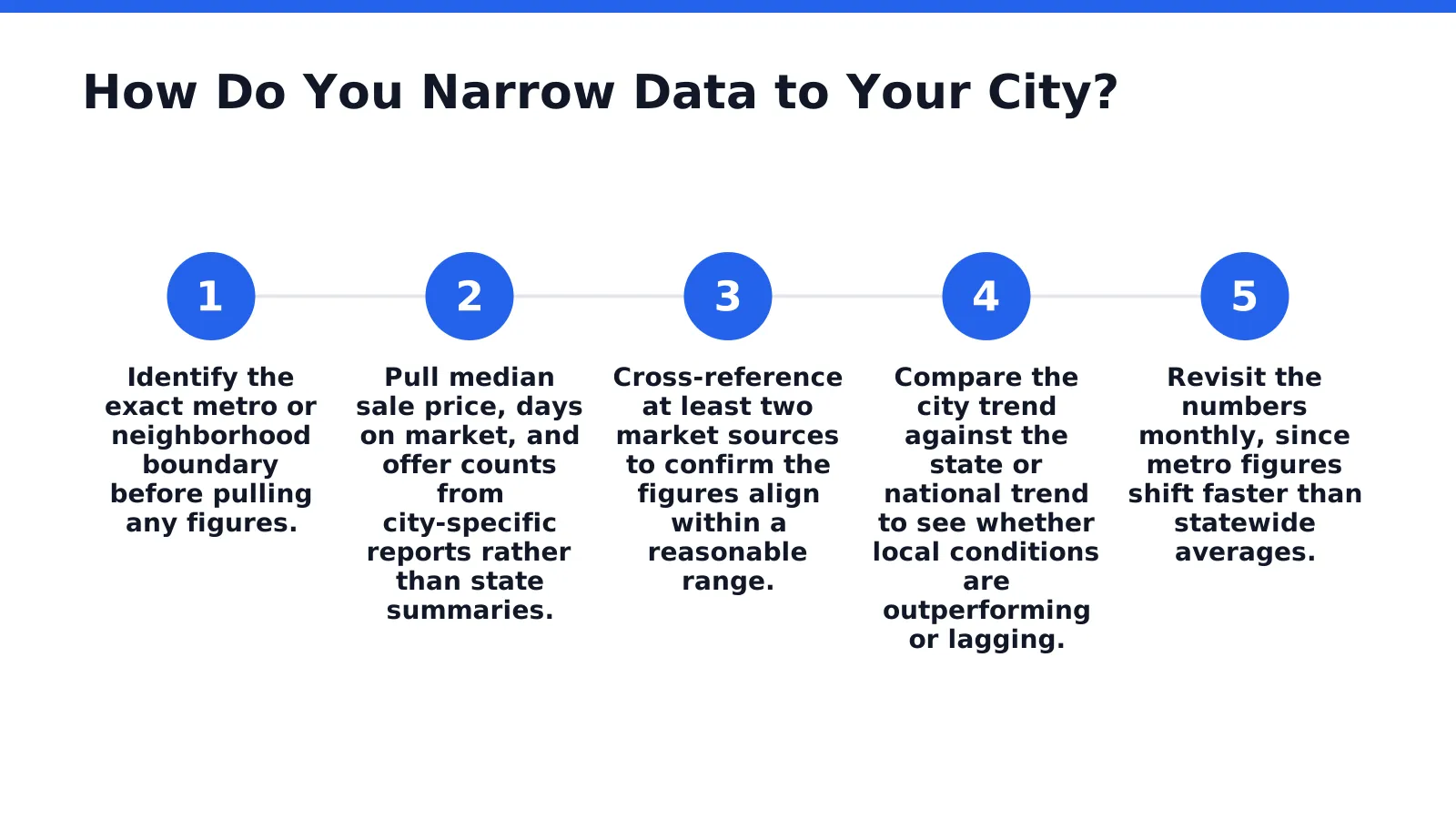
Narrowing local housing data to a single city takes a deliberate process, not a single search.
- Identify the exact metro or neighborhood boundary before pulling any figures.
- Pull median sale price, days on market, and offer counts from city-specific reports rather than state summaries.
- Cross-reference at least two market sources to confirm the figures align within a reasonable range.
- Compare the city trend against the state or national trend to see whether local conditions are outperforming or lagging.
- Revisit the numbers monthly, since metro figures shift faster than statewide averages.
Why do city numbers differ from state numbers?
State and national summaries blend fast-moving metros with slower ones, producing a flattened picture. A city like Jacksonville can post price growth above the state median while a neighboring metro stalls. Relying on broad real estate stats alone hides that divergence entirely.
How does Munshi Capital help buyers use this data?
Munshi Capital Inc. builds mortgage financing around the individual buyer, pairing loan program guidance with the local market context behind each decision. The company specializes in serving a wide range of borrowers, from first-time homebuyers to seasoned investors evaluating city-level trends. That combination of integrity, personalized service, and a broad loan lineup has made Munshi Capital a trusted choice for homebuyers and investors nationwide.
How Do You Verify Neighborhood-Level Home Values?
Verification starts with cross-checking at least two independent data sets before trusting any single figure. Relying on one number alone invites costly miscalculations when budgeting for a purchase or pricing a sale. The Zillow Home Value Index offers one dependable starting point. It measures monthly changes in property-level Zestimates. Captures values across a wide range of geographies and housing types, down to the neighborhood level.
Follow these steps to confirm accuracy before making a financial decision:
- Pull the neighborhood figure from the index and note the reporting date.
- Compare that figure against a second source, such as real estate stats published by a local association.
- Check whether the number reflects an average or a median, since the two track differently.
- Confirm the timeframe covered, since values shift month to month.
- Flag any gap larger than a few percentage points between sources for further review.
Why Does Average Value Differ From Median Sale Price?
Average home value and median sale price answer different questions. A metro area’s average value can sit below its median sale price because the average reflects the entire owned housing stock, not just recent closings. Confusing the two leads buyers and sellers to misjudge affordability or listing strategy in a given neighborhood.
What Comes After Confirming a Neighborhood’s Value?
Once a target neighborhood checks out across market sources, the financing conversation begins. Munshi Capital Inc. offers residential and commercial programs, including FHA, VA, USDA, and bank statement loans, structured around each client’s unique financial picture. Investors pursuing rental property in that same neighborhood gain access to specialized products like DSCR. Hard money loans, built for financing once the target location is identified.
What Mistakes Derail Accurate Market Reading?
Stale numbers top the list of errors that mislead buyers and investors. A figure from six months ago can misstate a neighborhood’s true direction, especially in markets shifting month to month. Raw sales counts cause a second common error: a single total, read without context, hides the trend underneath it. Jacksonville recorded 3,551 home sales in August, down from 3,581 the year before. That drop looks small until it’s measured against pricing and inventory trends happening at the same time. Context, not the count alone, tells the real story.
Mixing local housing data with national averages creates a third distortion, since metro-level shifts rarely mirror broad headlines. Treating every market sources platform as equally reliable compounds the problem further.
Why Does Data Timing Matter So Much?
Pricing and inventory move fast in competitive metros, and a report pulled even weeks late can misrepresent current conditions. Buyers comparing offers need figures reflecting today’s competition, not last quarter’s.
How Should Buyers Vet Their Sources?
Cross-check figures across multiple real estate stats providers before acting on any single report.
- Confirm the reporting date on every figure.
- Compare year-over-year change, not just a snapshot total.
- Match metro-level data to the specific neighborhood in question.
Munshi Capital Inc.’s transparency mission sets the same standard buyers should demand from their data. Modern technology paired with hands-on loan specialists keeps figures current, avoiding stale snapshots. That visibility supports pre-approvals that reflect real conditions, not outdated ones.
FAQ
Where can you find national housing statistics?
NAR centralizes current local housing data on nar.realtor, covering national, regional, and metro-market levels in one destination instead of scattered spreadsheets across multiple sites.
Where do you find city-specific market details?
Munshi Capital Inc. publishes city-specific mortgage pages for twenty markets, including Los Angeles, San Diego, and San Francisco, featuring local loan programs, current rates, and tailored market insights.
What should you determine before researching housing data?
Define a target city, a clear goal such as buying, refinancing, or investment analysis. A dependable data source, since skipping this step often leads to misreading price trends.
Conclusion
In closing, accessing reliable local housing market data equips you with the intelligence necessary to make informed decisions about your property investment or purchase. Armed with comprehensive market insights from the sources outlined above, you position yourself to negotiate confidently, identify opportunities strategically, and align your financing needs with current market conditions. When you combine this data-driven foundation with personalized mortgage guidance tailored to your unique financial situation, you establish a clear pathway toward achieving your real estate objectives with transparency and precision.
Leave a Reply