
Housing affordability continues shifting as interest rates, local inventory, and loan qualification standards move in tandem across markets from Los Angeles to Sacramento. Rising rates narrow buying power for many households, pushing buyers toward FHA, USDA, and bank statement loans. Munshi Capital Inc. offers loan programs designed for each market’s specific affordability conditions.
Key Takeaways
- Higher mortgage rates significantly worsen housing affordability challenges for buyers nationwide today.
- First-time homebuyers face increased barriers to entry as down payment requirements strain household budgets.
- Investor-focused financing options like DSCR loans provide alternative pathways for those seeking rental property investments.
- Transparent loan guidance helps borrowers navigate diverse programs to find solutions matching their unique financial situations.
Why Is Housing Affordability Still So Tight?
Persistent strain, not a temporary dip, defines the current market. Families across income brackets face a squeeze that predates recent headlines, touching individuals, households, and entire communities at once. The pressure shows up differently depending on region. The underlying math stays the same everywhere: homes cost more than paychecks can cover.
What’s driving the affordability gap?
A widening distance between median income and home prices sits at the root of the problem. Wages have grown, but not fast enough to keep pace with housing costs, pushing ownership further out of reach for a growing share of buyers. This gap didn’t open overnight. It built up over years of prices climbing faster than paychecks, a trend that recent mortgage rate relief has only partially offset.
Who feels the squeeze hardest?
First-time buyers absorb the brunt of it, lacking existing equity to offset high entry costs. Investors face a different calculus, weighing financing terms against tightening margins. Three groups consistently struggle most:
- Entry-level buyers with limited savings and no home equity to leverage
- Middle-income households priced out of markets where costs rose faster than wages
- Investors recalculating returns as borrowing costs shift
Munshi Capital Inc. built its lending approach around this reality. Loan programs serve first-time buyers and seasoned investors alike, recognizing that each group needs a different financing path through the same tight market. Personalized guidance and transparent underwriting matter most when margins are thin and timing counts. Buyers facing this squeeze can request a direct cash offer to understand their options before committing to a purchase.

How Do Regional Housing Costs Compare Today?
Regional cost gaps shape what buyers can afford far more than national averages suggest. State-level markets like California illustrate the divide clearly: housing costs there have stayed above the national average for years and have climbed even further in recent periods, according to the California Housing Affordability Tracker (2nd Quarter 2026). That trend changes the math for anyone comparing a national headline rate to a local purchase price.
Mid-tier homes in California run at more than double the price of a typical mid-tier home nationwide, per the same tracker (mid-tier reflecting the 35th to 65th percentile of home values). A buyer earning the same median income in two different states faces drastically different paths to ownership once that gap enters the equation.
Why does location change affordability so much?
Local price levels, not just mortgage rates, determine whether a paycheck stretches far enough to buy. A borrower in a high-cost state needs a larger down payment and a bigger loan simply to match the same square footage available elsewhere for less.
Does a higher-cost market always mean lower affordability?
Not necessarily. Affordability depends on the relationship between local income levels and local prices, not price alone. Some high-cost regions still offer workable housing affordability for borrowers with strong credit profiles or alternative income documentation, such as bank statement loans.
Because cost gaps vary so widely by city and state, generic rate quotes rarely tell the full story. Munshi Capital Inc. structures financing around each borrower’s actual market. Income picture, helping clients across the country pursue ownership confidently despite regional price swings. Sellers facing similar pressures from shifting local costs can also take the next step and request a direct cash offer. Buyers weighing a purchase should request your property assessment before committing to a price point.

What Income Do You Need To Buy Now?
Qualifying income depends less on sticker price and more on the mortgage rate attached to it. Elevated borrowing costs have stood as one of the main barriers keeping buyers out of the market, a trend Trends in Housing Affordability: Who Can Currently Afford to Buy a Home? identifies as a persistent driver of the gap between paychecks and purchase prices. That gap is the real obstacle, not the home price alone.
Conditions have shifted recently. Mortgage rates dropping below 6.5% have eased affordability pressure for many prospective buyers, according to the same report. That threshold matters: rates under 6.5% put a median-priced home within reach for a wider pool of households than during the preceding rate environment.
How does a lower mortgage rate change the required income?
A lower rate typically reduces the monthly payment, which can lower the gross income needed to qualify under standard debt-to-income guidelines. Buyers who were priced out at higher rates often find themselves back in range once rates below 6.5% apply to their target purchase price.
What if traditional income documentation doesn’t fit my situation?
Self-employed borrowers, investors, and business owners don’t always show qualifying income on a standard W-2 or pay stub. Munshi Capital’s DSCR and hard money loan products address this by evaluating property cash flow or asset value rather than relying solely on conventional income documentation. This gives borrowers with nontraditional financial pictures additional paths to qualify.
Three factors determine the income threshold for any given buyer:
- Current mortgage rate applied to the loan
- Target home price relative to housing costs in the local market
- Median income benchmarks for the metro area in question
Buyers weighing these factors should request a direct cash offer on an existing property before locking in a new purchase, converting equity into immediate qualifying power.
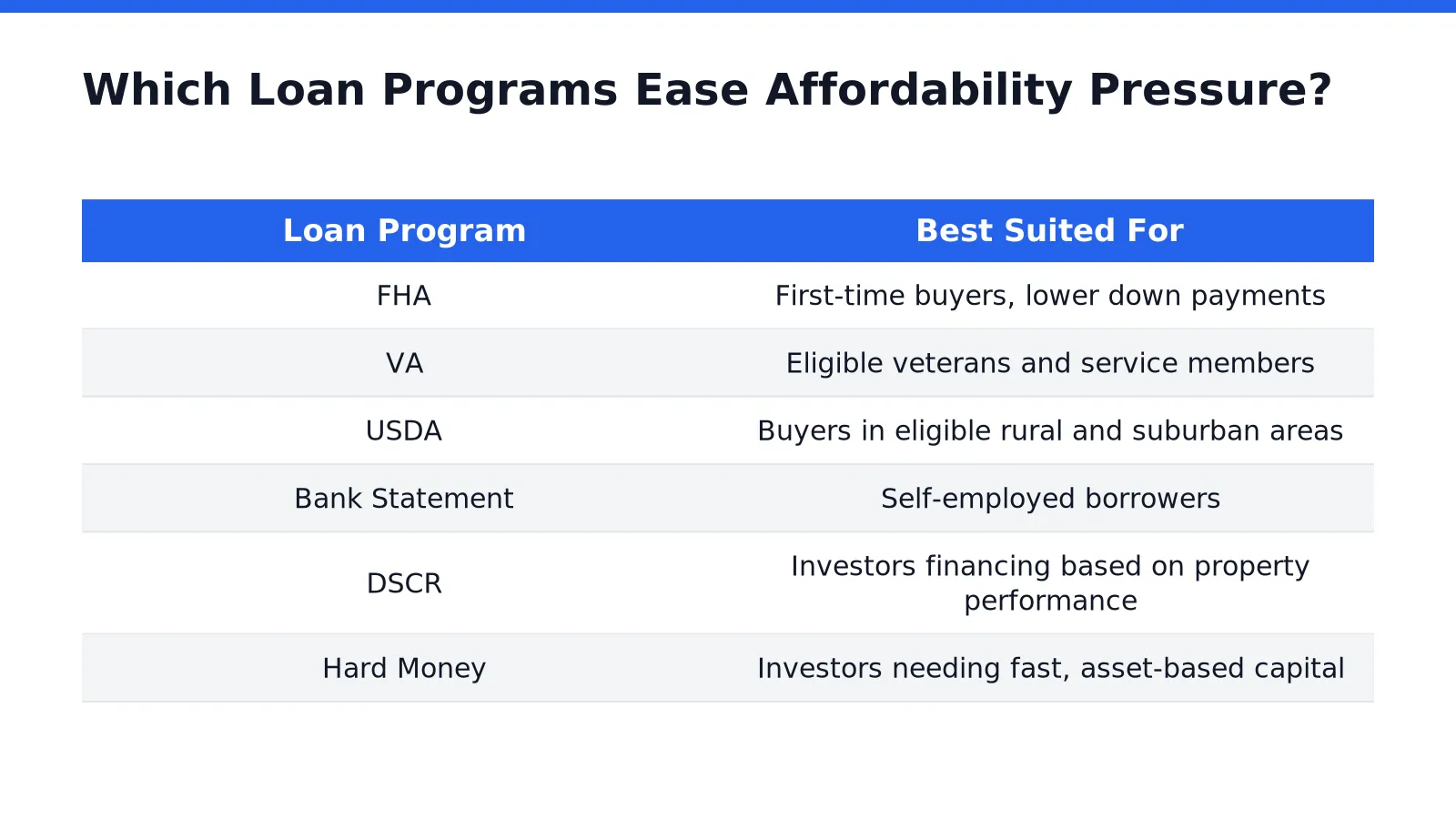
Which Loan Programs Ease Affordability Pressure?
Loan structure determines whether rising costs shut a buyer out or keep a deal alive. Munshi Capital Inc. offers a full suite of residential and commercial programs, including FHA, VA, USDA, and bank statement loans, each built for a different financial situation. Matching the right product to a borrower’s income, credit profile, and property type does more to protect housing affordability than waiting for rates to drop.
Which loan type fits a first-time buyer with limited savings?
FHA and USDA programs typically serve buyers with smaller down payments or tighter credit histories. VA loans serve eligible service members and veterans. These options widen access without requiring a borrower to meet rigid conventional underwriting standards, which matters when median income growth lags behind rising home prices.
What financing works for self-employed borrowers or investors?
Bank statement loans qualify self-employed applicants using deposit history instead of traditional tax documentation. For investors, DSCR (debt service coverage ratio) and hard money loans evaluate a property’s income potential rather than relying solely on personal income. This structure matters for investors managing multiple properties, where housing costs fluctuate by market and personal income alone fails to tell the full story.
The table below outlines how these programs generally serve different borrower types:
Speed matters as much as structure. Munshi Capital Inc. pairs this program range with modern technology and hands-on loan specialists, delivering quick pre-approvals and full visibility into loan status. That transparency removes uncertainty for buyers and investors trying to plan around shifting costs and timelines.
What Should Buyers Do Next?
Buyers facing today’s market need a lender who removes guesswork, not one who adds to it. Munshi Capital Inc. guides borrowers through a straightforward application, underwriting, and closing process built to avoid hidden surprises. That structure matters most when housing affordability pressures are already squeezing budgets and timelines.
A clear process starts with clear communication. Munshi Capital emphasizes honest, consistent communication at every stage of the lending process. Borrowers understand exactly where their loan stands and what comes next. This clarity helps buyers weigh decisions against their median income. Long-term financial plans, rather than guessing at loan terms or closing costs.
How does a lender help with rising housing costs?
A lender built around clarity helps buyers plan realistically against rising housing costs instead of reacting to them late. Munshi Capital’s mortgage financing centers on the borrower, offering guidance through every loan program with clear answers and dependable service. That guidance gives buyers room to compare options before committing.
What makes a mortgage partner trustworthy?
Trust comes from consistency, not promises. Munshi Capital’s approach is rooted in clarity, honesty, and a service-driven ethos, positioning the company as a reliable partner throughout the loan journey.
Buyers ready to move forward have two practical next steps:
- Property sellers exploring a sale can request a direct cash offer to understand their options quickly.
- Homeowners weighing timing can request your property assessment before making a final decision.
FAQ
What causes the housing affordability gap?
Median incomes grow slower than home prices, widening the distance between wages and housing costs over years. Recent mortgage rate relief only partially offsets this long-building trend.
Who struggles most with affordability challenges?
Entry-level buyers lack equity to offset high costs, middle-income households get priced out of fast-rising markets, and investors recalculate returns as borrowing costs shift.
How does Munshi Capital help buyers facing affordability pressure?
Munshi Capital Inc. offers tailored loan programs, including FHA, USDA, and bank statement loans, matched to each market’s affordability conditions. Transparent underwriting and personalized guidance support first-time buyers and investors alike.
Conclusion
In closing, housing affordability remains a complex challenge requiring strategic financial solutions tailored to individual circumstances. Borrowers navigating this landscape benefit from transparent guidance and access to diverse loan programs designed to accommodate varying financial profiles. By partnering with lenders committed to clarity and personalized service, prospective homeowners and investors position themselves to make informed decisions and secure financing aligned with their specific objectives. The path forward demands both honest communication and comprehensive options, cornerstones that enable borrowers to achieve their real estate goals with confidence and understanding.
Leave a Reply