
Rising inflation pushes mortgage rates higher because investors demand greater yields on mortgage-backed securities to offset shrinking purchasing power. The Federal Reserve often raises the federal funds rate in response. For borrowers nationwide, this translates directly into larger monthly payments and higher total interest paid over a loan’s full term.
Key Takeaways
- Inflation drives investors to demand higher yields on mortgage-backed securities, directly increasing mortgage rates.
- Federal Reserve rate hikes in response to inflation surge cause mortgage costs to rise significantly.
- Lenders increase rates to protect against declining value of future loan payments during inflationary periods.
- Higher mortgage rates reduce borrowing power, making transparent guidance from specialists essential for homebuyers.
Why Does Inflation Push Mortgage Rates Higher?
Rising prices do not set mortgage rates directly, yet the two move together with striking consistency. A report titled “How does inflation affect interest rates?” notes that inflation tends to correlate with rising mortgage costs even without a direct causal link. For homebuyers and investors in Walnut Creek, this connection explains much of the rate volatility affecting affordability in the inflation mortgages market.
Two forces drive this relationship. First, lenders price loans based on real rates, the return investors demand after accounting for inflation’s erosion of purchasing power. The report “What Happens to Mortgage Rates If Inflation Surges Again?” states that inflation erodes the future purchasing power of money. Lenders raise rates to protect their eventual repayment value. Second, the Federal Reserve intervenes directly.
Does the Federal Reserve cause mortgage rates to rise?
Not directly, but its actions ripple through the lending market. As prices climb, the Federal Reserve raises the federal funds rate to bring inflation under control, according to the same inflation-rates report. That benchmark increase pushes borrowing costs higher across mortgage products, even though the Fed does not set mortgage rates itself.
What does this mean for buyers weighing a purchase now?
Higher borrowing costs translate into larger monthly payments and more interest paid over a loan’s lifetime. Consider the chain reaction:
- Consumer prices rise
- The Federal Reserve lifts the federal funds rate
- Investors demand higher yields to offset lost purchasing power
- Mortgage rates climb in response
Borrowers watching inflation data gain an early signal for where financing costs are headed, allowing more strategic timing of purchase or refinance decisions.

What Are Real Rates And Why They Matter?
Real rates measure what borrowing truly costs after subtracting inflation from the quoted mortgage rate. For a Walnut Creek homebuyer, that distinction separates a loan that erodes savings from one that builds equity efficiently. Inflation mortgages move in tandem with broader economic conditions, and understanding that link protects buyers from unpleasant payment surprises.
Mortgage rate movement is not random. Rates respond to economic forces that play out over months, not days. This pattern matters because panic over a single rate headline often leads to poor timing decisions. Patience, grounded in understanding the cycle, serves borrowers better than reacting to daily noise.
Inflation expectations drive much of this cycle. When inflation or expectations of future inflation rise, investors demand higher yields on mortgage bonds. Lenders pass that demand along, often resulting in higher rates for new borrowers. The connection is indirect but consistent: bond markets price in anticipated inflation, and mortgage rates adjust accordingly.
Why Do Higher Rates Cost Borrowers More Over Time?
Higher mortgage rates increase borrowing costs in two ways: larger monthly payments and more total interest paid across the loan term. A borrower financing the same home at a higher rate pays more every month. Significantly more interest by the time the loan is paid off. This compounding effect makes rate timing a financial decision, not just a convenience issue.
How Should Buyers Respond to Rising Real Rates?
Buyers facing climbing real rates should focus on loan structure rather than waiting for a perfect entry point. Reviewing loan programs suited to current conditions, including fixed and adjustable options, helps manage exposure. Borrowers who understand this dynamic enter negotiations with realistic expectations and stronger financial footing.
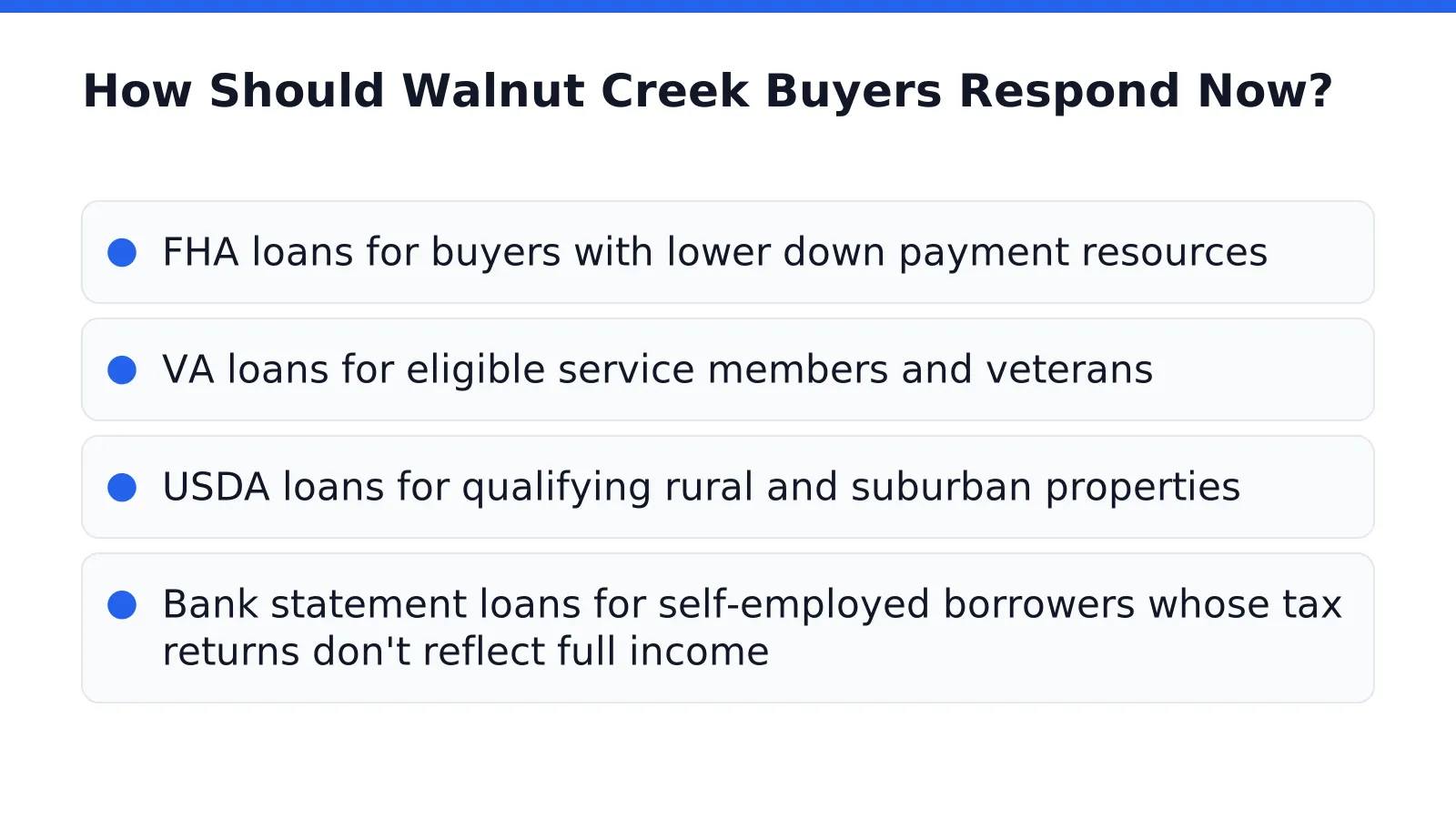
How Should Walnut Creek Buyers Respond Now?
Preparation beats prediction in a shifting rate environment. Walnut Creek buyers gain the most ground by locking in financing readiness rather than guessing where inflation mortgages head next. Munshi Capital Inc. structures loan options for both first-time purchasers and experienced investors navigating today’s conditions. Readiness looks different depending on where a buyer stands.
What loan options exist for different financial situations?
Not every borrower fits a standard mortgage box, and that’s the point. A full suite of residential and commercial programs addresses varied circumstances directly:
- FHA loans for buyers with lower down payment resources
- VA loans for eligible service members and veterans
- USDA loans for qualifying rural and suburban properties
- Bank statement loans for self-employed borrowers whose tax returns don’t reflect full income
Matching the right program to a borrower’s actual financial picture, rather than forcing a one-size-fits-all approach, keeps monthly payments manageable even as borrowing costs fluctuate.
Why does speed matter when rates are moving?
Rate windows close fast. Fast, transparent processing pairs modern technology with hands-on loan specialists, letting buyers act the moment a favorable rate appears instead of losing it to delay. Quick pre-approvals give buyers a concrete number to shop with, rather than a vague estimate that falls apart at the negotiating table.
Full visibility into loan status throughout underwriting removes the guesswork that often stalls Walnut Creek transactions. Buyers who understand where their application stands, and why, make sharper decisions about locking rates versus waiting. Prepared sellers in the same market often choose to request your property assessment before listing, matching the same clarity-first approach on the other side of the transaction.

Which Loan Programs Fit Rising-Rate Markets?
Rate volatility rewards borrowers who match financing structure to timeline rather than chasing a single “best” rate. Munshi Capital Inc. built its loan suite around that reality, offering programs suited to different risk tolerances and holding periods as inflation-driven mortgage costs shift month to month.
Investors facing tighter timelines need speed and flexibility more than a rock-bottom rate. Munshi Capital Inc. provides DSCR and hard money loans designed for rate-sensitive, time-driven deals, letting qualified investors move on a property before financing conditions change again.
- DSCR loans: Qualify based on property cash flow rather than personal income, useful when real rates squeeze traditional debt-to-income math.
- Hard money loans: Short-term, asset-based financing for investors who need to close fast and refinance later into permanent terms.
Which loan program works best when rates are climbing?
No single product wins in every rate environment. Investors chasing speed often lean on hard money or DSCR financing. Owner-occupant buyers typically benefit from FHA, VA, USDA, or bank statement programs that stabilize monthly borrowing costs over the life of the loan.
Does Munshi Capital Inc. help borrowers choose between programs?
Personalized guidance from a dedicated team helps borrowers nationwide secure financing that matches their specific goals, even as rates shift. That guidance matters more in rising-rate markets, where the wrong product can cost thousands over a loan’s term.
Financing here is built around the borrower, not forced into a single mold. Clear answers accompany every loan program Munshi Capital Inc. offers, and that wide product range, paired with a consistent commitment to integrity, has made the company a trusted choice for homebuyers and investors across the country.
What Should You Do Before Rates Shift?
Preparation now determines affordability later. Rate movement rewards borrowers who act early and penalizes those who wait. Walnut Creek buyers and investors watching inflation mortgages headlines face a narrow window: lock in terms before costs climb further, or risk higher monthly payments down the road.
Why does early preparation matter so much?
If inflation surges again, mortgage rates will likely rise in response, making a wait-and-see approach costly. Buyers weighing a purchase now versus later gain the most by locking in financing before another inflationary wave pushes borrowing costs higher. Delaying a decision does not protect against rate increases; it simply postpones the inevitable comparison between today’s terms and tomorrow’s.
Munshi Capital Inc. builds every client relationship on a mission of transparency, so clarity and honest communication guide each step, especially when rates are moving. That commitment shows up in three practical ways:
- A straightforward application process that sets clear expectations from day one.
- Transparent underwriting that removes hidden surprises for borrowers under time pressure.
- A borrower-first approach rooted in clarity and honesty, positioning Munshi Capital as a reliable partner when market conditions are uncertain.
What’s the first concrete step to take?
Start the conversation before rates move again, not after. Buyers facing real rates that erode purchasing power should evaluate financing options while terms remain favorable. Those ready to act on a property sale can request a direct cash offer. Homeowners unsure of current value should request your property assessment to understand standing before borrowing costs rise further.
FAQ
Why does inflation push mortgage rates higher?
Inflation erodes the future purchasing power of loan repayments, so lenders raise rates to protect returns. Investors also demand higher yields on mortgage-backed securities to offset shrinking purchasing power, driving rates upward.
Does the Federal Reserve set mortgage rates directly?
No, the Federal Reserve raises the federal funds rate to control inflation, and this benchmark increase pushes borrowing costs higher across mortgage products without the Fed setting mortgage rates itself.
How should borrowers respond to inflation-driven rate changes?
Borrowers should watch inflation data for early signals on financing costs. Rely on transparent, personalized guidance from Munshi Capital’s loan specialists to navigate rate volatility and secure the right loan program confidently.
Conclusion
In closing, inflation’s influence on mortgage rates underscores the critical importance of securing expert guidance when navigating the lending landscape. Understanding these economic dynamics empowers borrowers to make informed decisions about timing and loan selection. Munshi Capital Inc. remains committed to providing transparent, straightforward counsel throughout your financing journey, ensuring you access the right loan program tailored to your unique financial circumstances and objectives.
Leave a Reply