
Short-term rental property financing relies on specialized loan programs, including DSCR loans, that qualify borrowers using projected rental income rather than personal income documentation or tax returns. Munshi Capital Inc. structures these loans for Airbnb and VRBO investors nationwide, pairing flexible underwriting with fast pre-approvals and transparent terms throughout application, underwriting, and closing.
Key Takeaways
- Short-term rental properties require specialized financing distinct from traditional primary residence mortgages
- DSCR and hard money loans provide flexible underwriting tailored specifically to investor income profiles
- Transparent lender guidance clarifies investment goals and long-term strategy before securing financing
- Quick pre-approvals and full loan status visibility streamline the STR property financing process
Why Is Financing A Short-Term Rental Different?
Risk, not rate sheets, separates short-term rental financing from a standard home loan. Lenders view a vacation rental purchase through a different lens than they view a primary residence. That lens shapes every underwriting decision that follows.
The gap comes down to repayment priority. During a financial hardship, a borrower pays the mortgage on a primary home first and worries about an investment property payment second. Banks know this pattern well. That behavior is normal. It is also the main reason loans for Airbnb properties carry more friction than a loan for a house someone actually lives in.
Why do lenders treat investment properties as higher risk?
Lenders classify investment properties as secondary risk because the payment competes for priority against a borrower’s own housing. A missed payment on a rental is statistically more likely than a missed payment at home. That risk gets priced into underwriting standards, down payment requirements, and documentation demands.
Munshi Capital Inc. specializes in mortgage financing built for this exact gap, serving borrowers ranging from first-time homebuyers to seasoned investors pursuing short-term rental purchases. The firm’s Airbnb loans and broader investment property lending programs exist because conventional underwriting was never designed around nightly rental income.
What loan types fit a short-term rental purchase?
- DSCR loans: qualify the property on projected rental income rather than personal tax returns
- Hard money loans: fund time-sensitive acquisitions outside conventional owner-occupied rules
- Residential and commercial programs: tailored to the borrower’s broader financial picture
These products address the repayment-priority problem directly, giving investors financing options built for rental cash flow instead of owner-occupied assumptions.

Which Loan Programs Fit Short-Term Rental Investors?
Several loan categories work for vacation rental purchases, each suited to a different financial profile. Munshi Capital Inc. offers a comprehensive suite of residential and commercial loan programs, including FHA, VA, USDA, and bank statement loans. These programs can apply toward short-term rental financing for first-time buyers and seasoned investors alike. Choosing the right structure depends on income documentation, down payment, and long-term strategy.
Investors with steady W-2 income may qualify through FHA, VA, or USDA programs. Self-employed hosts often turn to bank statement loans instead. Tax returns rarely reflect true cash flow from a rental business. For those scaling a portfolio, DSCR and hard money products offer income-based qualification without personal income verification at all.
What’s the Difference Between DSCR and Bank Statement Loans?
DSCR loans qualify borrowers using the rental property’s projected income rather than personal earnings, making them a fit for investment property lending on multiple units. Bank statement loans, by contrast, rely on deposits shown across months of banking history. Munshi Capital provides guidance through every loan program with clear answers, helping investors weigh DSCR, bank statement, and hard money options against their specific deal.
Can Airbnb Income Qualify a Buyer for a Mortgage?
Yes, through programs built around property cash flow rather than traditional pay stubs. STR-focused loan products can combine a 30-year fixed structure with flexible underwriting and no tax-return requirements, which speeds closings for rental buyers pursuing airbnb loans.
A wide array of loan products, paired with a steady commitment to integrity, makes Munshi Capital a dependable choice for investors financing Airbnb properties nationwide. Comparing programs side by side before applying prevents costly mismatches between loan terms and investment goals.
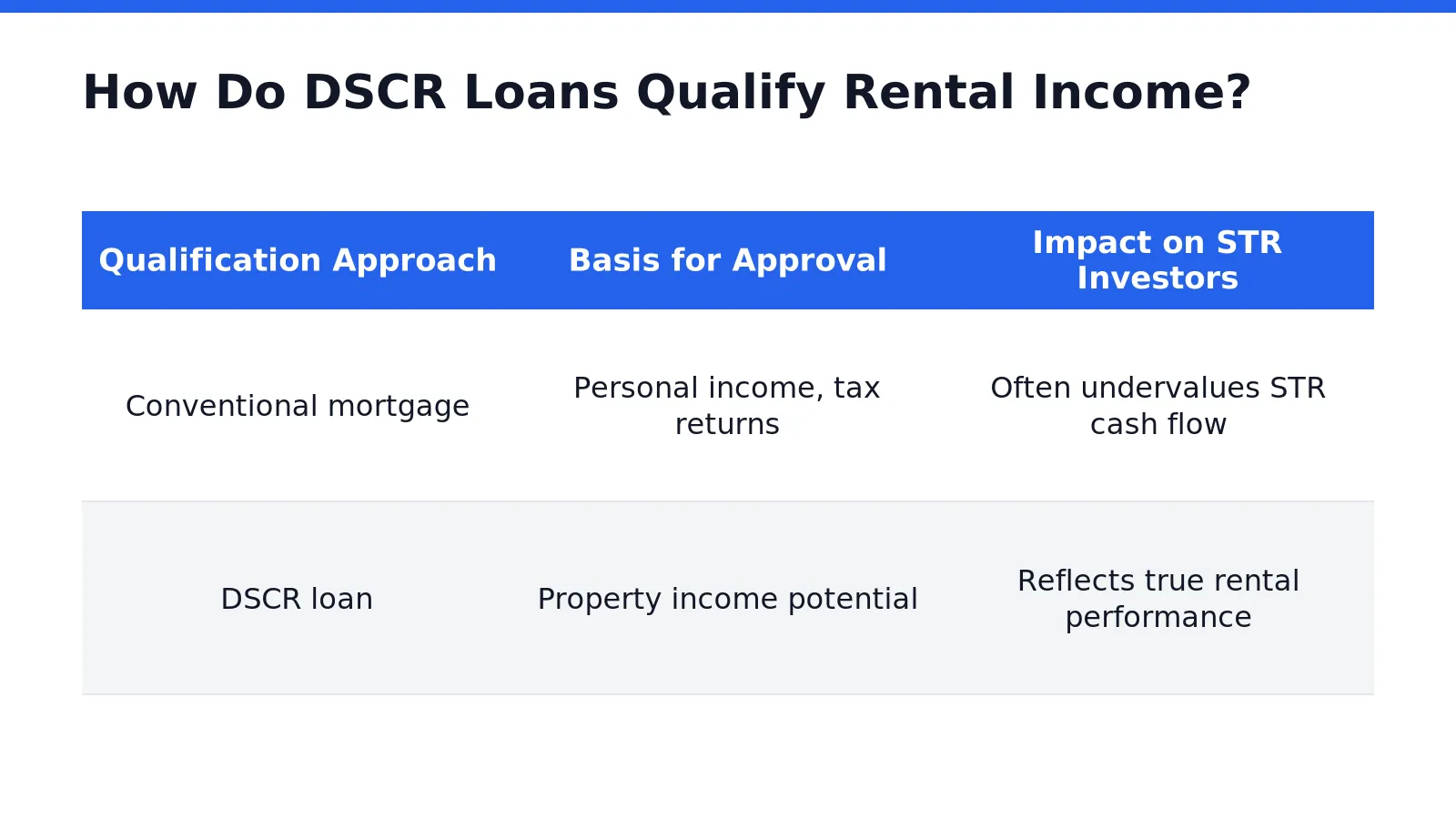
How Do DSCR Loans Qualify Rental Income?
DSCR loans qualify borrowers using the property’s income potential instead of personal tax returns. This approach to investment property lending opens the door for investors who have already maxed out conventional mortgage limits. Property cash flow, not a pay stub, carries the application.
That distinction matters most for short-term rental owners. Conventional underwriters frequently misjudge vacation rental income, pricing it against long-term rental comparables that understate what the property actually earns. An Airbnb generating strong monthly revenue can get discounted to a fraction of that figure, or dismissed outright, under standard mortgage guidelines. The result is a lower approved loan amount than the asset justifies.
What Makes STR Income Different from Long-Term Rental Income?
Short-term rentals generate revenue in a different pattern than a standard 12-month lease. Nightly and weekly bookings create seasonal swings and higher gross income. Conventional lenders rarely have a framework built for that variability. DSCR qualification, built around actual property performance, accounts for this cash flow pattern more accurately.
Why Does Qualification Method Matter for Investors?
The qualification method determines how much an investor can borrow and how many properties they can hold at once. Choosing income-based underwriting over tax-return scrutiny directly affects scale.
Munshi Capital Inc. built its mortgage programs around a mission of transparency. Borrowers receive a clear explanation of how property income drives DSCR approval. A dedicated loan specialist walks each client through the math behind short-term rental financing decisions. Investors evaluating a new acquisition. Refinancing an existing one, can request a direct cash offer discussion around how their property’s income profile supports qualification under this model.

What Challenges Should Airbnb Investors Expect?
Market volatility tops the list of obstacles facing short-term rental buyers. Reading the economic climate and relying on hard data stand out as essential steps for anyone pursuing short-term rental financing. Skip that groundwork, and a seemingly profitable property can turn into a cash-flow problem within months.
A second challenge involves strategy drift. Investors who never define clear goals often end up with loan terms mismatched to their actual plans. Long-term appreciation calls for different financing than a property built for maximum short-term income. Locking in the wrong structure early limits flexibility later, sometimes for years.
Why Does Loan Structure Matter So Much for Short-Term Rentals?
Loan structure determines how much breathing room an investor has when occupancy dips or seasons shift. A defined investment goal and long-term strategy guide the decision-making process. Help secure financing matched to the property’s real purpose. Without that clarity, borrowers risk locking into terms that work against their cash flow.
What Keeps Financing From Turning Into a Surprise?
Hidden fees, shifting underwriting requirements, and unclear timelines frustrate investors pursuing investment property lending. Munshi Capital Inc. built its application, underwriting, and closing process to remove those surprises, favoring clarity at every stage. That same borrower-first guidance helps clients sidestep the pitfalls that commonly derail Airbnb loans before closing.
Common friction points include:
- Misreading local market data before locking a purchase price
- Choosing loan terms disconnected from actual rental strategy
- Underestimating how underwriting delays affect closing timelines
- Overlooking total lending costs disclosed late in the process
Investors who plan around these factors position their properties for steadier, more predictable returns.
How Does The Financing Process Actually Work?
Short-term rental financing moves through four stages: application, document review, underwriting, and closing. Munshi Capital Inc. pairs modern loan technology with the direct guidance of loan specialists. Investors see where their file stands at every stage rather than waiting weeks for an update.
That combination produces two outcomes borrowers notice immediately. Pre-approvals come back quickly, and the entire loan status stays visible from the first application to the closing table. Investors eyeing competitive vacation rental markets gain a real edge when financing moves at the pace of the deal, not the pace of the paperwork.
Clarity drives the entire approach. Munshi Capital Inc. builds its process around honest communication. A service-first ethos, meaning borrowers understand each requirement before they submit it rather than discovering surprise conditions during underwriting.
Is there one standard way to finance a vacation rental?
No single financing path fits every short-term rental purchase. Investment property lending depends on the investor’s goals, the property’s projected income, and current market conditions. The right structure for a first-time host rarely matches the right structure for a seasoned portfolio owner.
A practical process typically includes:
- Defining investment goals and holding timeline before selecting a loan type
- Gathering property income data to support short-term rental financing qualification
- Comparing airbnb loans against conventional options for rate and flexibility
- Submitting documentation for underwriting review
- Closing with full visibility into remaining conditions
Matching the process to the investor’s strategy, not the other way around, determines whether financing supports the investment or slows it down.
FAQ
Why does financing a short-term rental differ from a primary home loan?
Lenders view investment properties as higher risk because rental payments compete against a borrower’s own housing payment during hardship. This repayment-priority gap shapes underwriting standards, down payment requirements, and documentation demands for short-term rentals.
What loan types work best for purchasing a short-term rental?
DSCR loans qualify the property using projected rental income instead of personal tax returns. Hard money loans fund time-sensitive acquisitions outside conventional owner-occupied rules. Residential and commercial programs are tailored to the borrower’s broader financial picture.
Can self-employed investors qualify for short-term rental financing?
Self-employed hosts often use bank statement loans since tax returns rarely reflect true cash flow from rental activity. Munshi Capital Inc. offers bank statement loans alongside FHA, VA, and USDA programs to fit different investor income profiles.
Conclusion
In closing, short-term rental property financing requires a strategic approach that aligns with your investment objectives and financial profile. Munshi Capital Inc. delivers the specialized loan programs, including DSCR and hard money options, that address the unique demands of rental property investors. Our transparent underwriting process and personalized guidance ensure you navigate financing with complete clarity. Confidence, supported by loan specialists committed to your success from application through closing.
Leave a Reply