
FHA loans, insured by the Federal Housing Administration, require lower credit scores and smaller down payments, making them suited to first-time homebuyers. Conventional loans, backed by private lenders, favor borrowers with stronger credit and reward larger down payments with lower mortgage insurance costs. California buyers and investors benefit from Munshi Capital Inc.’s guidance comparing both programs before applying.
Key Takeaways
- FHA loans accept credit scores as low as 580, while conventional loans typically require 620 or higher.
- Conventional loans allow down payments as low as 3%, compared to FHA’s standard 3.5% minimum requirement.
- FHA loans require mortgage insurance premiums for the loan’s entire duration, regardless of equity built.
- Both loan types serve first-time and experienced buyers; qualification depends on your financial profile, not buyer status.
What Sets FHA and Conventional Loans Apart?
Government insurance draws the clearest line in the fha vs conventional debate. Federal Housing Administration backing stands behind every FHA loan, which lets lenders relax some qualifying standards. Conventional mortgages carry no such federal guarantee. The lender alone absorbs the risk of default, a distinction that shapes underwriting rules, pricing, and eligibility across the market.
Munshi Capital Inc. builds its mortgage programs around this split. The company serves borrowers across the full spectrum, from first-time buyers stepping into homeownership to seasoned investors expanding a portfolio. FHA loans sit alongside VA, USDA, and bank statement programs in its residential lineup, giving California buyers several insured and non-insured paths to financing.
A clear loan comparison starts with identifying who carries the risk.
Who insures an FHA loan versus a conventional loan?
The Federal Housing Administration insures FHA loans, protecting the lender if a borrower defaults. Conventional loans carry no such insurance. Instead, the originating lender shoulders that risk directly, which shapes how closely it scrutinizes each application.
Do down payment requirements differ between the two?
Down payment differences factor into nearly every decision between these two loan paths, since each program applies its own thresholds and mortgage insurance rules. Loan specialists at Munshi Capital Inc. walk California borrowers through these distinctions with direct, documented communication rather than guesswork. First-time buyers, move-up buyers, and investors each face different stakes, so understanding how a chosen loan path affects monthly costs matters before any paperwork gets signed.

How Do Down Payment Differences Affect You?
Down payment size determines how much cash buyers need before closing and how large their monthly payment becomes afterward. Understanding down payment differences between loan programs helps buyers set realistic savings targets and avoid last-minute financing surprises.
A loan comparison between FHA and conventional financing shows a clear split in priorities. FHA loans allow lower credit scores and are easier to qualify for. Conventional loans allow lower down payments for buyers who meet stricter credit and income standards. The trade-off is straightforward:
- FHA path: lower credit score threshold, easier overall qualification, often a smaller cash requirement for buyers rebuilding credit.
- Conventional path: lower down payment option available, but typically reserved for buyers with stronger credit, higher income, and less outstanding debt.
Conventional loans tend to appeal to buyers who have already built savings, carry higher income, and manage debt responsibly. First-time buyers with thinner credit files often find the FHA structure more forgiving, even if it comes with added insurance costs.
Which loan fits a limited down payment budget?
Buyers with modest savings generally lean toward FHA financing because of its lower credit score requirements and more flexible qualification standards. Move-up buyers with stronger financial profiles, by contrast, may qualify for a smaller down payment through a conventional loan.
Munshi Capital Inc. builds financing solutions around each borrower’s specific financial picture, including down payment capacity, rather than forcing every client into one program. The company also delivers quick pre-approvals with full visibility into loan status, helping buyers plan their down payment strategy well before house hunting begins. Buyers ready to move forward can request a direct cash offer. Those still weighing options can request your property assessment to clarify their position before choosing a loan path.

Which Loan Is Easier to Qualify For?
Credit history shapes the answer more than any other factor in this loan comparison. An FHA loan typically appeals to first-time homebuyers or those with less-than-perfect credit, making it the more forgiving path for buyers still building their financial profile. Conventional mortgages, by contrast, generally reward stronger credit and steadier income with more flexible terms.
For California buyers weighing an FHA vs conventional decision, qualification eligibility rarely comes down to a single number. Lenders evaluate credit, income stability, and existing debt together. Munshi Capital Inc. works with a diverse range of borrowers, from first-time homebuyers to seasoned investors, and tailors guidance so each client understands where they stand before applying.
Does a lower credit score always mean choosing FHA?
Not necessarily. A lower score often points buyers toward FHA financing, but income, debt load, and available savings matter just as much. Munshi Capital Inc.’s process walks borrowers through application, underwriting, and closing with clarity at each stage. Credit concerns don’t become costly surprises later.
What else affects qualification besides credit?
Down payment size plays a central role alongside credit history. Among the down payment differences between loan types, FHA programs often require less upfront cash, which can offset a weaker credit profile. Reviewing these factors together, rather than in isolation, gives buyers a clearer picture of which loan fits their situation:
- Credit score strength
- Income consistency
- Existing debt obligations
- Available down payment funds
Which Loan Costs More Over Time?
Total cost depends on more than the interest rate alone. An accurate loan comparison between FHA and conventional financing has to weigh credit score requirements, down payment size, mortgage insurance, interest rates, appraisal standards, and loan limits together. Each factor shifts the real price of borrowing over the life of the mortgage.
Picking the wrong program carries a lasting financial cost. A loan with lower monthly payments today can still damage long-term financial stability if it carries higher interest rates or added fees down the line. That tradeoff makes the comparison worth doing carefully, not quickly.
Does FHA or conventional financing cost less long-term?
Neither program wins in every scenario; the answer depends on credit profile and the size of the down payment. Buyers comparing fha vs conventional options should look past the sticker rate. Calculate total insurance and fee costs across the expected loan term.
What role do down payment differences play in total cost?
Down payment differences affect insurance costs, equity growth, and monthly obligations simultaneously. A smaller upfront payment often raises ongoing insurance costs, while a larger one reduces them but ties up more cash at closing.
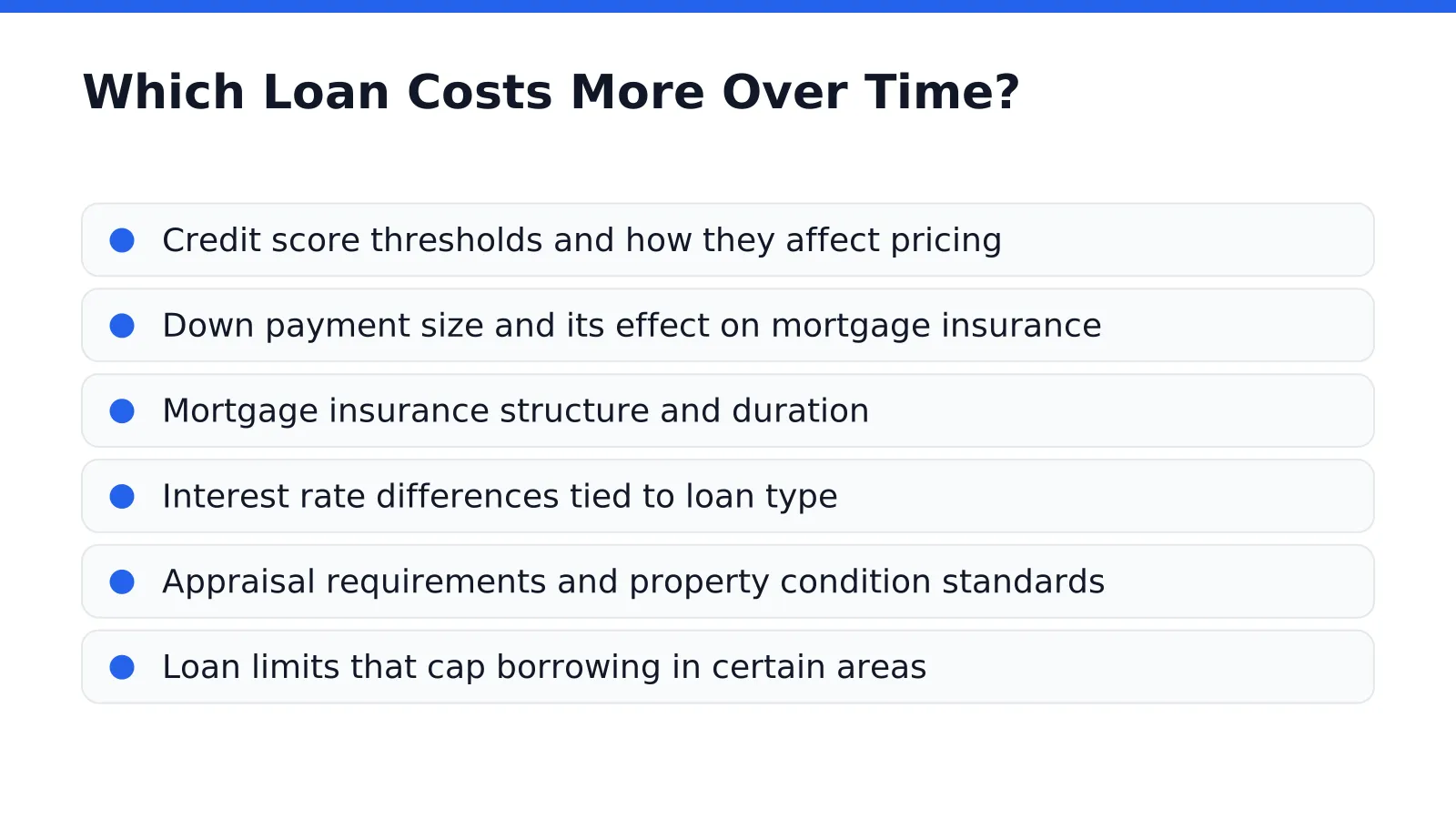
Key factors that shift the true cost of each loan type include:
- Credit score thresholds and how they affect pricing
- Down payment size and its effect on mortgage insurance
- Mortgage insurance structure and duration
- Interest rate differences tied to loan type
- Appraisal requirements and property condition standards
- Loan limits that cap borrowing in certain areas
Munshi Capital Inc. pairs modern technology with hands-on loan specialist service, keeping every cost detail visible from application through closing. The team stays focused on understanding each client’s goals, delivering dependable guidance through the full comparison. No fee or rate difference goes unexplained.
FAQ
What credit score do FHA and conventional loans require?
FHA loans accept credit scores as low as 580, while conventional loans typically require 620 or higher. Munshi Capital Inc. helps California borrowers compare both programs based on their actual credit profile.
Which loan type requires a smaller down payment?
Conventional loans allow down payments as low as 3%, compared to FHA’s standard 3.5% minimum. The right choice depends on available savings and overall financial standing.
Does FHA mortgage insurance ever go away?
No, FHA loans require mortgage insurance premiums for the loan’s entire duration, regardless of equity built. Conventional loans, by contrast, reward larger down payments with lower mortgage insurance costs.
Conclusion
In closing, the distinction between FHA and conventional loans fundamentally reflects your financial circumstances and borrowing capacity. FHA loans serve borrowers with limited down payment resources and credit flexibility. Conventional financing rewards those with stronger financial profiles through reduced costs and streamlined requirements. The optimal choice depends on your specific situation, credit standing, and long-term objectives. Munshi Capital Inc. provides comprehensive guidance across both loan programs, ensuring you understand the structural differences and select the financing solution that aligns with your goals and financial reality.
Leave a Reply