
Homeowners decide between refinancing and buying based on equity, rate, and long-term goals. Refinancing fits homeowners seeking a lower rate, shorter term, or cash access without selling. Buying suits those needing more space or a new location. Munshi Capital Inc. offers FHA, VA, USDA, DSCR, and bank statement loan programs supporting both paths.
Key Takeaways
- Refinancing lowers monthly payments when interest rates drop, saving thousands over your loan term.
- Buying a new home makes sense if your current property no longer fits your lifestyle goals.
What’s Really at Stake in This Decision?
Monthly payments, home equity, and long-term financial direction all hang on one choice: refinance the current mortgage or sell and buy something new. Entering 2026, homeowners face this same recurring question, and the answer shapes net worth for years to come, not just the next statement.
Market conditions complicate the math. With interest rates stabilizing and home prices continuing to climb, the stronger financial move depends on budget, existing equity, and long-term plans rather than a generic rule of thumb. A homeowner sitting on substantial equity faces a very different calculation than one who refinanced two years ago at a lower rate.
A solid refinance-vs-buy guide weighs these variables side by side instead of treating them as separate decisions:
- Current loan balance and remaining term
- Available home equity
- Target monthly payment
- Timeline for staying in the area
- Cost of moving versus cost of refinancing
What Factors Determine Whether Refinancing or Buying Wins?
No single factor decides this. Interest rate trends, home price trajectories, and personal goals interact, so knowing when to refinance means tracking all three, not just the rate on the news.
How Does Munshi Capital Inc. Help Borrowers Decide?
Munshi Capital Inc. builds mortgage guidance around each borrower’s specific goals instead of pushing a single loan program. That borrower-first approach, grounded in transparency and clear communication, helps homeowners run the numbers honestly, often using a buy-vs-refinance calculator, before committing to either path.

When Does Refinancing Make the Most Sense?
Refinancing fits best when a homeowner wants to adjust an interest rate, shorten or extend a loan term, or lower a monthly payment, all without moving. No listing, no moving truck, no new neighborhood to learn. For a household satisfied with its current property but burdened by unfavorable loan terms, this refinance-vs-buy-guide-041 approach addresses the financial problem directly.
Relocating solves a housing problem. Refinancing solves a loan problem. That distinction matters most for owners whose primary complaint is the mortgage itself, not the square footage or the school district.
For many homeowners, refinancing represents the simpler route when the main objective is improving loan terms rather than relocating. Skipping a home search, a sale, and a second closing cuts out significant complexity. The application and underwriting process stays contained to one property, one appraisal, one set of disclosures.
How do investors know when to refinance an income property?
When-to-refinance-041 decisions for rental property owners often hinge on cash flow and debt coverage rather than personal comfort. Munshi Capital Inc. provides DSCR and hard money loan products built specifically for investors refinancing income-producing real estate. These programs qualify borrowers using property income rather than personal tax returns, which suits investors scaling a portfolio.
What loan types work for a refinance?
Munshi Capital Inc. offers a broad range of residential and commercial programs for refinance scenarios, including:
- FHA loans
- VA loans
- USDA loans
- Bank statement loans
Running the numbers through a buy-vs-refinance-calculator-041 before applying clarifies whether rate relief outweighs closing costs. Homeowners ready to move forward can request your property assessment to confirm current equity position before selecting a loan program.
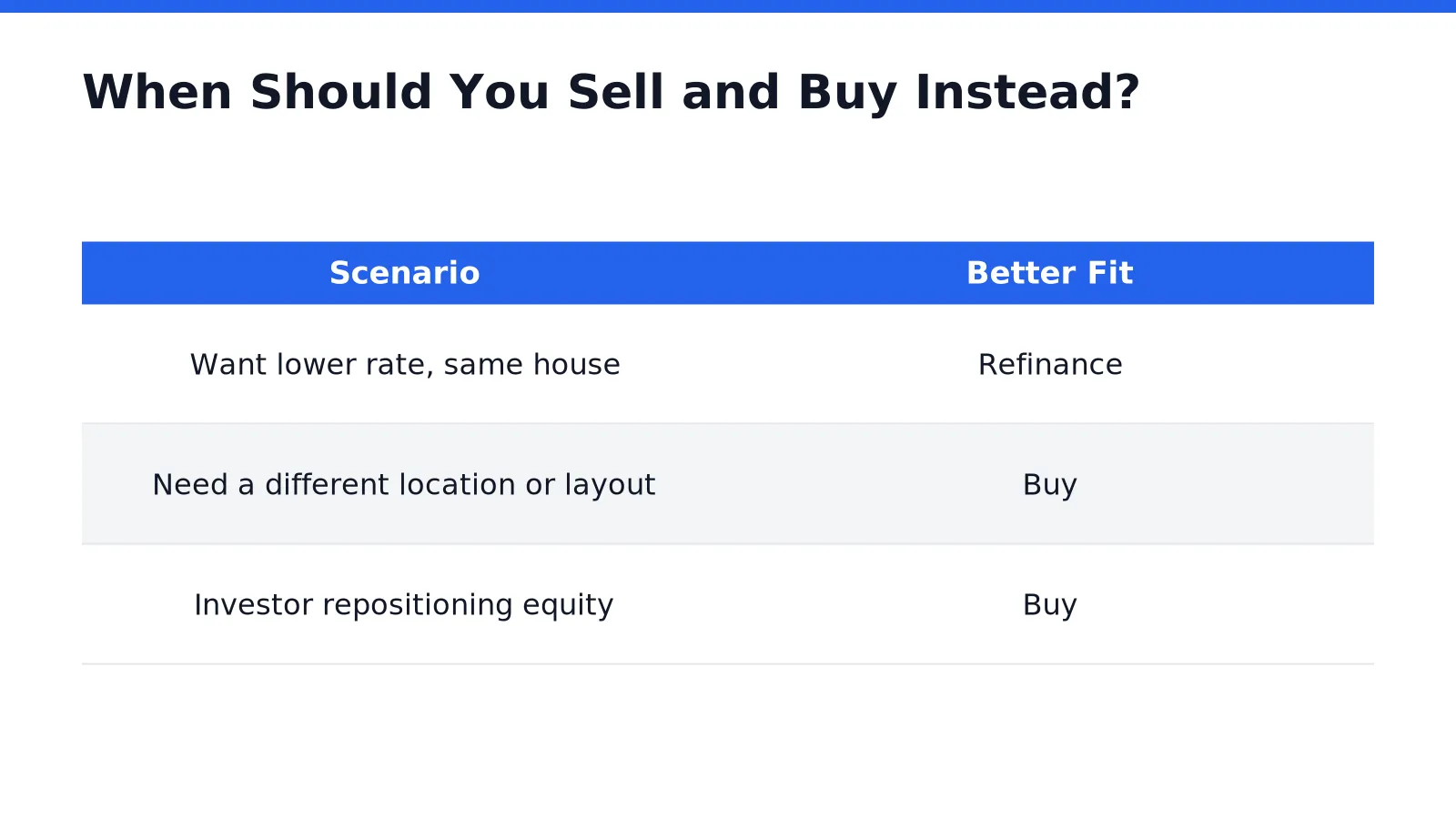
When Should You Sell and Buy Instead?
A genuine change of scenery, not just a better interest rate, signals that buying a new property outranks refinancing. Homeowners chasing lifestyle shifts, like a different neighborhood, school district, or more space, typically outgrow what a loan modification can offer. Refinancing adjusts the terms of an existing mortgage; it does nothing to change the physical home itself.
This distinction matters for anyone weighing a refinance-vs-buy-guide-041 decision. If the goal is a lower payment on the same house, refinancing solves that problem directly. If the goal is a different house altogether, selling and purchasing becomes the only real path forward.
Selecting the right home loan carries the same weight as selecting the right property. A mismatched loan program can erase the benefits of an otherwise ideal home purchase. Borrowers moving in this direction need financing built around their next property, not their last one.
How do I know it’s time to buy rather than refinance?
Consider buying when the current home no longer fits daily needs, regardless of its mortgage rate. A growing family, a job relocation, or a desire for different equity and investment positioning all point toward purchasing. Munshi Capital Inc. provides personalized guidance to help borrowers nationwide secure financing for that new purchase with confidence.
What should I check before deciding between a sale and a refinance?
A buy-vs-refinance-calculator-041 comparison, paired with local market data, clarifies which option delivers more value. Munshi Capital Inc. maintains city-specific mortgage pages so buyers can review local loan programs and market insights before committing.
Homeowners leaning toward a sale can request a direct cash offer. Those still comparing options can request your property assessment before deciding.

How Do You Run the Numbers Yourself?
Running the numbers starts with a side-by-side comparison of current rate, built-up equity, and long-term goals. A clear refinance-vs-buy guide lays these three factors out together, revealing which path actually serves a homeowner’s financial direction rather than relying on guesswork or outdated assumptions.
Homeowners weighing a refinance against a move need a structured way to compare both outcomes, not a gut feeling. Munshi Capital Inc. supports this process with technology-backed pre-approvals that generate fast, reliable figures for both scenarios. Full visibility into loan status at every stage means borrowers see exactly how each option affects their monthly payment. Long-term cost, rather than piecing together estimates from scattered sources.
What factors belong in a buy-vs-refinance calculator?
A sound buy-vs-refinance calculator accounts for current interest rate, remaining loan term, accumulated equity, and projected closing costs on both paths. It should also weigh how long the homeowner plans to stay in the property. Shorter horizons favor lower upfront costs. Comparing these inputs side by side, rather than evaluating refinancing or buying in isolation, produces a more accurate financial picture.
When does it make sense to refinance instead of sell?
Recognizing when to refinance comes down to whether a lower rate, shorter term, or reduced payment can be secured without the expense of moving. Munshi Capital Inc. walks borrowers through application, underwriting, and closing with no hidden surprises, which keeps cost comparisons grounded in verified numbers rather than assumptions.
Loan specialists pair this technology with hands-on guidance, ensuring each comparison reflects the borrower’s actual financial picture before any decision gets made.
What Should You Do Next?
Homeowners facing a choice between refinancing and buying start by comparing their equity, rate, and monthly payment side by side. A structured refinance-vs-buy guide removes the guesswork, showing exactly where each path leads financially before a decision gets made.
Munshi Capital Inc. guides borrowers through every step, from application to closing, with clarity and speed. No confusing jargon and no hidden surprises stand between a homeowner and a final answer. That transparency reflects a broader mission: honest communication throughout the lending process, whether the goal is refinancing a current mortgage or purchasing a new property.
How does a homeowner know when to refinance?
Timing matters more than most owners realize. A when-to-refinance decision typically hinges on falling rates, improved credit, or a shift in loan term goals rather than simply “wanting a change.” Reviewing current equity against today’s rate environment clarifies whether staying put makes financial sense.
What tools help compare buying against refinancing?
A buy-vs-refinance calculator puts projected payments, closing costs, and equity outcomes into one view. Pairing that comparison with professional guidance prevents an expensive miscalculation.
Practical next steps include:
- Reviewing current loan terms against today’s rates.
- Estimating equity available for a cash-out refinance versus a sale.
- Starting a quick, secure application with a Munshi Capital loan specialist.
Sellers leaning toward a purchase can request a direct cash offer. Owners still undecided can request your property assessment to see where their equity truly stands. Munshi Capital’s integrity, personalized service, and broad range of loan products make either path a confident one.
FAQ
Should I refinance or buy a new home?
The right choice depends on equity, interest rate trends, and long-term goals. Refinancing fits those wanting better loan terms without moving, while buying suits homeowners needing more space or a new location.
When does refinancing make the most sense?
Refinancing works best when the main goal is adjusting the interest rate, loan term, or monthly payment without relocating. It solves a loan problem directly, keeping the process contained to one property and one closing.
How does Munshi Capital Inc. help with this decision?
Munshi Capital Inc. offers borrower-first guidance built on transparency, helping homeowners weigh options honestly before committing. Their FHA, VA, USDA, DSCR, and bank statement loan programs support both refinancing and buying paths.
Conclusion
In closing, the decision between refinancing and purchasing a new home demands careful evaluation of your financial circumstances, long-term objectives, and market conditions. Whichever path aligns with your goals, securing the right financing partner proves essential to executing your strategy with confidence. Munshi Capital Inc. provides the transparent guidance, diverse loan programs, and personalized support necessary to navigate this significant decision. Our commitment to clarity and dependable service ensures you move forward with full visibility into your options and unwavering confidence in your choice.
Leave a Reply