
Down payment savings in Saving require disciplined planning. Lenders typically expect 5 to 20 percent of a home’s value upfront. Prospective buyers benefit from a dedicated savings account, a fixed monthly budget, and a clear timeline. Munshi Capital Inc. serves Saving buyers with FHA, VA, USDA, and bank statement loan programs matched to each financial picture.
Key Takeaways
- Down payments typically range from 5 to 20 percent of your home’s purchase price.
- Creating a detailed budget and timeline accelerates your savings strategy toward homeownership goals.
- Smarter strategies and consistent saving habits help you reach your down payment target faster.
- Multiple loan programs, including FHA and VA options, accommodate various down payment amounts for borrowers.
How Much Down Payment Does Saving Require?
Down payment requirements for homes in Saving generally fall between 5 and 20 percent of the purchase price. That range reflects the loan program selected, not a fixed industry rule. Some financing options in Saving’s market push the minimum even lower than many buyers expect.
The broader figure is wider than most people realize. Down payments across the housing market can span from 0% to 20% or more of the purchase price, depending entirely on the chosen loan structure. Comparing options early shapes the right down payment strategies for a buyer’s specific budget and timeline.
A persistent myth trips up many buyers before they even start saving.
Do first-time buyers really need 20% down?
No. Many first-time buyers wrongly assume a 20% down payment is mandatory. Most loan programs allow far less, which means a disciplined savings plan can get a buyer into a home sooner than expected.
Confirming the real target number first, rather than defaulting to 20%, is one of the most practical first-time buyer tips available. A buyer who overestimates the requirement often delays homeownership by months or years unnecessarily. Working with a knowledgeable loan specialist familiar with Saving’s local programs clarifies the actual minimum needed, prevents over-saving, and sets a realistic, achievable savings timeline from the start.

What Steps Create an Effective Savings Plan?
An effective savings plan starts with a number, not a guess. Buyers in Saving need to calculate the full down payment amount before setting a timeline, then commit to realistic monthly contributions. Munshi Capital Inc. offers a comprehensive range of residential and commercial loan programs across the country. The company encourages buyers to run the math first and build backward from there.
Clear goals anchor every workable set of down payment strategies before paperwork ever begins. Setting a target home price for properties in Saving, then building a monthly budget around that figure, turns a vague goal into a tracked habit. Without a budget, savings drift and closing timelines slip.
How much should a Saving buyer save each month?
The answer depends on the target home price and the chosen timeline. A buyer in Saving who sets a clear goal. Calculates the total down payment needed can divide that figure across the remaining months before closing. Monthly contributions become predictable once the target number and timeline are fixed.
Separate accounts protect progress once that monthly number is set. Opening a dedicated account exclusively for the Saving down payment fund, with automatic monthly transfers, removes the temptation to dip into savings for everyday expenses.
Why does a dedicated account matter?
A dedicated account keeps down payment funds apart from checking balances used for daily spending. Automatic contributions turn saving into a recurring habit instead of a monthly decision, reducing the risk that funds get spent before closing day.
Buyers who follow these first-time buyer tips build consistency, not just balance. Munshi Capital Inc. guides Saving-area buyers through loan programs matched to savings progress, turning accumulated funds into a workable mortgage once budget, goal, and account are all in place.
Which First-Time Buyer Tips Speed Up Savings?
Trimming recurring bills speeds up savings fastest for buyers planning a home purchase in Saving. Auto insurance, renter’s coverage, and utility plans often cost more than necessary, and reviewing those rates frees up cash that goes straight into a down payment fund. Smaller sacrifice, steadier progress: that is the real formula.
First-time buyer tips that work rarely involve extreme belt-tightening. Saving faster depends on smarter strategies, available assistance resources, and consistency over months, not drastic cuts to daily life. Buyers in Saving who automate transfers and revisit expenses quarterly tend to reach their goals without burnout.
How much house can a buyer in Saving actually afford?
Affordability comes before the savings target, not after. Buyers should calculate a realistic price range for homes in Saving based on income, debt, and local housing costs, then work backward to determine the down payment needed. Skipping this step often leads to saving either too little or far more than necessary.
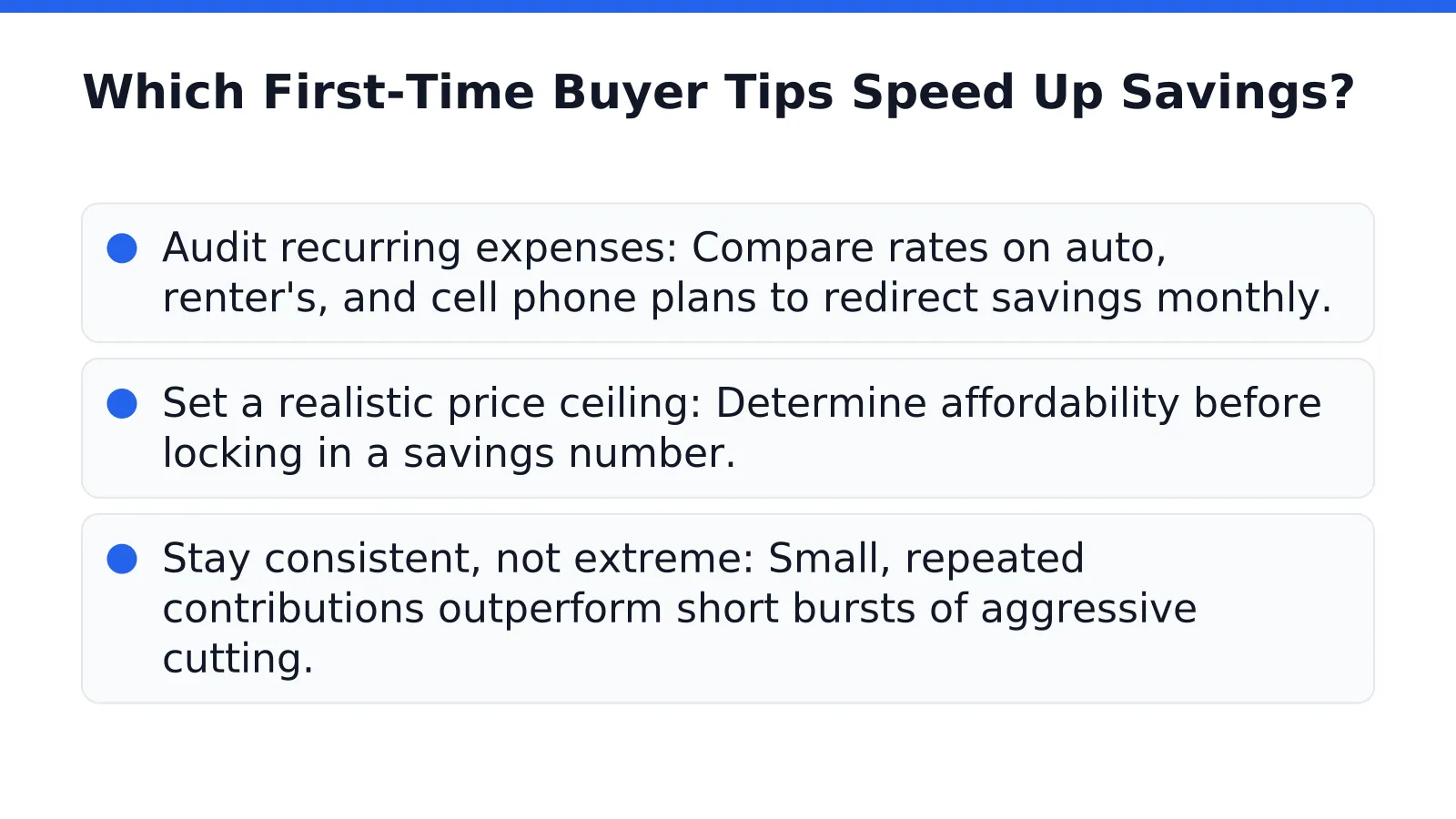
Three practical moves accelerate progress for buyers targeting homes in Saving:
- Audit recurring expenses: Compare rates on auto, renter’s, and cell phone plans to redirect savings monthly.
- Set a realistic price ceiling: Determine affordability before locking in a savings number.
- Stay consistent, not extreme: Small, repeated contributions outperform short bursts of aggressive cutting.
A disciplined savings plan built on these three habits moves buyers toward closing day without unnecessary financial strain. Munshi Capital Inc. is a business specializing in mortgage financing nationwide. The company serves buyers pursuing homes in Saving with mortgage programs tailored to each stage of that savings journey, from first review to final approval.

How Do Loan Programs Lower Required Savings?
Loan programs reduce the cash a buyer must set aside by shrinking the minimum down payment threshold. Conventional loans, for example, can require as little as 3 to 5 percent down, cutting the savings target well below the commonly assumed 20 percent figure. For a buyer in Saving planning a purchase, that difference can shorten a savings timeline by years rather than months.
FHA-backed loans push the threshold even lower. These loans typically require around 3.5 percent down, making homeownership reachable for buyers in Saving who have strong credit but limited reserves. Eligible borrowers pursuing VA or USDA loans may qualify for 0 percent down, removing the down payment barrier entirely for those who meet service or rural-property requirements.
Which loan type fits a first-time buyer in Saving best?
The right program depends on credit profile, service history, and property location within Saving. A borrower without military service or a rural-eligible address typically compares FHA and conventional options first.
Smart down payment strategies start with knowing which program applies before building a savings plan. Munshi Capital Inc. serves homebuyers throughout Saving with FHA, VA, USDA, and conventional loan options, matching each client’s financial picture to the program that demands the least cash upfront. For buyers weighing first-time buyer tips, understanding these thresholds first prevents months of unnecessary saving toward a 20 percent benchmark that may never apply. Buyers ready to move forward can request a direct cash offer or request your property assessment to clarify next steps.
Where Can Saving Buyers Find Loan Guidance?
Saving homebuyers find loan guidance through a lender that tailors mortgage financing to each borrower’s financial picture, from first-time buyers to seasoned investors. Munshi Capital Inc. The company extends that same guidance to Saving buyers without requiring a trip to a local branch. Clear answers replace guesswork at every stage of loan program selection.
A transparent, borrower-first approach anchors the entire process. Clarity and honesty guide Saving buyers through applications, underwriting, and closing, turning a complicated system into a sequence of understandable steps. That structure protects a first-time buyer’s savings plan from the surprise fees and shifting terms that often derail a home purchase late in the process.
Speed matters as much as clarity.
How fast can a Saving buyer get pre-approved?
Pre-approval timelines vary by documentation readiness, but Saving buyers gain full visibility into loan status from application through closing. Tracking progress in real time lets buyers coordinate down payment strategies against a target closing date instead of guessing where things stand.
What loan guidance helps first-time buyers most?
Sound first-time buyer tips start with matching the right loan program to a buyer’s actual financial picture, not a one-size-fits-all package. Saving buyers benefit from loan specialists who explain FHA, VA, USDA, and bank statement loan options in plain language before any paperwork gets signed.
Buyers comparing guidance sources should look for:
- A documented loan program for every borrower type, not a single standard package
- Direct communication during underwriting, not automated silence
- Visibility tools that confirm loan status without repeated phone calls
Guidance built on those three pillars keeps Saving buyers informed from the first application to the closing table.
FAQ
How much down payment do buyers in Saving typically need?
Down payment requirements in Saving generally range from 5 to 20 percent of the purchase price, depending on the loan program selected rather than a fixed industry rule.
Is a 20 percent down payment required for first-time buyers?
No, most loan programs allow
Conclusion
In closing, the discipline required to accumulate a down payment establishes the financial foundation necessary for responsible homeownership and investment success. By implementing systematic savings strategies and maintaining clarity regarding your financial objectives, you position yourself to make informed decisions when the time arrives to secure financing. Munshi Capital Inc. stands ready to guide you through the lending process with transparent communication and personalized solutions tailored to your unique circumstances, ensuring that your down payment efforts translate into confident, dependable financing that aligns with your long-term goals.
Leave a Reply