
FHA loans require as little as 3.5% down for qualified borrowers, making homeownership accessible to first-time buyers; Munshi Capital Inc. guides applicants through application, underwriting, and closing with transparent, step-by-step support nationwide.
FHA loans require as little as 3.5% down with a FICO score of 580 or higher. 10% down for scores between 500-579. Munshi Capital Inc. guides first-time and seasoned homebuyers through transparent application, underwriting, and closing, delivering fast pre-approvals and clear answers at every step.
FHA loans, backed by the Federal Housing Administration since 1934, require a FICO score of at least 580 for 3.5% down, or 500-579 for 10% down. Mortgage Insurance Premium applies on every loan. Munshi Capital Inc. guides first-time homebuyers through application, underwriting, and closing with transparent, step-by-step support.
Key Takeaways
- FHA loans require down payments as low as 3.5%, making homeownership accessible for first-time buyers nationwide.
- The Federal Housing Administration has insured residential mortgages since 1934, serving tens of millions of borrowers.
- FHA-approved lenders offer competitive rates and lower closing costs compared to conventional financing options.
- Credit qualifying for FHA loans remains flexible, accommodating borrowers with diverse financial backgrounds and credit histories.
What Makes FHA Loans Different?
Government insurance separates FHA loans from conventional mortgage products. The Federal Housing Administration, a division of the U.S. Department of Housing and Urban Development, insures these loans. That backing allows approved lenders to extend better terms than borrowers might otherwise qualify for on their own.
This insurance model matters most for Walnut Creek buyers facing high entry costs. A low down payment option becomes realistic because the lender carries less risk, with HUD standing behind the loan. First-time buyers with limited savings gain a path to ownership that might otherwise stay out of reach.
Munshi Capital Inc. positions FHA financing within a broader residential and commercial lending suite, alongside VA, USDA, and bank statement loan programs. This structure lets borrowers compare options side by side rather than guessing which program fits. Mortgage financing at Munshi Capital Inc. is designed for a wide range of borrowers, from first-time homebuyers to seasoned investors. A single visit covers multiple paths to financing.
How long have FHA loans been available to homebuyers?
FHA loans have supported American homeownership since 1934. That nine-decade track record reflects a program built specifically to widen access to mortgage credit, not a recent lending trend.
Who qualifies under FHA eligibility standards?
FHA eligibility depends on factors set by HUD and verified by the approved lender during underwriting. Because the program spans first-time buyers and repeat purchasers alike, eligibility review focuses on matching each borrower’s financial picture to the right loan structure rather than applying a one-size-fits-all test.
Budget-conscious buyers evaluating financing in Walnut Creek and beyond can request a direct cash offer to understand their options.

Who Qualifies for FHA Eligibility?
Credit history and debt load determine most FHA eligibility decisions. Borrowers with a FICO score of 580 or higher typically qualify for a low down payment of just 3.5%, a threshold far lower than many conventional mortgage programs require. Scores between 500 and 579 still open a path to approval, though a larger down payment usually follows.
Lenders also weigh how much debt a borrower already carries against monthly income. A total debt-to-income ratio near 43% serves as a common benchmark for FHA loans, giving underwriters a consistent way to measure repayment capacity. Falling above that line does not automatically disqualify an applicant. It does invite closer scrutiny of the full financial picture.
What Credit Score Do First-Time Buyers Need for an FHA Loan?
A score of 580 generally unlocks the 3.5% down payment tier, the most accessible entry point FHA offers. Buyers below that mark face a higher down payment requirement, not an automatic denial.
Does Debt Affect FHA Loan Approval?
Yes. Underwriters compare monthly debt obligations to gross income, and a ratio around 43% functions as a widely used guidepost. Lower ratios strengthen an application; higher ratios require stronger offsetting factors.
Eligibility review feels complicated, especially for a first-time buyer trying to decode credit thresholds and income math. Munshi Capital’s loan specialists walk borrowers nationwide through each requirement with plain-language explanations before an application ever gets submitted. That guidance covers the full range of residential programs, not FHA alone.
FHA loans work best when eligibility expectations are clear from the start:
- Credit score of 580+: 3.5% down payment
- Credit score 500-579: higher down payment required
- Debt-to-income near 43%: common underwriting benchmark
Munshi Capital frames every program around these clear answers, so borrowers understand where they stand before committing to a purchase.

How Low Can Your Down Payment Go?
FHA financing can bring a down payment as low as 3.5% of the purchase price. FHA loans exist specifically to open homeownership to buyers who haven’t saved a large cash reserve. For Walnut Creek shoppers watching home prices climb, that smaller upfront requirement often decides whether a purchase happens this year or gets pushed off indefinitely.
A low down payment changes the math on affordability, but it doesn’t remove every cost from the equation. Borrowers still carry a mortgage insurance premium, known as MIP, no matter how small their down payment is. That premium protects the lender and applies across FHA financing broadly, so budgeting for it matters as much as saving the 3.5%.
Munshi Capital Inc. walks borrowers through the full path from application to underwriting to closing, with no hidden surprises along the way. The process typically includes:
- Submitting income, credit, and asset documentation for review
- Underwriting against FHA eligibility standards for credit and debt
- Property evaluation to confirm it meets program requirements
- Closing with clear terms disclosed in advance
That structured approach, paired with a wide range of loan products, has made the company a trusted resource for homebuyers nationwide.
Does a 3.5% down payment mean lower monthly costs?
Not automatically. A smaller down payment means financing a larger loan balance, which raises the monthly principal and interest owed. The mandatory mortgage insurance premium adds another layer of cost on top of that balance, regardless of how low the down payment was.
Who typically qualifies for the minimum down payment?
FHA eligibility depends on documented credit history, steady income, and a property that meets condition standards. Borrowers who clear those thresholds move forward with underwriting toward the 3.5% minimum.
What Does the FHA Loan Process Involve?
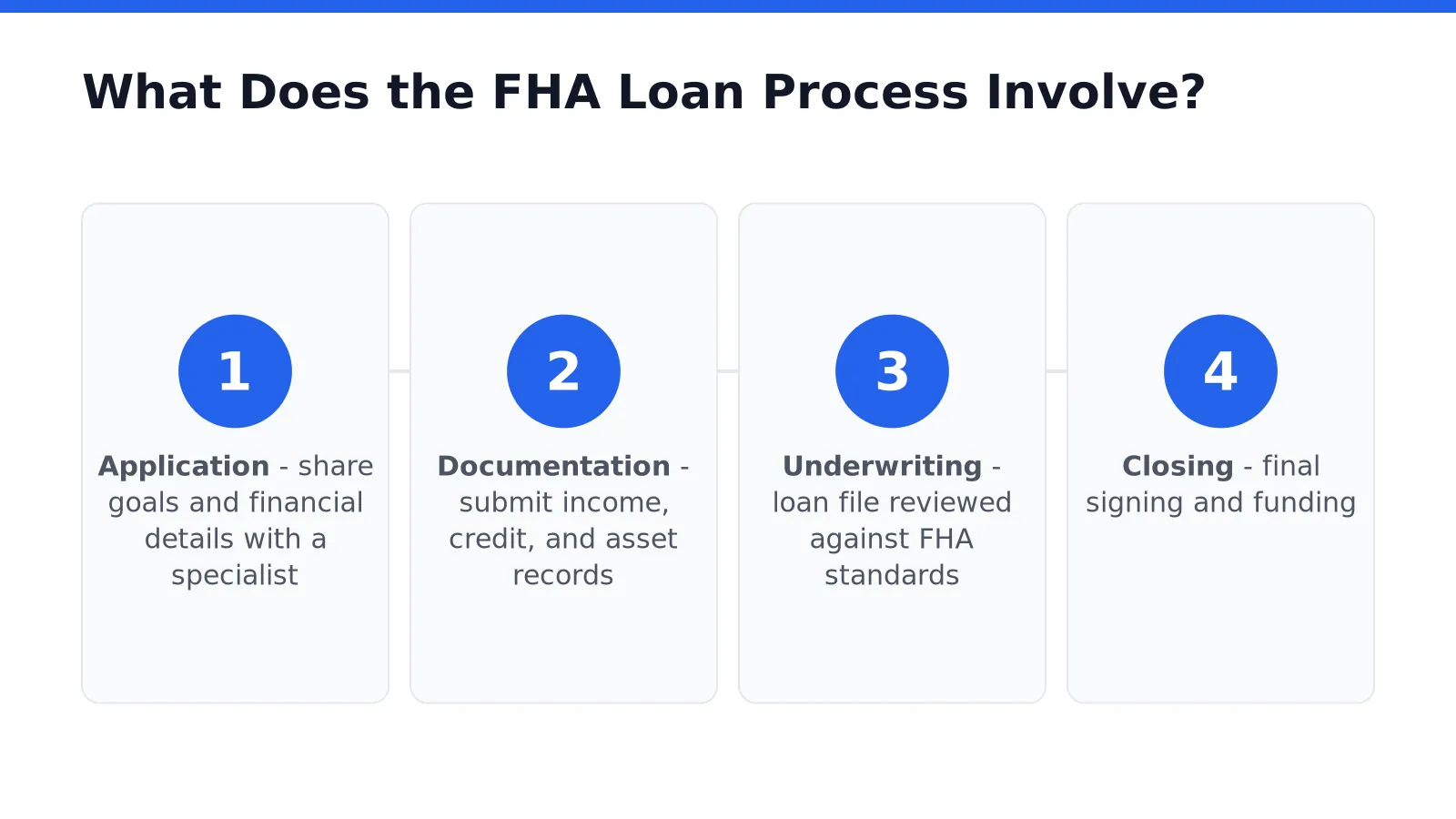
Four stages define the FHA loan process: application, document review, underwriting, and closing. Munshi Capital Inc. pairs modern technology with hands-on loan specialists to keep each stage fast. Transparent for first-time buyers across Walnut Creek and beyond. Confusion and delay cost borrowers time, and sometimes a home. A clear roadmap prevents both.
Applying starts simple. Borrowers complete a quick, secure application and share their homeownership goals with a Munshi Capital loan specialist, who helps identify whether an FHA loan or another residential program fits their situation. From there, the team walks applicants through document collection, verifying income, assets, and credit history against FHA eligibility standards.
How long does FHA pre-approval take?
Pre-approval moves quickly once documents are submitted. Munshi Capital’s borrowers get fast pre-approval decisions along with full visibility into loan status at every stage, from initial application through closing. That visibility matters: budget-conscious buyers need to know exactly where financing stands before making offers on a home.
What happens between underwriting and closing?
Underwriting confirms the loan meets FHA guidelines, including property standards and debt ratios. Munshi Capital’s specialists guide borrowers through this step with clarity and speed, cutting through confusing jargon and avoiding hidden surprises at the closing table.
The process breaks into four manageable phases:
- Application – share goals and financial details with a specialist
- Documentation – submit income, credit, and asset records
- Underwriting – loan file reviewed against FHA standards
- Closing – final signing and funding
Munshi Capital’s approach stays rooted in clarity, honesty, and a service-driven ethos throughout, reducing the uncertainty that stalls so many first-time purchases.
Is an FHA Loan Right for You?
Walnut Creek buyers with modest savings or a less-than-perfect credit history often fit the FHA profile best. FHA loans exist specifically to help individuals with lower credit scores, limited savings, or financial setbacks become homeowners. For a first-time buyer watching rent eat into a budget while home prices climb, that design matters.
Munshi Capital Inc. was built on trust, with a commitment to transparent, borrower-first guidance at every step. Clarity and honesty shape the process, not just the pitch. That approach, paired with a wide range of loan products, gives borrowers confidence when weighing FHA financing against other paths to a mortgage.
Who Benefits Most From an FHA Loan?
Borrowers carrying higher debt loads sometimes assume they’re locked out of homeownership. That isn’t always true. Lenders may permit higher debt-to-income ratios depending on underwriting findings and compensating factors, which means a strong rental history or stable income can offset other weaknesses on paper.
Does an FHA Loan Fit Every Budget?
Not automatically, but the structure helps many budget-conscious households qualify where other programs fall short. Consider FHA financing if any of the following applies:
- Savings are limited, and a low down payment option would ease the path to closing
- Credit history includes some bumps but shows recent stability
- Debt-to-income ratio runs higher than conventional lenders typically accept
- FHA eligibility concerns, like credit score or savings level, have raised doubts about qualifying elsewhere
Borrowers weighing these factors gain the most from a direct, honest conversation about where they stand before applying.
FAQ
What is the minimum down payment required for an FHA loan?
Borrowers with a FICO score of 580 or higher qualify for just 3.5% down. Those with scores between 500-579 need a 10% down payment instead.
What credit score do I need to qualify for an FHA loan?
FHA loans require a minimum FICO score of 580 for the lowest down payment option. Scores between 500-579 still qualify, but require 10% down.
How does Munshi Capital Inc. help FHA borrowers through the process?
Munshi Capital Inc. guides first-time and seasoned homebuyers through transparent application, underwriting, and closing. Borrowers receive fast pre-approvals and clear answers at every step.
Conclusion
In closing, FHA loans represent a practical pathway for homebuyers seeking accessible financing with reasonable down payment requirements and flexible credit considerations. Understanding the mechanics of mortgage insurance, property standards, and borrower obligations positions you to make informed decisions aligned with your financial circumstances. The lending process demands clarity and dependable guidance at every stage, from pre-approval through closing. Securing the right financing partner ensures you navigate this significant investment with confidence, supported by transparent communication and expertise dedicated to your homeownership goals.
Leave a Reply