
Jumbo loans finance properties exceeding Federal Housing Finance Agency conforming loan limits, common for premium California purchases in markets like Walnut Creek. Munshi Capital Inc. structures jumbo financing for vacation homes, investment properties, and new-constru
Key Takeaways
- Jumbo loans exceed conforming loan limits, financing high-value properties that standard mortgages cannot cover.
- Lenders set individual jumbo loan standards since these nonconforming loans fall outside federal guidelines and limits.
- Jumbo mortgages finance vacation homes, investment properties, condos, multifamily homes, and new construction projects effectively.
- Rising home prices drive jumbo loan demand, making them increasingly important for today’s luxury homebuyers.
What Exactly Is A Jumbo Loan?
Jumbo loans finance home purchases that exceed the conforming loan limits set by the Federal Housing Finance Agency (FHFA). Any mortgage above that federal ceiling falls outside standard conforming rules and enters jumbo territory. For buyers eyeing premium properties in markets like Walnut Creek, this distinction shapes every part of the financing process.
The size of the loan is only part of the story. Fannie Mae and Freddie Mac, the two government-sponsored enterprises that purchase most conforming mortgages, cannot buy jumbo loans. That exclusion classifies jumbo loans as nonconforming, shifting significantly more risk onto the lender rather than onto the secondary mortgage market.
Why do lenders treat jumbo loans differently?
Lenders absorb the full risk of a jumbo loan instead of passing it to Fannie Mae or Freddie Mac. Without that backstop, underwriting standards tighten. Qualification for a high-value mortgage typically demands closer scrutiny of income, assets, and overall financial strength than a conforming loan requires.
Munshi Capital Inc. structures jumbo financing for a wide range of borrowers pursuing high-value mortgage needs, including:
- First-time buyers purchasing above-conforming-limit properties
- Move-up buyers relocating to higher-cost markets
- Real estate investors expanding premium portfolios
- Seasoned homeowners refinancing substantial loan balances
Transparency guides every step of that process. Borrowers receive clear, honest communication about requirements and terms before committing to a jumbo loan, removing guesswork from a decision this consequential. That clarity matters most when the property, and the loan, carry significant financial weight.

How Do Loan Limits Work In California?
The Federal Housing Finance Agency, known as the FHFA, sets the criteria a mortgage must meet to qualify for purchase by Fannie Mae and Freddie Mac. Any mortgage exceeding that criteria becomes a jumbo loan, placing it outside standard conforming guidelines. For high-net-worth buyers eyeing premium properties in markets near Walnut Creek, this distinction determines which financing path applies before an offer even goes in.
Loan limits are not a single national figure. They vary by county and typically track local home values, which explains why high-cost California markets carry elevated thresholds before a mortgage crosses into jumbo territory. A property that qualifies for conforming financing in a lower-cost state may require a high-value mortgage in a competitive Bay Area neighborhood.
Why Are California Loan Limits Higher Than Other States?
California’s coastal and metro counties carry some of the nation’s steepest home prices, and conforming limits adjust to reflect that reality. Counties with elevated median values receive higher conforming thresholds, narrowing the gap buyers need to bridge with jumbo financing. Even with those adjustments, premium properties in sought-after communities regularly exceed the local ceiling.
Who Needs A Jumbo Loan In Walnut Creek?
Buyers targeting move-up homes, luxury properties, or investment real estate above the county’s conforming ceiling typically need jumbo financing. Rising home prices continue pushing more buyers toward jumbo loans as the standard route to secure premium properties.
Munshi Capital Inc. maintains city-specific mortgage pages covering local loan programs, rates, and market insights tailored to where clients are buying, including markets surrounding Walnut Creek. Personalized guidance from the Munshi Capital Inc. team helps borrowers nationwide pinpoint exactly where local loan limits apply to their target property, removing guesswork before an offer is drafted. Buyers evaluating a specific property can request your property assessment to clarify which financing category fits before moving forward.
What Down Payment And Credit Standards Apply?
Down payment requirements for jumbo loans run higher than those for conforming mortgages. Lenders use this larger upfront investment to offset the added risk of financing loan amounts above standard loan limits. For high-net-worth buyers eyeing premium properties in markets like Walnut Creek, understanding these standards early prevents surprises during underwriting.
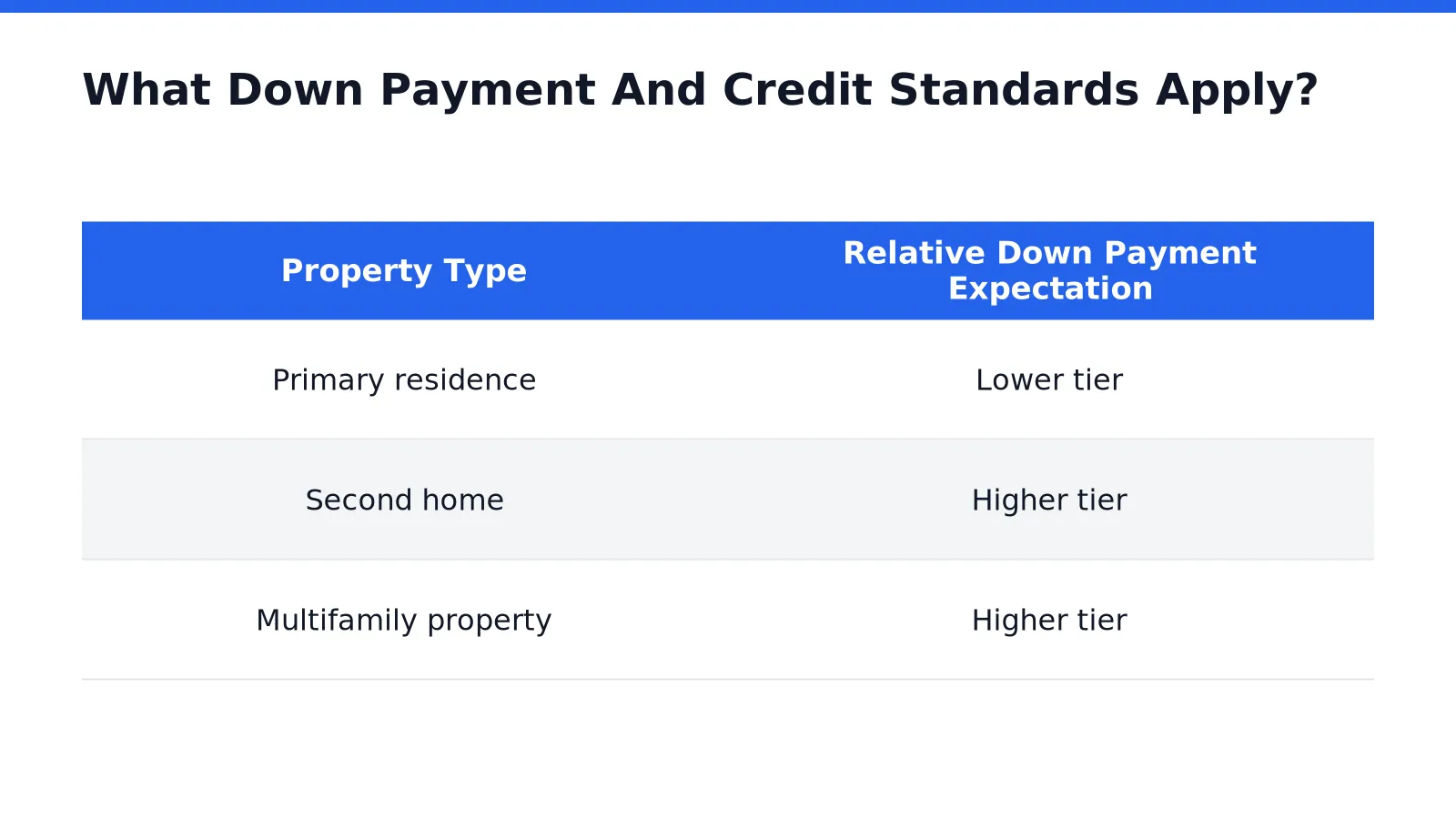
The exact minimum depends on three factors: total loan amount, credit history, and property type. A buyer purchasing a primary residence with strong credit may qualify for a different down payment tier than one financing a vacation property. Investors should note that second homes and multifamily properties typically carry steeper down payment requirements than owner-occupied purchases.
How Does Property Type Affect Down Payment Minimums?
Primary residences generally require the smallest down payment among jumbo-eligible properties. Second homes and multifamily buildings push that minimum higher, since lenders view them as carrying more risk. Investors building a portfolio of rental or vacation properties should budget accordingly before structuring an offer.
Can Self-Employed Buyers Qualify For A High-Value Mortgage?
Yes. Munshi Capital Inc. offers bank statement loan programs alongside FHA, VA, and USDA options, giving self-employed buyers a documented path to meet jumbo qualification standards without traditional W-2 income verification. This matters for business owners and investors whose income doesn’t fit a standard pay-stub model.
Property Type and Typical Down Payment Risk Tier
Munshi Capital Inc. builds its lending process on clarity. Honesty, walking buyers through down payment and credit expectations before an application ever gets filed. That transparency gives buyers confidence to move forward on a high-value mortgage without guesswork.

Which Properties Qualify For Jumbo Financing?
Eligible properties span a wide range, from primary residences to income-producing real estate. Jumbo loans finance vacation homes, investment properties, condos, multifamily homes, and new-construction homes, matching the goals of move-up buyers and seasoned investors alike. High-net-worth buyers in markets like Walnut Creek often use this flexibility to secure a custom retreat while simultaneously expanding a rental portfolio.
Not every high-value purchase fits neatly into standard jumbo guidelines, though. Munshi Capital Inc.’s DSCR and hard money loan programs give investors additional paths to finance high-value rental. Investment properties when conventional jumbo underwriting falls short. These specialized products evaluate property income and investment strategy rather than relying solely on personal income documentation.
Can jumbo loans finance investment or rental properties?
Yes. A high-value mortgage structured as a jumbo loan can fund investment properties, multifamily buildings, and condos purchased for rental income. For borrowers seeking commercial-scale opportunities, Munshi Capital Inc. provides commercial mortgage financing for real estate investors across the country, complementing jumbo loans for income-producing or mixed-use purchases.
Property types commonly financed include:
- Vacation homes and second residences
- Investment and rental properties
- Condominiums
- Multifamily homes
- New-construction homes
What should buyers expect during the qualification process?
Buyers should expect a structured, transparent path from application through closing. Munshi Capital Inc. guides high-value buyers through a straightforward application and underwriting process, with no hidden surprises along the way. Because property type influences documentation and loan limits, working with a lender familiar with diverse asset classes reduces delays before closing.
How Should You Choose Your Jumbo Lender?
Lender selection determines the terms, speed, and certainty of a jumbo loan far more than it does with a standard mortgage. Because jumbo loans are nonconforming, each lender sets its own underwriting standards, down payment minimums, and documentation requirements. Two buyers with identical finances can receive very different offers depending on which lender reviews their file. For California purchasers competing on premium listings in markets like Walnut Creek, that variability carries real weight.
High-net-worth buyers and investors often sacrifice leverage when they skip this comparison. A lender unfamiliar with complex income, multiple properties, or investment portfolios can slow a high-value mortgage application at the exact moment speed matters most.
What Should a High-Value Buyer Look for in a Jumbo Lender?
Buyers should prioritize lenders who pair technology-driven efficiency with experienced loan specialists who understand nonconforming underwriting. Munshi Capital Inc. structures its process this way, combining modern tools with hands-on guidance to keep applications moving. This matters when loan limits push a purchase outside conventional financing and documentation grows more layered.
Why Does Pre-Approval Speed Matter on Premium Properties?
Quick pre-approval strengthens a buyer’s position before competing offers appear. Munshi Capital Inc. delivers fast pre-approvals alongside full visibility into loan status. Clients track every stage of the process rather than waiting on uncertain timelines.
Buyers evaluating lenders should weigh three factors:
- Transparency: clear communication from application through closing, with no hidden surprises.
- Specialization: demonstrated experience with jumbo underwriting and investor-focused financing.
- Track record: a history of trust among homebuyers and investors nationwide.
Munshi Capital Inc.’s integrity-driven, personalized approach reflects this standard. Buyers ready to move forward can request a direct cash offer or request your property assessment before comparing jumbo financing terms.
FAQ
What makes a loan jumbo instead of conforming?
A loan becomes jumbo when it exceeds the conforming loan limits set by the Federal Housing Finance Agency, placing it outside standard Fannie Mae and Freddie Mac purchase guidelines.
Why do jumbo loans require stricter qualification standards?
Lenders hold the full risk themselves since Fannie Mae and Freddie Mac cannot buy jumbo loans. They closely scrutinize income, assets, and overall financial strength before approval.
What types of properties can a jumbo loan finance?
Jumbo mortgages finance vacation homes, investment properties, condos, multifamily homes, and new construction projects, serving first-time buyers, move-up buyers, investors, and refinancing homeowners alike.
Conclusion
In closing, navigating the jumbo loan landscape requires a clear understanding of qualification standards, documentation requirements, and the distinct advantages these products offer for high-value properties. Borrowers benefit from working with lending partners who prioritize transparency throughout the application and underwriting process, ensuring full visibility into loan status and personalized guidance tailored to individual financial circumstances. By partnering with experienced mortgage specialists committed to straightforward communication. Dependable service, buyers secure the right financing solution with confidence and clarity from start to finish.
Leave a Reply