
Prequalification offers a preliminary estimate of borrowing power based on self-reported finances. Preapproval requires documented income, credit, and asset verification through Munshi Capital Inc., producing a conditional loan commitment. Buyers touring homes or submitting offers need preapproval; buyers setting an initial budget start with prequalification. Both steps precede underwriting and closing.
Key Takeaways
- Prequalification estimates borrowing capacity based on self-reported financial information without verification.
- Preapproval involves verified documentation and credit checks, providing a stronger offer position.
- Prequalification suits preliminary budgeting; preapproval readies you to tour homes and make offers.
- Neither guarantees final loan approval, but both demonstrate serious intent to sellers and lenders.
Why Does Confusing These Two Steps Cost You?
Mixing up preapproval prequalification steps costs borrowers time, leverage, and sometimes the home itself. Lost leverage shows up fast: a seller receiving two offers chooses the one backed by verified financing, not estimates. Confusion between these stages also delays mortgage approval, stretching a purchase timeline by weeks a buyer rarely has to spare.
Neither step outranks the other in importance. Each serves a distinct purpose in the path toward loan readiness. Prequalification offers a quick snapshot built on self-reported numbers, useful for early budgeting. Preapproval demands verified documentation and carries real weight when an offer hits the table.
Munshi Capital Inc. structures its process so borrowers never confuse the two. The company guides clients, from first-time buyers to seasoned investors, through a clear application, underwriting, and closing sequence. That structure removes the guesswork that typically causes missed opportunities.
What happens if a buyer skips preapproval and relies only on prequalification?
Offers built on prequalification alone often get dismissed by sellers in competitive markets, since the numbers remain unverified. A buyer risks falling in love with a home outside actual borrowing capacity, then scrambling when preapproval reveals a lower limit.
Does prequalification still matter if preapproval is stronger?
Yes. Prequalification sets realistic expectations before a serious search begins, saving wasted house tours.
Munshi Capital Inc. builds financing around each borrower, offering guidance through every loan program with clear answers and dependable service at every stage.

What Does Mortgage Prequalification Really Tell You?
Prequalification answers one narrow question: based on self-reported numbers, does a borrower look likely to qualify for a home loan? The process asks for income, debt, and savings figures without verifying any of them against pay stubs, tax returns, or bank statements. That makes it fast, but it also means the resulting estimate is only as accurate as the information supplied.
This distinction matters for anyone measuring preapproval prequalification as part of early planning. Prequalification sets expectations; it does not confirm mortgage approval. Treating the two as identical creates a real risk: a buyer shops for homes based on a number that a lender later cannot support once documents arrive.
Is prequalification enough to start house hunting?
Prequalification works well as a first checkpoint, not a final answer. First-time buyers and investors use it to gauge affordability before committing time to tours or offers. It gives a rough budget, not a guarantee. Treat it as a planning tool rather than proof of loan readiness.
Does prequalification affect credit score?
Prequalification typically relies on self-reported financial details rather than a hard credit pull. It carries minimal impact on credit standing. That low-friction design is precisely why it works as a starting point rather than a closing document.
Munshi Capital’s team guides borrowers through every step of the lending process with clarity and speed, removing jargon and unwelcome surprises along the way. That personalized guidance helps first-time buyers and seasoned investors alike move from a rough estimate toward real financing confidence, backed by a commitment to integrity and individualized service nationwide.

What Makes Mortgage Preapproval More Powerful?
Preapproval carries more weight than prequalification because it verifies the numbers rather than estimating them. A lender reviews financial records and credit score directly, then sets a specific loan amount and interest rate based on documented proof. That verification step changes how sellers respond to an offer.
Prequalification relies on self-reported figures. Preapproval relies on evidence. The distinction matters most in competitive housing markets, where sellers weigh offers based on certainty, not promises.
Why does preapproval impress sellers more than prequalification?
Preapproval signals financial readiness backed by documentation, not estimates. A seller comparing two offers at the same price favors the buyer whose financing has already cleared underwriting review. That confidence shortens negotiation time and reduces the risk of a deal collapsing over financing.
Munshi Capital Inc. builds its process around that advantage. Loan specialists combine with underwriting technology to move borrowers through preapproval prequalification review quickly, without sacrificing accuracy. Clients see full visibility into loan status at every stage, so no step happens behind closed doors.
That transparency supports a borrower’s broader path toward mortgage approval. The comprehensive loan suite includes:
- FHA loans for lower down payment requirements
- VA loans for eligible service members and veterans
- USDA loans for qualifying rural properties
- Bank statement loans for self-employed borrowers and investors
Each program carries its own documentation standards, but preapproval establishes a verified baseline before any offer goes to a seller. Strengthening loan readiness this early protects a buyer from last-minute financing surprises once a contract is signed. First-time buyers, repeat buyers, and investors all benefit from entering negotiations with a preapproval letter already in hand, rather than a rough estimate that still needs confirmation.
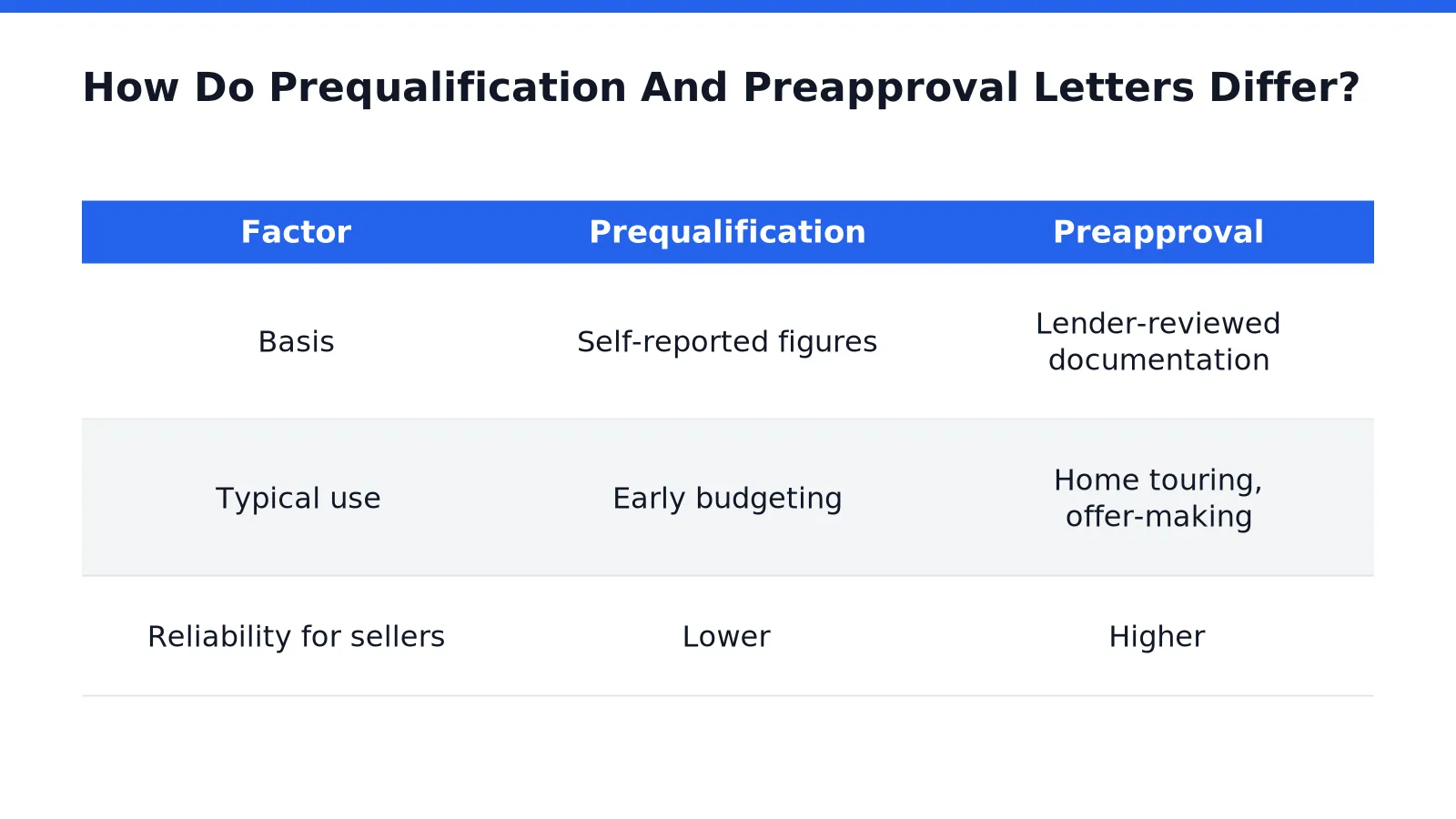
How Do Prequalification And Preapproval Letters Differ?
Both documents estimate borrowing power, yet they rest on different levels of financial verification. A prequalification letter relies on self-reported income, assets, and debt figures. A preapproval letter, by contrast, rests on documents a lender has actually reviewed.
Munshi Capital Inc. treats this distinction as the starting point for sound loan readiness, not a technicality to gloss over. Both letter types specify how much a lender is willing to extend, up to a set amount, based on certain assumptions about the borrower’s finances. Neither one guarantees a final loan offer.
Confusion grows because the mortgage industry has no single standard for these terms. Lenders apply “prequalification” and “preapproval” inconsistently across the market. Some call an unverified estimate a prequalification; others label the same type of estimate a preapproval. That inconsistency makes it essential to ask any lender exactly what review steps stand behind the letter in hand.
Is a preapproval letter stronger than a prequalification letter?
Generally, yes. Preapproval carries more weight because a lender has already examined financial records rather than accepted unverified claims. That verification step is why real estate agents. Sellers tend to treat a preapproval letter as a more credible signal of a buyer’s mortgage approval prospects.
Munshi Capital Inc. builds every client conversation around clarity on exactly this point. The company’s borrower-first guidance walks first-time buyers. Investors through what each letter actually confirms, removing guesswork from an already complex process. That transparency, paired with straightforward documentation requests, keeps preapproval prequalification decisions grounded in fact rather than assumption from application through closing.
Which Step Builds True Loan Readiness First?
A quick, secure application marks the real starting point of loan readiness, not the paperwork that follows weeks later. Buyers who complete this step share their goals directly with a loan specialist, who maps out which residential or commercial program fits their situation. That early conversation sets the foundation for everything that follows: income review, document verification, and underwriting.
Understanding how preapproval prequalification connects to mortgage approval matters before comparing offers on paper. Prequalification gives a rough estimate of buying power based on self-reported numbers. Preapproval digs deeper into income, credit, and debt to produce a figure sellers actually trust. Both stages build toward one goal: proving loan readiness before an offer gets submitted on a property.
Income requirements shift depending on individual circumstances, not a fixed formula. Down payment size, interest rates, and existing debt load all affect how much a household qualifies to borrow. Two buyers earning identical salaries can qualify for very different loan amounts once these factors are weighed.
What determines loan readiness level?
Loan readiness rests on documentation, not guesswork. Lenders assess income stability, debt obligations, and down payment strength to gauge whether a borrower can carry a given mortgage comfortably. A borrower who understands these levers enters the preapproval stage already prepared.
How does Munshi Capital keep this process transparent?
Munshi Capital Inc. pairs modern technology with hands-on loan specialists to keep every step visible to the borrower. Clarity and honesty guide the path from application through closing, with no hidden conditions buried in fine print.
FAQ
What’s the main difference between preapproval and prequalification?
Prequalification relies on self-reported financial details without verification, while preapproval requires Munshi Capital Inc. to verify income, credit, and assets, producing a conditional loan commitment with real negotiating weight.
Which step should a buyer complete before making an offer?
Buyers touring homes or submitting offers need preapproval, since verified financing carries weight with sellers. Prequalification only suits early budgeting before a serious home search begins.
Does preapproval guarantee final mortgage approval?
No, preapproval does not guarantee final approval, but it demonstrates serious intent and stronger offer position, since Munshi Capital Inc. still completes underwriting and closing afterward.
Conclusion
In closing, understanding the distinction between prequalification and preapproval positions you to navigate the mortgage process with clarity and confidence. Prequalification offers an initial assessment of your borrowing capacity. Preapproval demonstrates to sellers that you possess verified financial credentials and serious purchasing intent. Munshi Capital Inc. guides borrowers through both stages with transparent communication and personalized expertise, ensuring you select the financing path aligned with your specific objectives and timeline. Our commitment to clarity throughout the lending journey removes uncertainty. Empowers you to move forward decisively in your real estate endeavors.
Leave a Reply