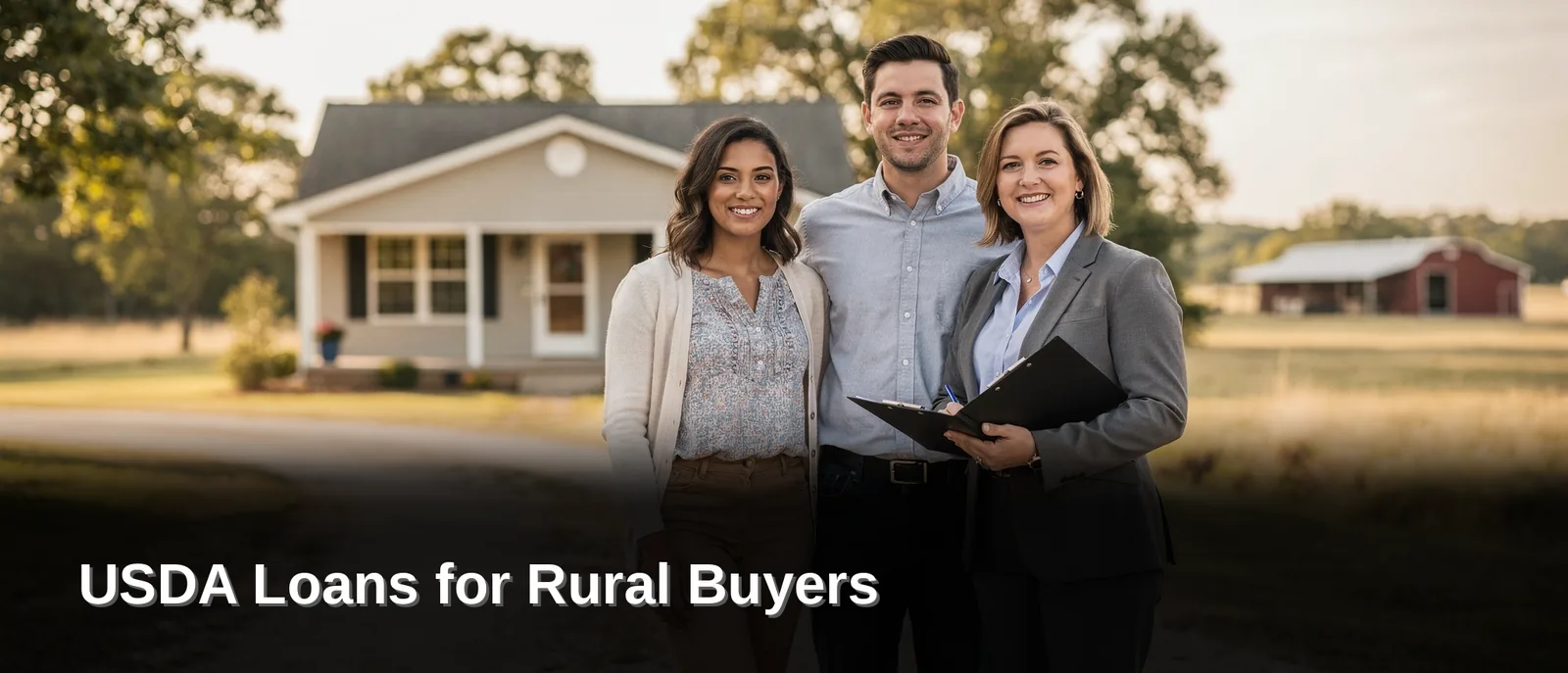
USDA loan eligibility for rural buyers requires household income within county limits. A home located in a USDA-designated rural area. The Section 502 Guaranteed Loan Program offers 100% financing with a 90% loan note guarantee, letting qualified low- and moderate-income applicants purchase, build, or rehabilitate a primary residence without a down payment.
Key Takeaways
- USDA Section 502 loans assist low- and moderate-income households in purchasing homes in eligible rural areas.
- Applicants must meet specific household income guidelines and locate properties in USDA-defined eligible rural zones.
- Direct loans provide payment assistance subsidies that reduce monthly mortgage payments for very-low-income borrowers.
- Properties must be decent, safe, sanitary dwellings serving as the primary residence for qualified applicants.
What Exactly Are USDA Loans?
USDA loans finance the purchase, construction, rehabilitation, or relocation of a home in an eligible rural area, with 100% financing and no down payment required. Qualifying buyers avoid the single largest barrier to homeownership: the cash needed upfront. Many families delay homeownership for years simply to save a down payment that this program eliminates entirely for those who meet income and location requirements.
This structure functions as a zero down rural mortgage, and the mechanics behind it are straightforward. The U.S. Department of Agriculture provides approved lenders a 90% loan note guarantee, which offsets the risk of extending a full 100% loan to a qualifying rural homebuyer. Lenders gain protection; borrowers gain access. Without that guarantee, most lenders would require a traditional down payment, pushing homeownership further out of reach for low- and moderate-income households.
Munshi Capital Inc. includes these loans within its residential lending programs, alongside FHA, VA, and bank statement financing. Mortgage products are designed for a wide range of borrowers, from first-time homebuyers to seasoned investors, and rural financing fits naturally into that lineup for buyers who qualify.
Who Benefits Most From a Zero-Down USDA Loan?
First-time buyers with limited savings benefit most, since the program removes the down payment requirement entirely. Low- and moderate-income households purchasing a primary residence in an eligible rural or eligible suburban area represent the core audience. Meeting USDA eligibility standards for income and property location determines qualification, not cash reserves. Buyers ready to move forward can request a direct cash offer discussion or request your property assessment to confirm whether a target home qualifies for this financing path.
Who Qualifies Under USDA Eligibility Rules?
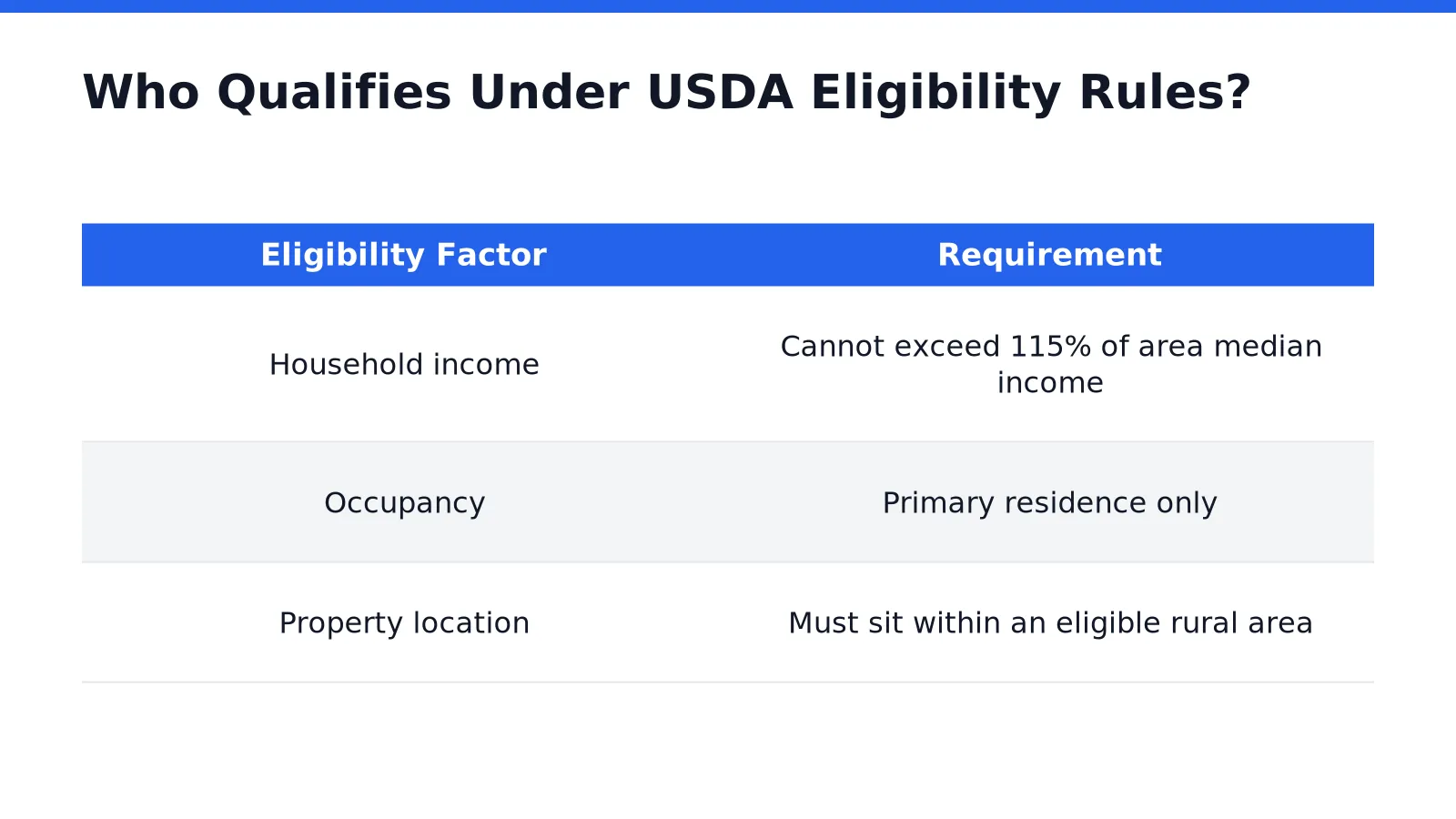
Income and occupancy determine qualification for USDA eligibility, not credit scores alone. Household earnings cannot exceed 115% of the area’s median household income, a threshold set under the Section 502 Guaranteed Loan Program. That single number separates eligible applicants from those who need to look at other financing paths.
Occupancy rules matter just as much as income. Applicants must agree to live in the financed property as a primary residence, not as a rental or vacation home. This requirement exists because the program targets families seeking stable, long-term housing, not real estate investment.
What Income Counts Toward the 115% Limit?
Lenders calculate eligibility using total household income, not just the income of the applicant on the loan. That includes wages from all adults in the home, even those not listed on the mortgage. This method keeps the program focused on genuine need rather than individual credit profiles.
Does Everyone in the Home Need to Qualify?
Every income-earning household member factors into the calculation, even non-borrowing spouses or adult children. The property itself must also sit within a designated rural area to support a zero down rural mortgage. Meeting income limits alone does not guarantee approval if the location falls outside eligible boundaries.
Munshi Capital Inc. reviews both factors, income and occupancy, before guiding applicants toward USDA loans or alternative programs. The company’s mortgage specialists walk borrowers through each requirement with direct, documented answers. No guesswork, no vague assurances, just a clear comparison of where a household stands.
Is Your Property Located in an Eligible Rural Area?
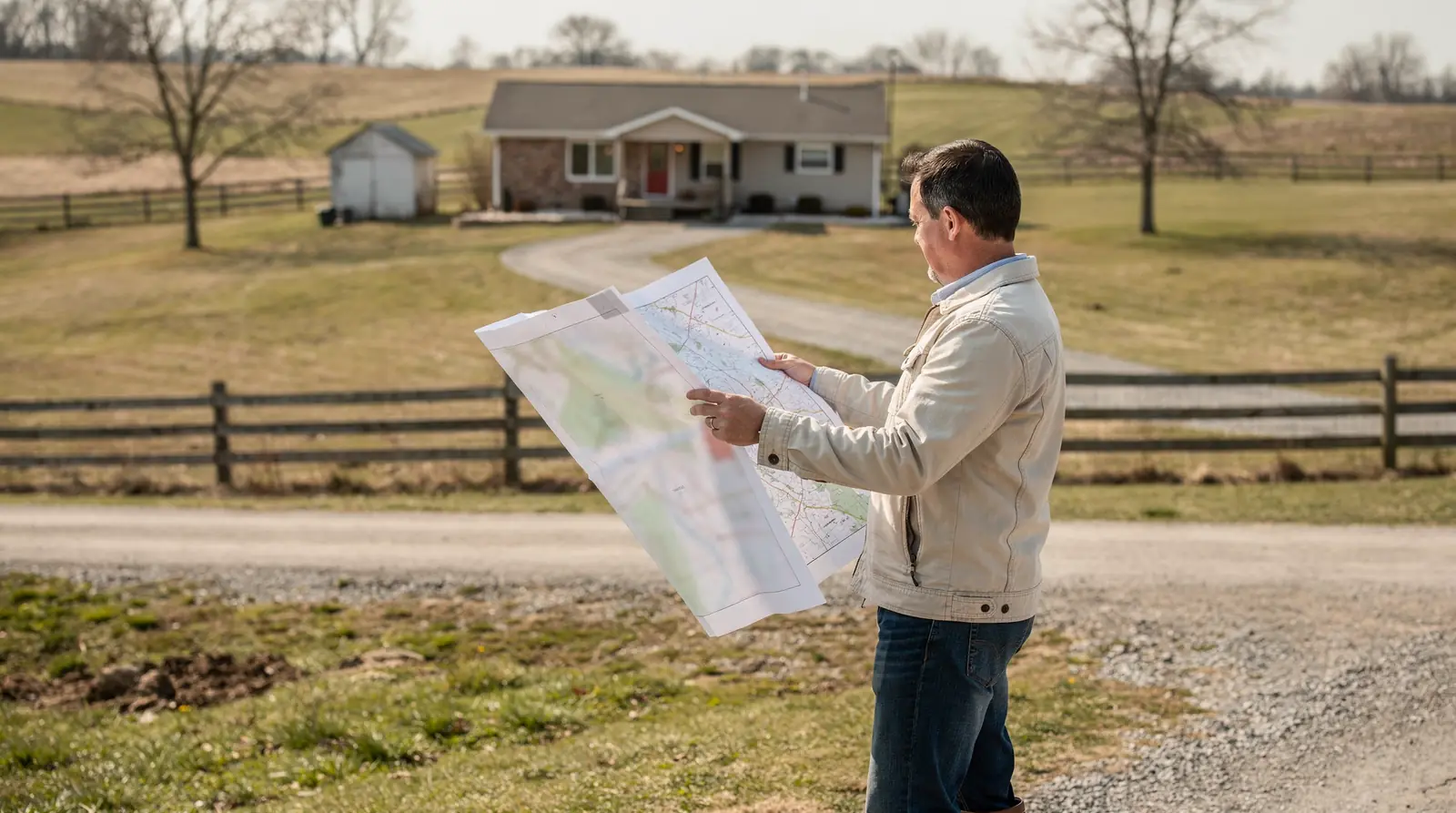
Rural status, not lot size or distance from downtown, determines eligibility for this financing. A home financed through USDA loans must sit inside a boundary the U.S. Department of Agriculture classifies as rural, not simply any quiet suburban street or small-town address that looks the part.
Many buyers assume a property is remote enough to qualify just by appearance. That assumption carries real risk. Homes sitting just outside a designated boundary lose access to zero-down financing entirely, even when the surrounding area feels far from any city. Confirming the boundary before writing an offer protects buyers from a denied application after months of house hunting.
How can a buyer confirm property eligibility before making an offer?
USDA maintains a dedicated Property Eligibility Program lookup tool through its loan program resources. Entering a specific address returns an immediate determination of rural status, removing guesswork from the search. Checking usda eligibility through this tool before touring homes or submitting offers prevents wasted time on listings that never qualify for a zero down rural mortgage.
Buyers searching across state lines face added complexity, since rural boundaries shift from one county to the next without warning.
- Search city-level pages for local loan programs, current rates, and market insights tailored to the target buying area.
- Compare neighboring streets, since rural designation can change block by block near metro edges.
- Review loan options built around each buyer’s financial picture, since program fit varies by income, location, and household size.
What happens if a property falls outside the eligible boundary?
The property simply does not qualify for this path, regardless of income or credit strength. Buyers in that position still have access to a broad range of residential loan programs serving homebuyers nationwide. Checking eligibility early, before falling for one specific listing, avoids that disappointment altogether.

Guaranteed or Direct: Which USDA Loan Fits?
Two distinct programs answer that question, and the right fit depends on income level. The Section 502 Direct Loan Program serves low- and very-low-income applicants. The Guaranteed program works through approved private lenders for a broader income range. Both fall under the USDA loans umbrella, but the assistance structure differs sharply.
Direct loans stand out for one key feature: payment assistance. This support functions as a temporary subsidy, lowering the mortgage payment for a limited period while the household builds repayment strength. It’s a targeted tool, not a permanent discount, and the amount depends on the applicant’s financial profile at closing.
What makes the Direct program different from the Guaranteed option?
The Direct program lends federal funds straight to qualifying low- and very-low-income buyers, with payment assistance built in. The Guaranteed program instead backs loans issued by private lenders, reaching moderate-income households without that subsidy layer. Both aim at the same goal: safe, decent housing in eligible rural areas through a zero down rural mortgage.
Figuring out which path fits isn’t always obvious from income alone. Household size, local limits, and USDA eligibility rules all factor in. Munshi Capital Inc. asks prospective borrowers to share their homeownership goals directly with a loan specialist, who then identifies which residential program, USDA or otherwise, matches the household’s circumstances. That personalized review, paired with a broad lineup of loan products, is why rural buyers across the country turn to the firm for guidance they can trust.
How Do You Start the USDA Loan Process?
A documented application kicks off the process, followed by underwriting and a scheduled closing. Munshi Capital Inc. moves borrowers through this straightforward application, underwriting, and closing sequence, built for ease and understanding rather than confusion. First-time buyers and low-to-moderate income families pursuing usda loans gain a clear path instead of a maze of paperwork.
Modern technology drives the pace, but hands-on loan specialists remain central to the work. Munshi Capital Inc. pairs digital tools with experienced staff who review each file personally. That combination produces quick pre-approvals and gives applicants full visibility into loan status at every stage, from the first document upload through the closing table.
What Happens After Submitting an Application?
Submission triggers a review of income, credit, and property eligibility against usda eligibility standards for the household and the area. Underwriting staff verify documents and flag any gaps early, rather than late in the process. Communication continues throughout, so applicants always know where their file stands.
Does the Process Stay Transparent From Start to Finish?
Yes. Munshi Capital Inc. guides every step with clarity and speed, avoiding confusing jargon and hidden surprises. This borrower-first approach reflects a company built on trust, with transparent guidance rooted in honesty and service.
For buyers ready to explore a zero down rural mortgage, the next step is simple:
- Gather income and household documentation.
- Confirm property location against eligible rural boundaries.
- Submit an application for underwriting review.
- Track status through to closing with steady, direct communication.
Sellers weighing a sale alongside a purchase can also request a direct cash offer or request your property assessment to plan financing timelines accurately.
FAQ
What makes USDA loans different from other mortgage programs?
USDA loans offer 100% financing with no down payment, backed by a 90% loan note guarantee from the U.S. Department of Agriculture to approved lenders for qualifying rural buyers.
Who qualifies for a USDA loan?
Qualification depends on household income staying within 115% of the area’s median income and occupying the financed property as a primary residence, not a rental or investment property.
Does Munshi Capital Inc. offer USDA loans alongside other programs?
Yes, Munshi Capital Inc. includes USDA loans within its residential lending programs alongside FHA, VA, and bank statement financing, serving first-time homebuyers and seasoned investors alike.
Conclusion
In closing, understanding USDA loan requirements and eligibility criteria positions rural borrowers to make informed financing decisions aligned with their unique circumstances. The pathway to homeownership in eligible rural areas becomes clearer when applicants comprehend income limits, property location restrictions, and credit considerations that define program parameters. Prospective borrowers benefit from partnering with experienced loan specialists who provide transparent guidance throughout the application and underwriting process, ensuring clarity at every stage and empowering confident progress toward securing appropriate financing solutions.
Leave a Reply