Mortgage applications follow a clear sequence: submission of a full application with income and asset documentation, lender review, underwriting, appraisal, and closing. Munshi Capital Inc. guides borrowers through FHA, VA, USDA, DSCR, and bank statement loan options at each stage, ensuring transparent communication and steady progress from pre-approval to final signing.
Summary of the Mortgage Application Process
- Submit your application with required documentation to begin your mortgage journey with transparency and clarity.
- Complete underwriting review within days, with our loan specialists providing full visibility into your loan status.
- Receive pre-approval quickly through modern technology combined with hands-on service from our dedicated team members.
- Close your loan confidently knowing no hidden surprises await, just honest communication throughout the entire process.
What Do You Need Before Applying?
Documentation determines readiness. Lenders require full records of income, debts, and assets before a loan file moves into underwriting. Missing paperwork stalls approval timelines and delays closing dates that buyers depend on. A disorganized file costs time that competitive housing markets rarely allow.
Preparation begins with an honest look at finances, not a loan officer’s phone call. The **mortgage application process** runs smoother when borrowers assemble records before submission rather than scrambling afterward. Gathering these items early protects against last-minute underwriting requests that stretch closing dates.
What documents belong on a mortgage checklist?
A thorough **mortgage checklist guide** covers four categories every borrower should prepare in advance:
- Income verification: pay stubs, tax returns, or profit-and-loss statements for self-employed applicants
- Debt records: statements for auto loans, student loans, and credit card balances
- Asset documentation: bank statements and investment account summaries
- Identification: government-issued ID and Social Security verification
Should a borrower get prequalified first?
Prequalification gives borrowers a realistic borrowing estimate before they start shopping for homes. This step prevents wasted time touring properties outside a true budget range. It also clarifies **how to apply for a mortgage** with confidence instead of guesswork.
Munshi Capital Inc. structures its residential and commercial programs, including FHA, VA, USDA, and bank statement loans, around the financial picture each borrower brings forward. First-time buyers and seasoned investors alike fall within that range of supported profiles. Borrowers weighing a sale alongside a purchase can request a direct cash offer to simplify the transition. Those same borrowers can request your property assessment for their own understanding before setting next steps.

How Do You Submit Your Application?
Submission starts with a quick, secure online form rather than a stack of paperwork. Munshi Capital Inc. built the mortgage application process around speed and clarity, so borrowers know exactly where they stand from the first click. Skipping this step or submitting incomplete details delays underwriting. Stalls a closing timeline that depends on accurate documentation from day one.
Before starting, applicants should gather income records, asset statements, and a clear picture of the loan program they want. Knowing how to apply for a mortgage correctly means matching goals to the right product, whether that’s a residential purchase loan or a commercial financing package. The steps below outline the submission sequence in order.
- Access the secure application portal and begin the intake form.
- State homeownership or investment goals clearly, including property type and purchase timeline.
- Identify the loan program that fits the borrower’s financial picture, residential or commercial.
- Connect with a Munshi Capital loan specialist who reviews the stated goals and program selection.
- Submit the application for processing, triggering document collection.
Once submitted, a mortgage consultant collects and verifies the paperwork needed to build the loan file for underwriting. This document-gathering stage forms the backbone of the entire mortgage checklist guide, since missing records at this point create bottlenecks later in review.
What Happens Right After Submission?
A loan specialist contacts the applicant to confirm program fit and request any missing documentation. This conversation shapes the loan file before it moves to underwriting.
Does Submitting an Application Guarantee Approval?
No. Final loan approval remains subject to credit approval and program guidelines. Not every loan program is available in every state or for every loan amount. Eligibility depends on individual circumstances reviewed during underwriting.
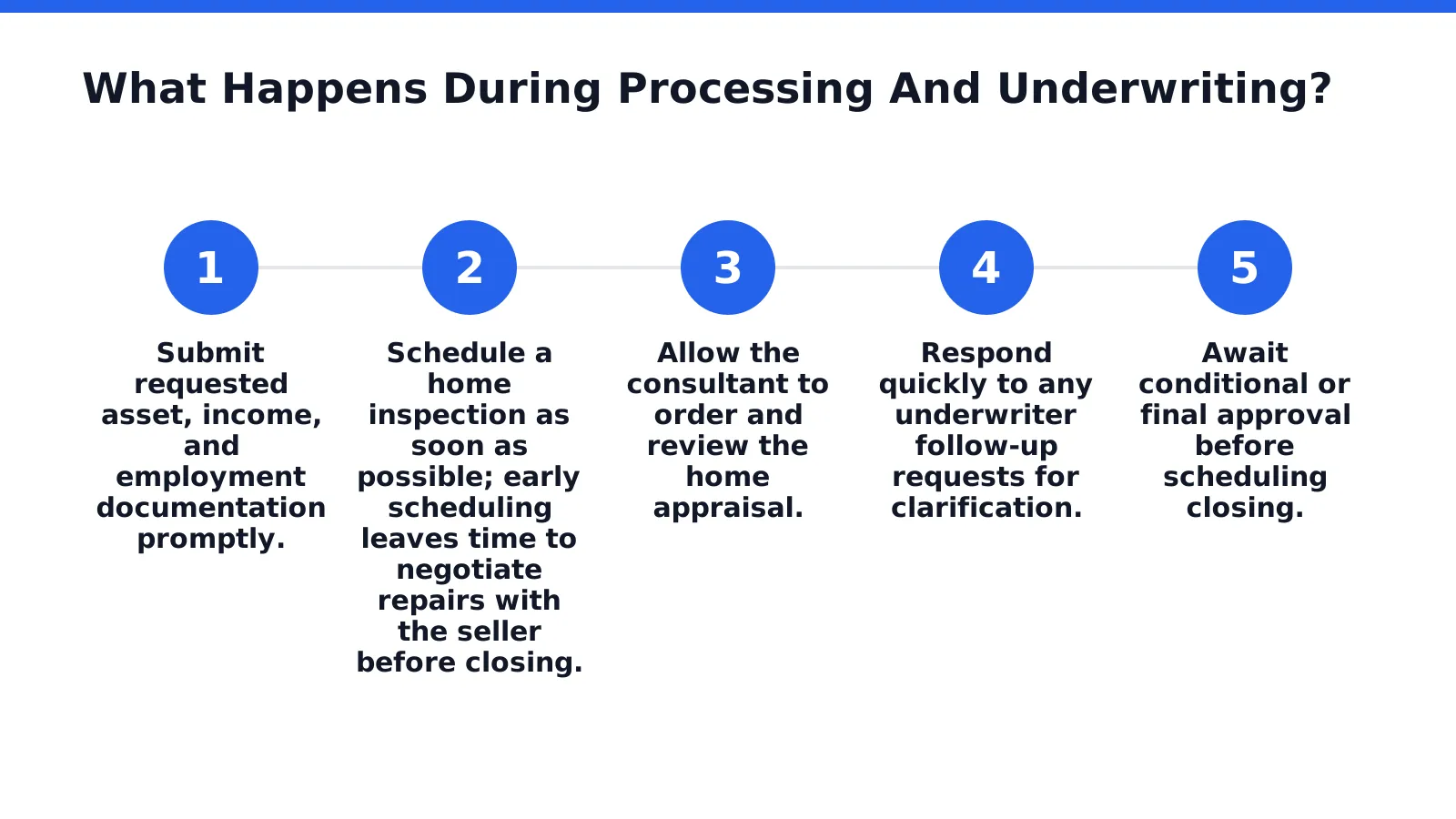
What Happens During Processing And Underwriting?
Processing and underwriting form the verification stage of the mortgage application process. A loan consultant confirms every detail submitted at application. The consultant checks assets, income, and employment records, then orders a home appraisal to confirm the property’s value. Underwriters compare these verified figures against program guidelines before approving the file. Delays at this stage usually trace back to missing documents or an incomplete mortgage checklist guide, not loan eligibility itself.
Borrowers following a sound how to apply for a mortgage strategy take action early rather than waiting for a lender request. The steps below outline the typical sequence during this phase:
- Submit requested asset, income, and employment documentation promptly.
- Schedule a home inspection as soon as possible; early scheduling leaves time to negotiate repairs with the seller before closing.
- Allow the consultant to order and review the home appraisal.
- Respond quickly to any underwriter follow-up requests for clarification.
- Await conditional or final approval before scheduling closing.
Why does underwriting take so long?
Underwriting timelines stretch when documentation arrives piecemeal or appraisal scheduling faces delays. Self-employed borrowers and investors often face additional scrutiny of income verification, which extends review time. Munshi Capital Inc. shortens this window by pairing modern technology with hands-on loan specialists, delivering quick pre-approvals and full visibility into status updates from start to finish.
What should borrowers do while waiting on underwriting?
Borrowers should avoid new credit inquiries, large deposits, or job changes during this window, since underwriters recheck financial activity before final approval. Keeping documentation organized prevents last-minute scrambling. Munshi Capital Inc.’s dedicated team provides personalized guidance throughout underwriting, helping first-time buyers, self-employed borrowers, and investors nationwide move toward closing with confidence rather than uncertainty.
What Are The Final Steps To Closing?
Closing marks the final stage of the mortgage application process, following final underwriting approval and a clear title review. Borrowers move through application, underwriting, and closing in a straightforward sequence, and Munshi Capital Inc. builds that path with no hidden surprises. Before this stage begins, the loan file must carry a clear-to-close status from underwriting. From there, the path to the closing table follows a defined order.
- Review the closing disclosure for final loan terms, monthly payment, and closing costs.
- Confirm funds for closing costs and down payment are ready in a verified account.
- Complete a final walkthrough of the property, if applicable.
- Sign closing documents, including the deed and promissory note.
- Fund the loan and receive keys or transfer ownership.
The Munshi Capital Inc. team guides borrowers through every step from application to closing with clarity and speed. That guidance matters most in these final days, when paperwork and timing questions tend to pile up fast.
Why does loan availability affect closing terms?
Not every loan program is available in every state or for every loan amount. That variation can shape the terms a borrower sees at closing. A program offered in one market may carry different conditions elsewhere. This is where a thorough mortgage checklist guide earns its keep. It flags state-specific and loan-amount restrictions long before the closing table.
What happens after signing?
Funds disburse, the deed records, and the loan officially closes once documents clear final review. Borrowers walk away with a funded loan. A clear record of every disclosed term, exactly as promised from day one. Those weighing how to apply for a mortgage now hold a complete picture, from first document to final signature.
What Common Mistakes Should You Avoid?
Skipping lender vetting ranks as the most common misstep during the mortgage application process. Borrowers who choose a lender on rate alone often lose the clarity needed for a smooth closing. A lender built on trust and committed to transparent, borrower-first guidance protects against confusing terms later in the loan journey. Integrity, personalized service, and a broad range of loan products separate a dependable financing partner from a risky one.
Four errors derail borrowers most often:
- Signing paperwork without researching the lender’s track record.
- Ignoring a mortgage checklist guide and submitting incomplete income or asset documentation.
- Accepting verbal promises instead of written loan terms.
- Staying silent when contract language seems unclear.
What happens if loan terms seem unclear?
Confusion at this stage signals a gap in communication, not a borrower failure. A clarity- and honesty-driven approach reduces the risk of surprises before closing. Borrowers should request plain-language explanations immediately rather than proceeding on assumptions.
How to apply for a mortgage without missing documents?
Successful applicants organize income statements, tax records, and asset verification before submission. Early preparation shortens underwriting delays and keeps the loan file moving toward funding without last-minute scrambling.
FAQ
What documents do you need before applying for a mortgage?
Borrowers gather income verification, debt records, asset documentation, and identification before submission. This preparation keeps
Conclusion
In closing, navigating the mortgage application process requires clarity, precision, and dependable guidance at each stage. Munshi Capital Inc. delivers exactly that through a straightforward pathway designed to eliminate confusion and build confidence. From initial pre-qualification through final closing, our commitment to transparency and personalized service ensures you understand every step and maintain full visibility into your loan status. Whether you are a first-time homebuyer or an experienced investor, our comprehensive loan programs and dedicated specialists provide the expertise and integrity necessary to secure financing aligned with your specific objectives.
Leave a Reply