
Comparing mortgage rates and fees requires requesting loan estimates from multiple lenders. Bankrate data shows national averages reaching 7.49% while top offers hit 6.73%, a meaningful spread. Borrowers should evaluate APR, closing costs, and lender fees side by side rather than rate alone. Variance between lenders can substantially affect total borrowing costs.
Key Takeaways
- Compare rates across multiple lenders to identify meaningful differences in interest rates and closing costs.
- Shop around with at least 3 different lenders within a 45-day window to lock in competitive offers.
- Request transparent compensation details from each loan specialist to understand how they’re paid and avoid conflicts.
- Evaluate total loan costs beyond interest rates, including fees, points, and closing expenses for accurate comparison.
What Do You Need Before Comparing Mortgage Rates?
Three documents and one mindset shift form the foundation of any sound rate-comparison-guide-020: income verification, a target loan program, and a clear view of total cost rather than rate alone. Borrowers skip this step at a cost. Without preparation, loan estimates become confusing rather than useful, and the comparison collapses into guesswork.
Munshi Capital Inc. supports this groundwork by offering residential and commercial loan programs across FHA, VA, USDA, and bank statement options. Having multiple products available means borrowers can match the right program to their financial picture before shopping rates at all. Investors facing non-traditional income or property situations also have access to DSCR. Hard money loans, financing options built outside conventional underwriting rules.
What documents should borrowers gather first?
Lenders need proof of income, asset statements, and credit history before issuing an accurate quote. Gathering these ahead of time speeds up underwriting and produces estimates that actually reflect a borrower’s situation.
Does the loan program affect the comparison?
Yes. An FHA quote and a bank statement loan quote serve different borrower profiles, so comparing them side by side without context misleads more than it clarifies. Identify the right program category first, then compare lenders within that category.
A proper mortgage-rate-comparison-020 also requires transparency from the lender itself. Munshi Capital Inc. operates under a mission built on clarity and honest communication through every stage of the process, a standard worth expecting from any firm under review.
Finally, remember that the rate is only one piece of the full cost picture. Fees, terms, and closing costs complete the equation of true compare-lenders-rates-020 practice. Borrowers ready to move forward can request a direct cash offer. Request your property assessment to establish an accurate starting value before locking in terms.
How Do You Request Loan Estimates From Lenders?
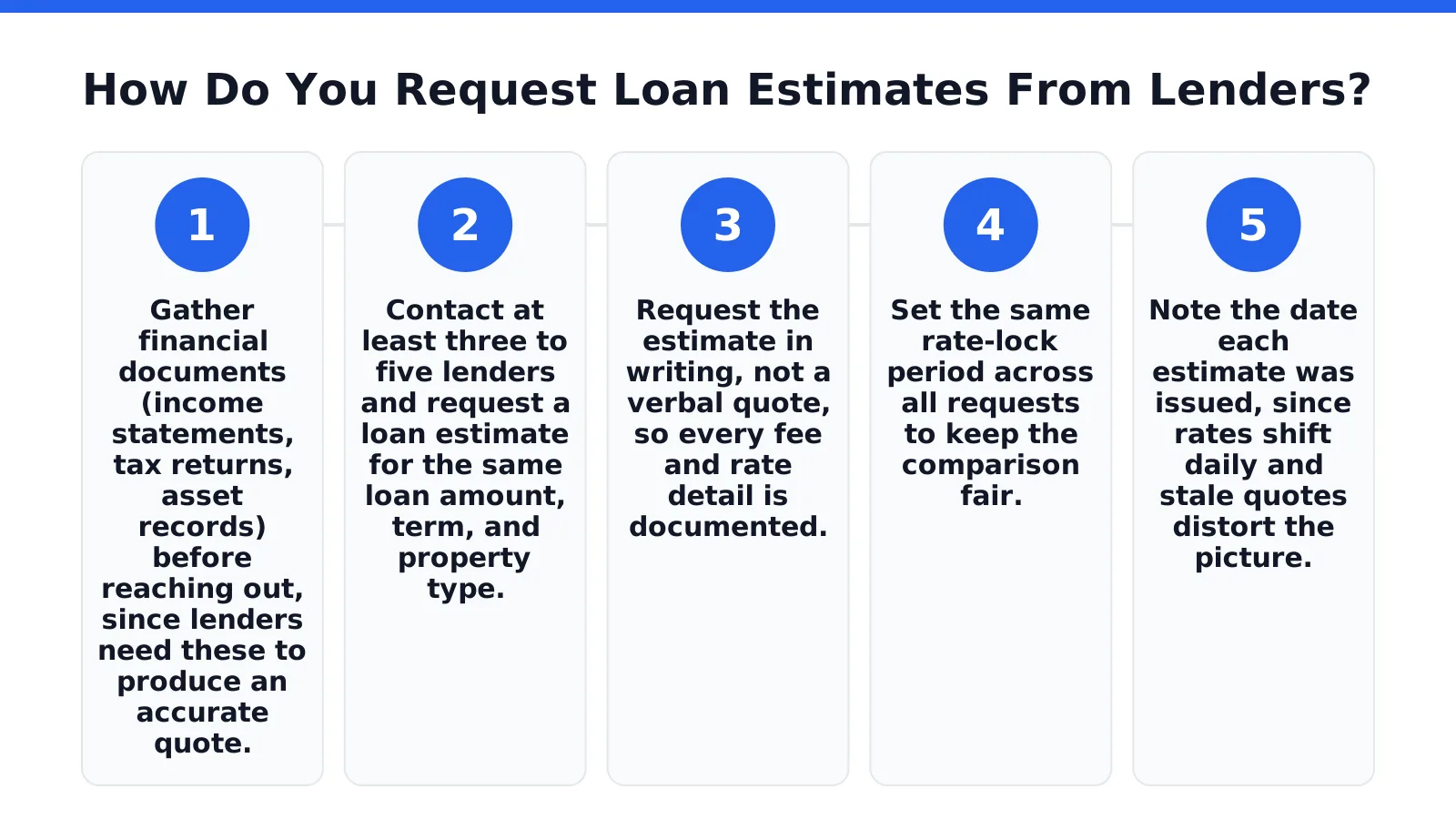
Requesting loan estimates starts with contacting multiple lenders directly and asking each for a formal, written quote. Borrowers who skip this step risk overpaying for years on a loan they never fully understood. Pricing varies among lenders, and understanding these differences can help borrowers avoid overpaying over the life of a loan.
Follow these steps to build a reliable rate-comparison-guide before choosing a lender:
- Gather financial documents (income statements, tax returns, asset records) before reaching out, since lenders need these to produce an accurate quote.
- Contact at least three to five lenders and request a loan estimate for the same loan amount, term, and property type.
- Request the estimate in writing, not a verbal quote, so every fee and rate detail is documented.
- Set the same rate-lock period across all requests to keep the comparison fair.
- Note the date each estimate was issued, since rates shift daily and stale quotes distort the picture.
Gathering quotes this way is the foundation of any sound mortgage-rate-comparison, because rate alone never tells the full cost story.
Why Do Lenders Give Different Quotes for the Same Loan?
Lenders price risk, overhead, and profit margins differently, so identical borrower profiles can receive different rate and fee combinations. One lender might offer a lower rate paired with higher closing costs, while another does the reverse. This variance is exactly why a borrower benefits from requesting multiple estimates rather than accepting the first offer.
Munshi Capital Inc. structures its process around quick pre-approvals and full visibility into loan status, which speeds up the estimate-gathering stage. The company also guides borrowers through application, underwriting, and closing with transparent communication at each step, so no hidden terms surface late. Homeowners ready to move forward can request a direct cash offer or request your property assessment to begin comparing lenders rates with confidence.

How Do You Compare Rates And Fees Side-By-Side?
Side-by-side comparison requires lining up three figures from each quote: the interest rate, the annual percentage rate, and the total fees charged at closing. Borrowers who skip this step risk locking in a rate that looked attractive on day one but cost more by closing day. National average rates for 30-year fixed loans recently climbed to a multi-year high. That kind of movement means a quote collected on a Monday can be stale by Thursday.
Follow these steps to build an accurate comparison:
- Request written estimates from multiple lenders on the same day.
- Record the interest rate, APR, and lender fees for each offer in a single table.
- Confirm the loan amount, term, and property type match across every quote.
- Ask each lender how long the quoted rate stays locked.
- Re-request updated figures if more than 48 hours pass before a decision.
Why Do Mortgage Quotes Change So Quickly?
Rates shift because lenders reprice loans based on bond markets, which move throughout the trading day. A quote given at 9 a.m. may not match one given at 3 p.m. This volatility is exactly why a disciplined rate-comparison-guide matters: it forces an apples-to-apples read rather than a memory-based guess.
Munshi Capital built its lending programs around this problem. As part of its mortgage-rate-comparison approach, the company offers personalized guidance that helps borrowers nationwide evaluate offers with confidence, backed by a wide range of loan products and a stated commitment to transparency at every stage of the process.
How Do You Negotiate For A Better Rate?
Negotiating a better mortgage rate requires leverage, and leverage comes from collected estimates. Borrowers who gather multiple loan quotes gain the standing to push back on both lenders and brokers. Skipping this step costs borrowers real money across the life of a loan. No single quote reveals whether a rate or fee structure is competitive.
Once estimates arrive, the work of comparison begins. A solid rate-comparison-guide approach treats negotiation as a structured process, not a one-time ask. Follow these steps in order:
- Collect written estimates from several lenders and brokers before comparing anything.
- Line up rates, fees, and closing costs side by side using a mortgage-rate-comparison worksheet or table.
- Return to each broker with the lowest competing number and ask for a match or improvement.
- Request clarification on any fee that seems unclear before agreeing to it.
- Lock the rate only after confirming the final terms in writing.
Should Borrowers Negotiate With Brokers, Not Just Lenders?
Yes. Brokers set their own compensation structures, and that leaves room for discussion separate from the lender’s posted rate. Borrowers prepared to negotiate with brokers, as well as direct lenders, often secure better combined terms.
What Role Does A Loan Specialist Play In Negotiation?
Munshi Capital Inc. supports borrowers through this stage with modern technology paired with the hands-on service of loan specialists, keeping negotiation and lock-in transparent. Financing stays structured around the borrower, with guidance through every loan program and clear answers at each step. That borrower-first approach, built on trust and honest communication, keeps rate and fee discussions straightforward rather than adversarial. Effective lender rate comparison work, paired with that steady guidance, puts borrowers in a stronger position before they commit to a lock.
What Mistakes Should You Avoid When Comparing Offers?
Selecting an estimate based on rate alone ranks as the costliest error borrowers make. A lower rate often comes bundled with fees substantial enough to erase any monthly savings, shifting the real cost burden to closing day. Borrowers who skip a full mortgage rate comparison end up paying more over the life of the loan than the headline number suggested.
Munshi Capital Inc. builds its process around clarity and honesty rather than sales pressure. That service-driven ethos exists specifically to prevent the kind of comparison error that traps unprepared borrowers. From application through closing, the team walks each client through every document, removing confusing jargon and eliminating hidden surprises before they become problems.
What other mistakes derail a solid comparison?
Beyond fixating on rate alone, borrowers frequently overlook market context and lender-to-lender variation. The following missteps compound quickly when left unchecked:
- Ignoring local market data that affects pricing and loan structure
- Treating every lender quote as directly comparable without checking fee categories line by line
- Failing to request updated figures when rates shift during the shopping window
- Skipping a true compare lenders rates exercise in favor of a single quote
Why does location matter in a rate comparison?
Loan programs, pricing, and market conditions shift from city to city. A quote built for one market rarely applies cleanly to another. Munshi Capital Inc. lets borrowers search local loan programs, rates, and market insights by city, ensuring the figures reflect where they’re actually buying. Skipping this step risks comparing offers that look similar on paper but rest on mismatched market assumptions. A disciplined rate comparison guide approach, paired with jurisdiction-specific data, keeps borrowers grounded in numbers that actually apply to their purchase.
FAQ
How many lenders should you compare before choosing a loan?
Shop around with at least 3 different lenders within a 45-day window to lock in competitive offers. Identify meaningful differences in rates and closing costs.
What should you evaluate besides the interest rate?
Evaluate total loan costs beyond interest rates, including APR, fees, points, and closing expenses. Rate alone misleads since variance between lenders substantially affects total borrowing costs.
Why does the loan program matter when comparing offers?
An FHA quote and a bank statement loan quote serve different borrower profiles, so comparing them without context misleads. Identify the right program category first, then compare lenders within it.
Conclusion
In closing, comparing mortgage rates and fees demands a systematic approach grounded in transparent data and comprehensive analysis. By evaluating multiple lenders, understanding fee structures, and calculating total cost of borrowing, borrowers position themselves to make informed decisions aligned with their financial objectives. The lending process need not obscure complexity. Clarity and honest communication throughout application, underwriting, and closing ensure you secure financing that genuinely fits your unique circumstances. Your mortgage decision merits nothing less than dependable guidance and full visibility into every component of your loan.
Leave a Reply