
Mortgage rates averaged 6.95% on the 30-year fixed loan in mid-September, remaining the housing market’s primary affordability obstacle. Rising existing-home inventory now gives buyers greater negotiating leverage, though price trends vary by region. Munshi Capital Inc. guides homebuyers and investors through FHA, VA, USDA, DSCR, and bank statement loan programs matched to current conditions.
Current Housing Market and Mortgage Rate Insights
- Average 30-year fixed mortgage rates reached 6.95% in mid-September, creating affordability challenges for borrowers.
- Rising existing-home inventory shifts negotiating power toward buyers in today’s competitive real estate market.
- Regional price trends vary significantly, requiring personalized guidance to navigate local market conditions effectively.
- Interest rate fluctuations remain the primary affordability obstacle for homebuyers and investors nationwide.
Why Do Mortgage Rates Keep Shifting?
Mortgage rates move because lenders constantly reprice risk against shifting economic signals, bond market behavior, and local housing supply. For buyers, that volatility carries real stakes. Forbes Advisor notes that mortgage rates rank among the first indicators buyers check to determine whether a home fits their budget. A single rate swing can push a monthly payment out of reach or open the door to a better deal.
Rate movement isn’t random, but it also isn’t uniform across every city or loan type. This is why mortgage rates insights matter more than a single national average. Local lending conditions, property values, and loan program availability all shift the picture for a specific buyer in a specific market.
How Can Buyers Track Rate Changes in Their Own Market?
Munshi Capital addresses this gap directly. The company provides local mortgage pages covering loan programs, rates, and market insights by city, giving buyers a way to see how national rate trends translate into their own neighborhood. A rate dip that helps a buyer in one region may barely register in another, depending on inventory and local demand.
What Does a Transparent Rate Guidance Process Look Like?
Clarity matters as much as the numbers themselves. Munshi Capital’s approach centers on transparent, borrower-first guidance at every stage of financing, built on honesty and a service-driven ethos toward each client. That commitment supports a broader current mortgage rates guide for anyone trying to time a purchase or refinance.
Three forces drive most short-term rate swings:
- Economic data releases affecting investor expectations
- Bond market pricing of inflation and growth risk
- Local housing supply and lender competition
A sound rate trends analysis weighs all three before any borrower locks in a number.
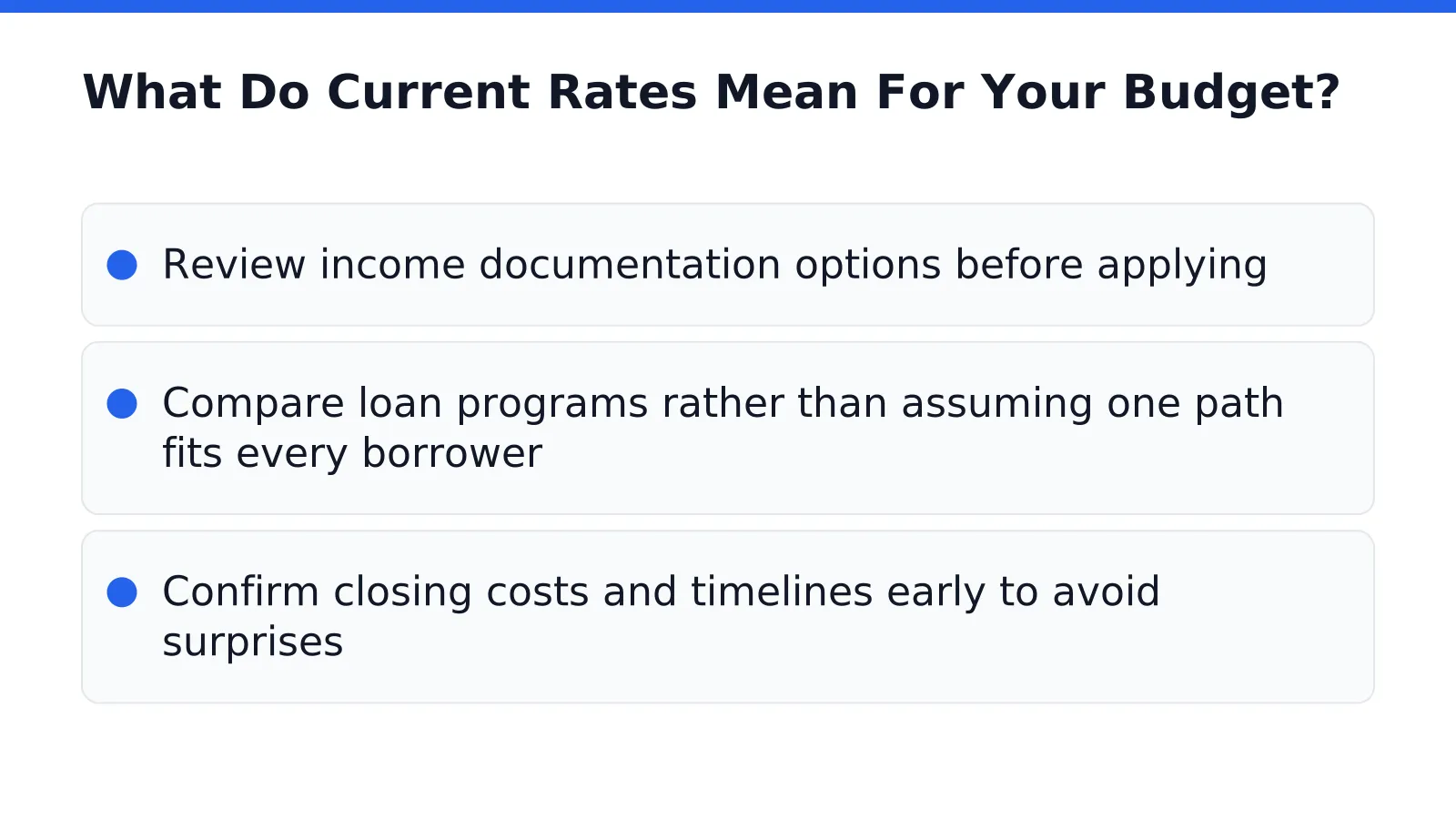
What Do Current Rates Mean For Your Budget?
Affordability sits at the center of every budget decision right now. The average 30-year fixed mortgage rate reached 6.95% in mid-September. That figure, more than home prices themselves, now drives what a monthly payment looks like for buyers and refinancing homeowners alike.
A rate this high changes the math on nearly every purchase. Buyers calculating monthly payments need to understand that published benchmark rates come from surveys of first-lien prime conventional conforming purchase mortgages with an 80 percent loan-to-value ratio. A borrower putting down less, carrying a different credit profile, or seeking a jumbo loan will see a quote that differs from the headline number.
Why does my quoted rate differ from the national average?
National averages describe a specific borrower profile, not every borrower. Loan-to-value ratio, credit score, property type, and loan size all shift the final number up or down. Comparing quotes side by side matters more than comparing one quote to a published average.
How can borrowers protect their budget when rates shift?
Flexibility in loan structure helps offset rate pressure. Munshi Capital provides FHA, VA, USDA, and bank statement loans built around each applicant’s actual financial picture, rather than a single rigid formula.
Budget planning benefits from a clear process, too:
- Review income documentation options before applying
- Compare loan programs rather than assuming one path fits every borrower
- Confirm closing costs and timelines early to avoid surprises
Borrowers move through application, underwriting, and closing with transparency at each stage. That matters most when rates move quickly and budgets have little room for hidden costs.

How Is The Housing Market Responding To Rates?
Existing-home inventory is climbing, and that shift is handing buyers more negotiating leverage than they had a year ago. Sellers in many metro areas face longer listing times, though price trends still vary widely by region. A buyer in one state may find room to negotiate closing costs. A buyer two states over faces a tighter, seller-favored market.
This unevenness matters because housing touches far more than individual transactions. Housing-related spending and investment account for roughly 15% to 18% of U.S. economic activity, so a shift in borrowing costs ripples outward into construction, retail, and employment. Rate movement rarely stays contained to mortgage statements alone.
Why Do Regional Markets React Differently To The Same Rate?
Local supply constraints, job growth, and population shifts shape how a given metro absorbs rate pressure. Two buyers facing identical rates can experience opposite negotiating conditions depending on inventory levels in their specific market.
Munshi Capital Inc. tracks these regional patterns closely, building out mortgage rates insights for clients weighing purchase timing against local conditions. That localized view, paired with a current mortgage rates guide covering residential and investor products, helps borrowers separate national headlines from what is actually happening on their block.
Seasoned investors and first-time buyers alike benefit from this kind of rate trends analysis. It clarifies whether a slower market favors waiting or acting now. Munshi Capital Inc. serves first-time homebuyers, seasoned investors, and business owners nationwide with a full range of loan programs. That breadth, paired with a transparent, personalized process, gives borrowers a clearer read on when conditions favor a move and when patience pays off.

Where Are Rates Headed Next?
Mortgage costs, income growth, and disciplined new-home supply, not another broad surge in home prices, will shape the housing market’s direction. This mortgage-rates-insights-019 outlook rests on fundamentals rather than speculation. Borrowers chasing short-term swings often miss the larger pattern taking shape across 2026.
The Federal Reserve spent much of 2026 holding the federal funds rate steady, watching how earlier cuts moved through the economy. That patience ended in September, when a quarter-point increase signaled a shift in posture. For buyers and refinancers tracking this current-mortgage-rates-guide-019, that single policy move carries weight far beyond one month’s headlines.
Will mortgage rates drop soon?
No single data point answers that question. Rate direction depends on income growth, housing supply discipline, and the Fed’s ongoing response to inflation data, not isolated forecasts. Buyers waiting for a dramatic drop risk missing windows when conditions are merely favorable, not perfect.
How should buyers respond to rate uncertainty?
Preparation matters more than prediction. Locking in financing readiness now protects against sudden rate shifts later.
Munshi Capital Inc. pairs modern technology with loan specialists working side by side, a structure built for exactly this kind of rate-trends-analysis-019. That combination delivers quick pre-approvals and full visibility into loan status from application through closing, even as rates move unpredictably. Clients gain a clearer picture.
The path forward for mortgage rates:
- Tracks income growth and new-home supply, not a return to rapid price surges
- Reflects Federal Reserve decisions made after months of data review
- Rewards borrowers who stay pre-approved and ready to act
Homeowners weighing a sale amid this environment can request a direct cash offer to skip rate uncertainty entirely. request your property assessment to understand current value before deciding.
How Can Munshi Capital Help You Act Now?
Munshi Capital turns market uncertainty into a clear path forward. Borrowers get guidance through every loan program, paired with straight answers and dependable service, regardless of where rates land on any given day. That steady support matters most when mortgage rates insights shift week to week. Buyers need a lender who won’t waste their time.
What does the application process look like?
The process begins with a quick, secure application. Borrowers share their goals directly with a loan specialist and identify which residential or commercial program fits their situation. No lengthy forms, no runaround, just a direct conversation about what the borrower needs.
From there, the path to closing stays consistent. The team guides borrowers through each step with clarity and speed. There is no confusing jargon. There are no hidden surprises buried in fine print.
Who benefits from acting now instead of waiting?
First-time buyers and seasoned investors fall into different categories, but both benefit from moving decisively. Munshi Capital serves a wide range of borrowers, from those purchasing a first home to investors scaling a portfolio.
Investors tracking current rate trends analysis often need speed over paperwork, which is exactly where DSCR and hard money products apply.
Timing matters in any current mortgage rates guide. Those ready to sell a property can request a direct cash offer. Homeowners weighing their options can request your property assessment before deciding on next steps.
FAQ
Why does my quoted mortgage rate differ from the national average?
Published benchmark rates come from surveys of first-lien prime conventional conforming purchase mortgages with an 80 percent loan-to-value ratio. A different down payment, credit profile, or jumbo loan amount produces a quote that differs from that headline number.
What causes mortgage rates to shift so often?
Lenders reprice risk against economic data releases, bond market pricing of inflation and growth risk, and local housing supply and lender competition. These three forces drive most short-term rate swings nationwide.
How does Munshi Capital help buyers understand rates in their specific market?
Munshi Capital provides local mortgage pages covering loan programs, rates, and market insights by city. This shows buyers how national rate trends translate into their own neighborhood’s inventory and demand conditions.
Conclusion
In closing, navigating mortgage rate trends and housing market dynamics requires both informed decision-making and access to financing solutions tailored to your specific circumstances. Munshi Capital Inc. stands ready to guide borrowers through this complex landscape with transparent communication, comprehensive loan programs spanning residential and commercial needs, and personalized service that prioritizes your financial objectives. Whether market conditions shift or your borrowing requirements evolve, our commitment to clarity and dependable expertise ensures you secure the right financing with full visibility and confidence throughout the entire process.
Leave a Reply