
Equity and current interest rates determine readiness: compare your rate to today’s options, confirm your goal, lower payments, cash-out, or a shorter term, and gather key documents before applying. Munshi Capital Inc. guides borrowers through FHA, VA, USDA, DSCR, and bank statement programs with transparent, step-by-step support.
Homeowners benefit from a refinancing checklist that confirms current interest rates against existing loan terms, verifies home equity position, and gathers documents like income statements and credit history. Munshi Capital Inc. guides clients through FHA, VA, USDA, and DSCR refinance options, ensuring each decision rests on clear, verifiable financial facts rather than guesswork.
Key Takeaways
- Refinancing saves hundreds of dollars monthly by leveraging your home equity strategically.
- Your credit score, income verification, and current loan terms determine refinancing eligibility.
- Shortening your loan term accelerates debt payoff and builds long-term financial freedom.
- Our transparent process reveals all costs upfront, eliminating hidden fees and surprises.
Is Refinancing Right for You?
Three financial goals drive most refinancing decisions: a lower monthly payment, access to cash for a major purchase, or a shorter loan term that cuts long-term debt. Each goal demands a different strategy, and the right fit depends on a homeowner’s current rate, equity position, and timeline for staying in the home.
A refinance checklist turns that decision from guesswork into a structured process. Preparing documents, reviewing current loan terms, and confirming financial goals before applying keeps the process on track and avoids delays once a loan file opens.
What Documents Does a Refinance Checklist Usually Include?
A typical checklist covers proof of income, recent tax returns, bank statements, and current mortgage details. Having these items organized before applying shortens the time between application and closing.
How Does Munshi Capital Support the Decision?
Munshi Capital Inc. builds mortgage financing around each borrower’s specific situation rather than a one-size-fits-all product. Guidance runs through every loan program, with clear answers and dependable service at each step. That approach stays rooted in clarity, honesty, and a service-driven ethos, giving homeowners a reliable partner through the loan journey rather than a transaction that ends at closing.
Weighing refinance pros cons means looking beyond the headline rate. Consider the following before moving forward:
- Current interest rate compared to available refinance rates
- Equity available for a cash-out option
- Remaining loan term versus a shortened payoff timeline
- Closing costs weighed against monthly savings
Homeowners ready to explore options can request your property assessment to see how current equity. Loan terms line up with refinancing goals.
What Belongs on Your Refinance Checklist?
A complete refinance checklist covers two essential tasks: calculating new terms and options, and gathering required documents. Homeowners who skip either step risk delays, denied applications, or terms that fail to match their financial goals. Munshi Capital Inc. structures its lending process around these same priorities, giving borrowers clarity from the first conversation through closing.
Before anything else, reassess the existing mortgage. Rates shift, financial pictures change, and a loan that made sense five years ago may no longer serve a homeowner’s current goals. Replacing that loan with a new one only makes sense once the terms, balance, and payment history are fully reviewed.
What documents are needed to refinance?
Lenders typically request recent pay stubs, tax returns, bank statements, and proof of homeowners insurance. Self-employed borrowers may need additional records to verify income, which is one reason bank statement loan programs exist. Having these documents ready before applying shortens the underwriting timeline considerably.
How does the loan process actually work?
The process begins with a quick, secure application and a direct conversation with a loan specialist. That specialist reviews a borrower’s goals and identifies which residential or commercial program fits the situation, whether that means FHA, VA, USDA, or another option. From there, borrowers move through underwriting and closing without hidden surprises, since Munshi Capital Inc. builds transparency into every stage.
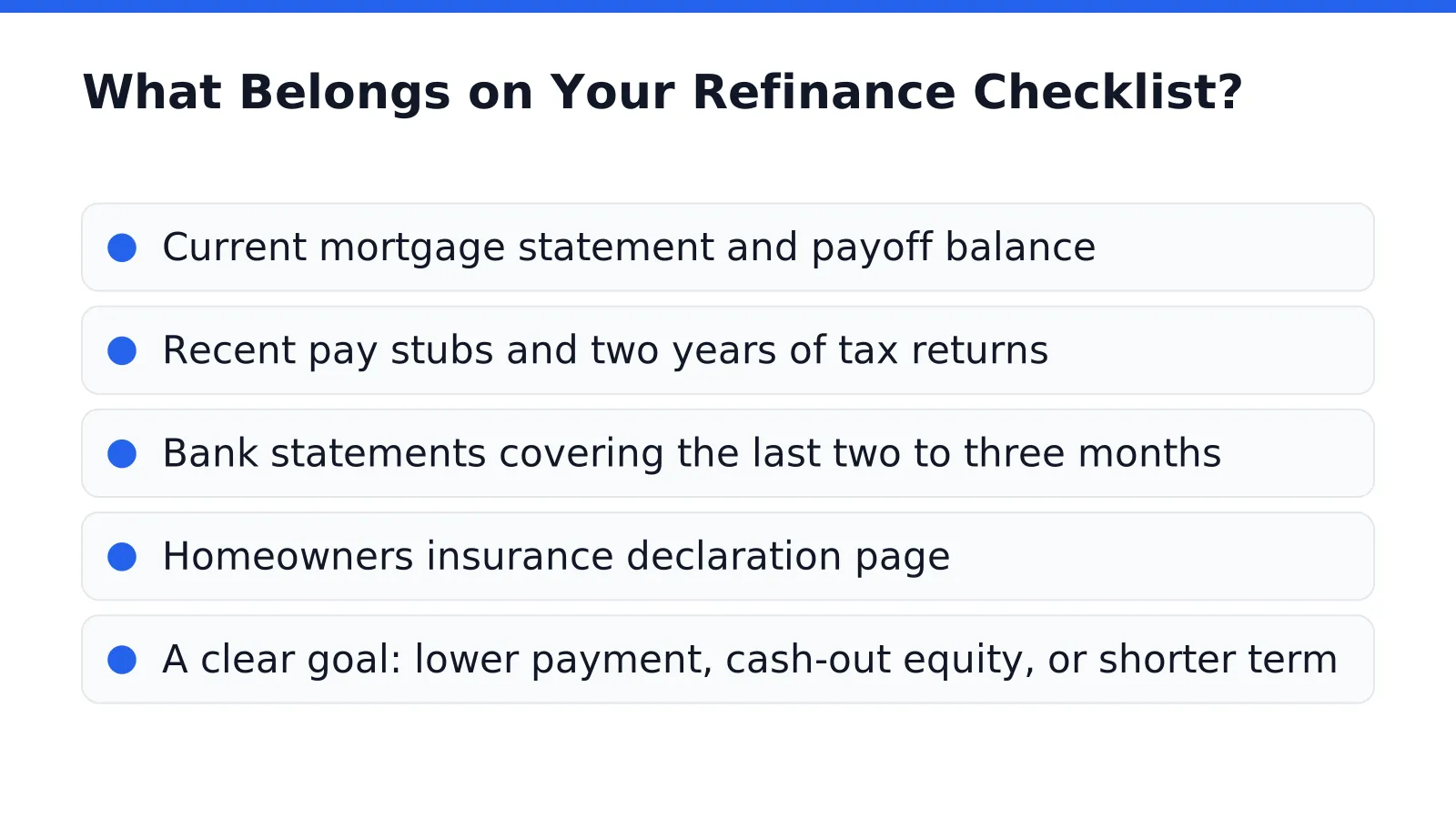
A practical checklist includes:
- Current mortgage statement and payoff balance
- Recent pay stubs and two years of tax returns
- Bank statements covering the last two to three months
- Homeowners insurance declaration page
- A clear goal: lower payment, cash-out equity, or shorter term
Homeowners who want a side-by-side look at their equity position before refinancing can request your property assessment to confirm current value and options.
How Does a Breakeven Analysis Work?
A breakeven analysis weighs the upfront cost of refinancing against the monthly savings a new loan produces. The math determines how many months pass before those savings outweigh the expense of closing. For most homeowners, this calculation forms the backbone of any sound refinance decision.
The process starts with the interest rate comparison. Industry experts generally recommend refinancing only when a new rate lowers the existing rate by at least one percentage point. A smaller gap often fails to justify the cost and disruption of a new loan.
What Costs Factor Into the Calculation?
Closing costs, transaction fees, and other related expenses all belong in the equation. Homeowners should add these figures together to calculate the full transitional expense of refinancing. Skipping any line item distorts the breakeven timeline and leads to a false sense of savings.
A simplified breakeven comparison might look like this:
Why Does Loan Visibility Matter During Refinancing?
Accurate numbers depend on clear access to loan details throughout the process. Munshi Capital’s commitment to transparent, technology-backed service supports this need directly. Borrowers gain quick pre-approvals and full visibility into loan status from application through closing. That clarity gives homeowners the reliable figures a breakeven analysis demands, rather than estimates that shift midway through underwriting.
What Are the Refinance Pros and Cons?
Refinancing carries real tradeoffs, not guaranteed wins. On the benefit side, replacing an existing loan can bring a lower monthly payout, a reduced interest rate, or access to a loan against home equity. Those outcomes, however, depend heavily on timing, loan terms, and personal financial circumstances. Weighing the refinance pros cons honestly, rather than assuming savings are automatic, keeps the decision grounded in reality.
A well-timed refinance offers more than payment relief. For homeowners reassessing their finances at year’s end, refinancing might help start the new year on stronger financial footing, whether through a potentially lower monthly payment, reduced interest costs, or cash made available for other needs. Savings vary by household, but many homeowners find they can save considerably by refinancing, provided the new terms genuinely improve on the old loan.
Is refinancing always worth it?
No. Refinancing works best when the new terms create a measurable improvement over the current loan. A breakeven analysis, weighing closing costs against monthly savings, helps clarify whether the timing makes sense.
What loan options exist beyond a standard refinance?
Borrowers with investment properties or non-traditional income often need more than a conventional loan. Munshi Capital’s lineup includes specialized products like DSCR. Hard money loans, built for investor-focused financing scenarios that standard refinancing programs do not cover.
Homeowners ready to move forward should request a direct cash offer. Request your property assessment to see how current equity and rate conditions apply to their specific situation.
Ready to Start Your Refinance?
Preparation determines outcome. Homeowners who complete a thorough refinance checklist and weigh their refinance pros cons before applying move through underwriting with fewer delays and fewer surprises. Munshi Capital Inc. built its process around that principle, offering personalized guidance that helps borrowers across the country secure the right financing with confidence.
The lending team walks clients from application to closing with clarity and speed. No confusing jargon. No hidden surprises buried in fine print. That structure matters most for homeowners weighing a rate reduction, a cash-out plan, or a shorter loan term. Each path carries different costs and different long-term tradeoffs.
How does Munshi Capital support different types of borrowers?
Support extends across the full spectrum of homeownership experience, from first-time buyers to seasoned investors. Munshi Capital serves this range with a comprehensive set of residential. Commercial loan programs designed around each borrower’s financial picture. That breadth allows a homeowner running a breakeven analysis on a refinance to find a program structured for their specific goal, rather than a one-size-fits-all product.
What makes a lender trustworthy for refinancing decisions?
Integrity and consistency build trust over time, not marketing claims. A wide array of loan products, paired with personalized service, positions Munshi Capital as a dependable choice for homeowners nationwide.
Homeowners ready to move forward have two clear next steps:
- Request a direct cash offer to understand available equity options before committing to a loan structure.
- Request your property assessment to confirm current value and strengthen the refinancing decision with accurate numbers.
FAQ
What documents does a refinance checklist usually include?
Organizing these items before applying shortens the time between application and closing.
How does Munshi Capital support the refinancing decision?
Munshi Capital Inc. builds mortgage financing around each borrower’s specific situation and guides clients through FHA, VA, USDA, and DSCR refinance options. This transparent, step-by-step approach keeps decisions based on clear, verifiable financial facts.
What financial goals determine if refinancing is right for you?
A lower monthly payment, access to cash for a major purchase, or a shorter loan term each drive refinancing decisions. The right fit depends on your current rate, equity position, and timeline for staying in the home.
Conclusion
In closing, determining whether refinancing aligns with your financial objectives requires honest assessment of your current situation against your long-term goals. The refinancing decision ultimately rests on your unique circumstances, your credit profile, equity position, rate environment, and timeline. By working through this checklist systematically, you establish clarity on whether refinancing delivers measurable value or represents an unnecessary expense. When you are ready to explore refinancing options tailored to your specific financial picture, our loan specialists stand prepared to guide you through the process with transparency and dependable expertise.
Leave a Reply