First-time home buyers qualify for USDA loans by purchasing in USDA-eligible rural areas and meeting household income limits set by the Section 502 Guaranteed Loan Program. This program offers 100% financing with no down payment, backed by a 90% loan note guarantee. Munshi Capital Inc. guides eligibility verification and application steps.
What Is a USDA Loan?
A USDA Rural Development Loan Requirements program refers to a government-backed mortgage guaranteed by the United States Department of Agriculture. The guarantee shifts risk away from lenders, which allows them to extend financing on favorable terms to qualified buyers. This structure sits at the heart of why USDA-backed financing remains attractive to first-time home buyers pursuing rural or suburban properties.
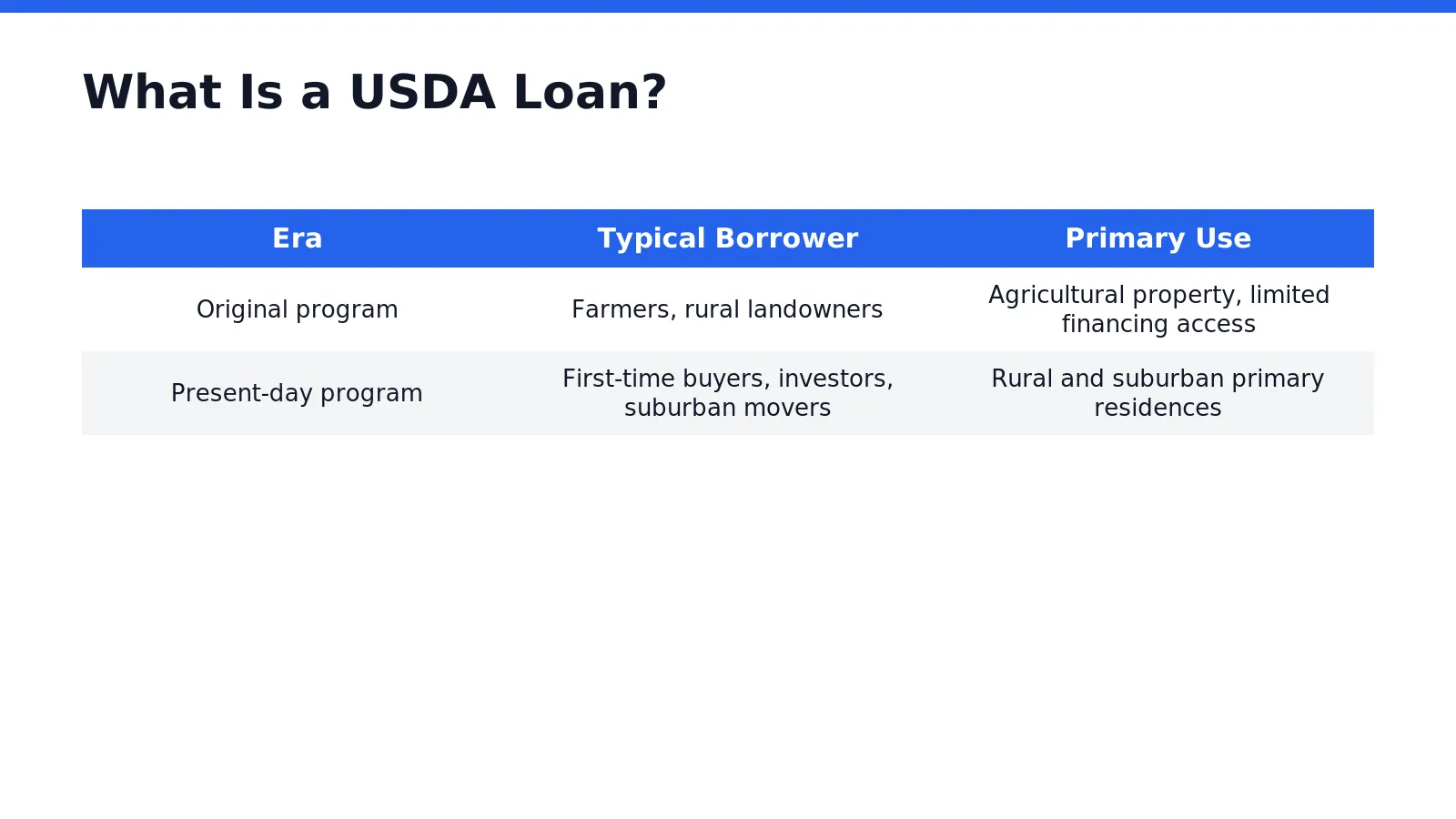
Origins matter here. The program began as a solution for rural property buyers who faced limited financing options decades ago. Farmers and rural landowners needed a mortgage path that conventional lenders weren’t always willing to provide, and the federal guarantee filled that gap.
Circumstances have shifted since then. Population growth and suburban expansion have pushed the program well beyond its original farming-community focus. Buyers no longer need to own agricultural land or work in agriculture to qualify for consideration.
Who Can Actually Use a USDA Loan Today?
Eligibility now extends to a much broader group than the program’s early years suggest. Buyers who want to live outside major metropolitan areas. Enjoy a quieter, country-oriented lifestyle increasingly turn to this financing option. First-time home buyers and real estate investors exploring affordable rural or suburban properties fall squarely within this expanded pool.
The shift reflects real demand. As cities grow more expensive, suburbs and outlying communities absorb more buyers seeking value and space. USDA financing has adapted to meet that demand rather than staying confined to its original agricultural purpose.
Comparison at a glance:
Understanding this evolution helps buyers recognize that USDA financing isn’t a niche farming tool anymore. It functions as a mainstream mortgage alternative for anyone drawn to life beyond city limits.
Who Qualifies for USDA Loans?
Eligibility rests on income limits, occupancy rules, citizenship status, and property location. The Section 502 Guaranteed Loan Program exists to help low- and moderate-income households buy modest, safe, and decent homes in designated rural areas. First-time buyers and investors researching zero-down rural financing need to understand each requirement before assuming a property or income level qualifies.
Occupancy is non-negotiable. Applicants must agree to live in the purchased dwelling as a primary residence, not as a rental or vacation property. That single condition rules out most investment strategies built around leasing single-family homes. The borrower has to actually reside there.
Citizenship status matters too. An applicant must hold U.S. citizenship, qualify as a U.S. non-citizen national, or hold status as a Qualified Alien. Lenders verify this during underwriting, alongside income and credit documentation.
Meeting broader USDA Loan Eligibility Requirements takes more than occupancy and citizenship, though. Borrowers must also satisfy specific USDA loan requirements covering income thresholds, creditworthiness, and property location before a loan moves to approval.
What Are the Core USDA Rural Development Loan Requirements?
The core USDA Rural Development Loan Requirements combine four elements: household income within program limits, primary-residence occupancy, eligible citizenship or non-citizen status, and a property situated in a designated rural area. Missing any one of these disqualifies an applicant regardless of credit strength.
- Household income at or below the moderate-income threshold for the area
- Primary-residence occupancy, not investment or rental use
- U.S. citizenship, non-citizen national status, or Qualified Alien status
- Property location within an eligible rural zone
Does Credit History Affect USDA Loan Qualification?
Credit history factors into the broader set of USDA loan requirements lenders review during underwriting. Approved lenders assess repayment capacity alongside income and occupancy documentation before issuing a guarantee. Buyers with limited credit history should consult an approved lender directly to confirm standing.
What Are the Income Eligibility Limits?
Income limits define who qualifies for USDA-backed financing. USDA Loan Eligibility Requirements center on household earnings measured against local benchmarks, not a fixed national number. A household applying for many USDA loan programs must meet specific income guidelines before a lender will move the application forward. Property location matters too; the home under contract must sit within an area the USDA classifies as rural.
The core threshold is straightforward, at least on paper. Applicant household income generally cannot exceed 115% of the median household income for the area where the property is located. That 115% ceiling applies to combined household income, meaning every wage earner in the home counts toward the total, not just the applicant on the loan.
How Do First-Time Buyers Check If They Qualify?
Prospective buyers can use the USDA’s eligibility site before starting the mortgage process. The tool evaluates the likelihood that a potential applicant would qualify for program assistance, factoring in both income and property location. Running an address and household income through the site offers a quick, no-cost first read on eligibility. Results are directional, not a guarantee, since final approval still runs through an approved lender.
What Determines Who Qualifies for USDA Loans?
Who Qualifies for USDA Loans comes down to two intersecting factors: income and geography. A household earning at or below 115% of the area median, purchasing a home in an eligible rural zip code, clears the baseline screen.
USDA Rural Development Loan Requirements work as a pair of filters:
- Income filter: household earnings must stay at or under the 115% area median threshold.
- Location filter: the property must fall within a USDA-designated eligible rural area.
Buyers serving markets nationwide can request a location-specific eligibility check through Munshi Capital Inc. before committing to a purchase contract, reducing wasted time on ineligible properties.
Is the Property Located in an Eligible Rural Area?
Location determines everything under this program. A home purchase qualifies only when the property sits inside an area USDA classifies as rural, a boundary drawn by federal designation rather than local zoning maps. First-time buyers and investors researching USDA Loan Eligibility Requirements often assume rural means farmland. The designation covers a much wider footprint than county fairgrounds and open pasture.
Confirming a property’s status does not require guesswork. USDA maintains a Property Eligibility Program screen where buyers enter an address and receive an immediate determination. This single step often decides whether a financing plan moves forward or needs a different path entirely. Skipping it risks wasted time on a home that never qualifies.
Once location clears, the financing terms become notably generous. Eligible applicants may purchase, build, rehabilitate, improve, or relocate a dwelling within a qualifying rural area using 100% financing, meaning no down payment stands between a buyer and closing. That structure matters most for first-time buyers stretched thin by savings goals and rising rents.
Do suburban areas ever qualify as rural under USDA rules?
Some suburban and exurban communities do qualify. Designations depend on population thresholds set by USDA rather than a simple urban-versus-country distinction. A neighborhood on the edge of a growing metro area can still fall inside an eligible zone. Checking the official screening tool remains the only reliable way to confirm.
Who Qualifies for USDA Loans depends on this location test as much as income limits. Meeting USDA Rural Development Loan Requirements starts with the address, not the applicant’s job or credit history. Buyers evaluating property in a designated eligible zone should confirm status early. Those weighing a sale alongside a purchase can request a direct cash offer or request your property assessment to compare paths before committing to either loan structure.
What Are USDA Rural Development Loan Requirements?
A government-backed mortgage program guarantees the loan behind this financing option. Officially, the product carries the name USDA Rural Development Guaranteed Housing Loan Program, a designation that reflects its origin as a United States Department of Agriculture initiative. First-time home buyers and rural property investors researching zero-down financing will encounter this exact program name across lender disclosures and federal resources.
The program’s structure differs from conventional mortgages in a few key ways. Federal backing reduces risk for approved lenders, which allows those lenders to extend financing without requiring a large upfront cash contribution. Buyers pursuing rural homes, small acreage properties, or homes just outside metro boundaries often find this structure more accessible than standard loan products.
How Do Buyers Determine Loan Program Basics Before Applying?
Buyers should start with the Loan Program Basics resource before submitting an application. This resource explains eligibility categories, property standards, and the general application sequence for the guaranteed housing loan. Reviewing it early prevents wasted time on properties or income situations that ultimately fall outside program parameters.
Where Can Buyers Learn Who Qualifies and What They Might Save?
USDA publishes introductory video guidance that walks through who qualifies for USDA loans, which land types meet eligibility standards, and the potential savings buyers could realize. The video format condenses program details into a format easier to digest than dense policy text. Buyers weighing rural financing against conventional mortgage options often use this video as a first checkpoint before deeper research.
Buyers evaluating this path should treat the sequence deliberately:
- Review Loan Program Basics for program structure and terms.
- Watch the introductory eligibility video for a quick overview.
- Confirm property location and income against published standards.
Each step narrows uncertainty before a formal application begins.
How Does the Guaranteed Loan Program Work?
A federal guarantee sits behind every loan closed under this program. The government backs 90% of the loan note issued to an approved lender, which lowers the lender’s risk when extending full financing to a rural buyer. That guarantee removes a major obstacle for buyers who lack savings for a down payment. Without collateral to protect against default, lenders would rarely offer zero-down mortgages to moderate-income households. The guarantee changes that math entirely.
This structure produces a practical outcome for eligible buyers: no money down. Qualified applicants purchase a primary residence at full value, financed at 100%, without draining savings for closing. First-time buyers and investors eyeing rural or exurban markets gain a financing path that conventional loans rarely offer without private mortgage insurance or a substantial cash reserve.
Who handles the loan application, the government or the lender?
Approved lenders manage the application process directly, not a federal office. Buyers interested in this financing work with a participating lender rather than filing paperwork through a government agency. The lender evaluates income, creditworthiness, and property eligibility, then originates the loan under the federal guarantee. Contacting a lender approved for the program is the required first step for any applicant.
USDA Rural Development Loan Requirements extend to the lending institutions themselves, not only the borrowers. Lenders seeking to participate follow a separate approval process:
- Review program guidelines specific to lender participation
- Submit qualifying documentation to gain approved status
- Maintain compliance to keep active participation in the program
- Consult dedicated lender guidance for procedural updates
This division of labor, government guarantee paired with private lender execution, keeps the system efficient. Buyers get streamlined service through familiar lending channels. The federal guarantee reduces risk enough to make zero-down financing possible in eligible rural areas.
How Do You Check Eligibility Before Applying?
Checking eligibility starts with two separate questions: does the property qualify, and does the household’s income fall within program limits. Skipping this step wastes time on homes or income brackets that fall outside program rules. First-time buyers exploring zero-down rural financing should confirm both factors before contacting a lender or submitting paperwork.
The USDA eligibility site handles the first question. Selecting a Rural Development program on that site directs the user to the correct property eligibility screen for the chosen loan type. Each program, whether for guaranteed loans or other Rural Development options, has its own screening path, so picking the right one matters before entering an address.
What Counts as an Eligible Rural Area?
Eligibility hinges on location rather than a strict population count alone. The property must sit within boundaries the USDA has designated as rural. Many suburban and exurban areas near larger cities still qualify, surprising many first-time buyers who assume rural means remote farmland.
Where Can Buyers Get Help With the Application Itself?
Buyers researching USDA Loan Eligibility Requirements should start with the guaranteed housing webpage, which offers program information and guidance for anyone learning about the Single Family Housing Guaranteed Loan Program. That resource explains USDA Rural Development Loan Requirements in plain terms before any paperwork begins.
Questions that go beyond general program details require a different contact point. Buyers with specifics not answered on the website should reach out directly to an approved program lender for assistance.
A practical eligibility check follows this order:
- Confirm the property address on the USDA eligibility site under the correct Rural Development program.
- Review household income against program limits.
- Read the guaranteed housing webpage for program mechanics.
- Contact an approved lender for questions specific to the application.
Understanding who qualifies for USDA loans means treating property location, income, and lender guidance as three connected checkpoints, not one single test.
How Can Munshi Capital Help First-Time Buyers?
Munshi Capital Inc. specializes in mortgage financing solutions built for first-time home buyers, seasoned investors, and fund managers pursuing rural property purchases. Loan structuring for zero-down rural financing requires navigating USDA Loan Eligibility Requirements. Munshi Capital applies proprietary insights and strategies to translate those rules into a clear path toward closing.
A first-time buyer evaluating a rural property often faces two hurdles at once: confirming income limits and confirming the property’s location falls within an eligible service area. Munshi Capital’s guidance addresses both, helping buyers understand who qualifies for USDA loans before they submit an offer. That upfront clarity prevents wasted time on properties or applications that never had a realistic chance of approval.
What documents does a first-time buyer need for a USDA loan?
Buyers typically need income verification, credit history, and property location details to confirm eligibility. Munshi Capital’s process moves applicants from application to closing with clarity and speed, reducing the guesswork that stalls many rural loan files. No confusing jargon accompanies the process, and no hidden surprises appear later in underwriting.
Munshi Capital’s residential loan lineup serves first-time homebuyers nationwide, tailoring each program to the buyer’s financial picture rather than a one-size-fits-all model. Understanding USDA Rural Development Loan Requirements matters because approval hinges on more than credit score alone. Key factors include:
- Household income relative to area median limits
- Property location within a designated rural boundary
- Intended use as a primary residence, not an investment rental
- Debt-to-income ratio and repayment capacity
Each factor interacts with the others, so a strong score in one area rarely offsets a disqualifying detail elsewhere. Munshi Capital’s comprehensive guidance helps buyers see the full picture before committing time and resources to a single property.
Conclusion
In closing, understanding USDA loan eligibility requirements positions first-time home buyers to access financing solutions tailored to their circumstances and objectives. The criteria outlined, encompassing income thresholds, credit considerations, property location parameters, and citizenship status, establish a clear framework for qualification. By thoroughly evaluating these requirements against your financial profile. Real estate goals, you gain the clarity necessary to pursue homeownership with confidence and strategic precision.
Leave a Reply